I’ve noticed that betta fish exhibit heightened aggression towards fish that resemble them in shape or color, like dwarf gouramis and scarlet badis. This mistaken identity can lead to territorial disputes and stress. To prevent conflicts, consider keeping fish with distinctly different body shapes and colors.
Providing ample hiding spots and visual barriers over extended periods of time also helps minimize encounters. By understanding these dynamics, you’ll effectively create a more peaceful aquarium environment where the betta fish live safely. There’s a lot more to unpack on this topic.
Understanding Betta Fish Behavior
Understanding Betta fish behavior is vital for anyone looking to keep these vibrant creatures in a home aquarium. Betta fish are notoriously territorial and can display significant aggression, particularly towards other fish that share similar shapes or colors. Bettas react defensively not only to their tank mates but also to decor and plants, often uprooting or damaging these elements as they establish dominance.
This aggression can lead to mistaken identity attacks, causing harm to both the Betta and other fish. To mitigate conflicts, I’ve found that rearranging the tank environment can temporarily disrupt their territorial instincts. Additionally, closely monitoring their behavior after introducing new tank mates is essential to maintaining a peaceful aquatic community.
Identifying Dwarf Gouramis
When keeping a diverse aquarium, distinguishing between similar-looking species is important for maintaining harmony. Dwarf gouramis (Trichopodus lalius), typically reaching about 2 inches in length, are renowned for their vibrant colors—shades of blue, red, and orange—that can easily lead to confusion with male bettas. Unlike bettas, dwarf gouramis are generally more peaceful and thrive in community tanks, making them suitable companions for small, gentle fish and baby fish.
However, it’s essential to note that male dwarf gouramis can exhibit territorial behaviors like dominant fish, especially during mating seasons. Their ability to create bubble nests, a trait they share with bettas, can further complicate identification. I find that careful observation of their interactions can prevent potential conflicts and guarantee a harmonious aquatic environment.
Recognizing Scarlet Badis
When recognizing Scarlet Badis, one can’t overlook their vivid red and blue coloration, which sets them apart from similar species. I find it fascinating that their feeding habits lean towards live and frozen foods, contrasting with the betta’s dietary preferences. Additionally, understanding their semi-aggressive behavior is essential for ensuring compatibility in community tanks, especially when compared to the more territorial nature of bettas.
Color Variations and Patterns
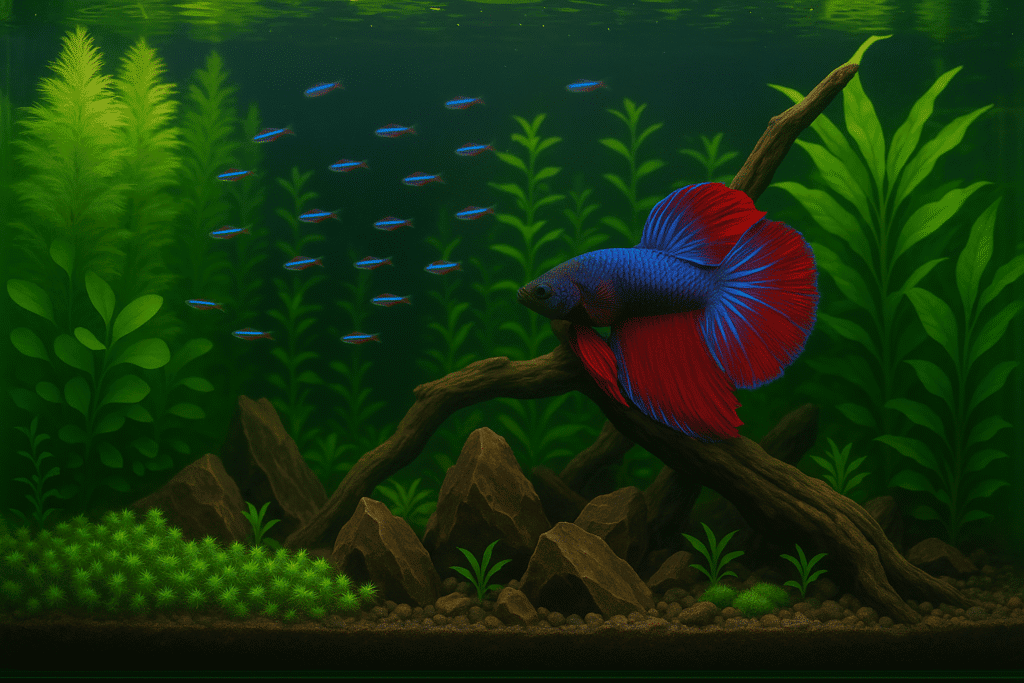
Although both the scarlet badis and bettas can captivate aquarists with their vivid hues, recognizing the subtle differences in color variations and patterns is crucial for accurate identification. Scarlet badis (Dario dario) typically grow to about 1 inch and display vibrant reds and blues, often featuring intricate patterns of spots or stripes.
This contrasts with many bettas, which tend to exhibit more solid colorations. Additionally, the elongated body of the scarlet badis further differentiates it from the bulkier betta. When observing these fish in an aquascape, pay attention to their semi-aggressive nature and preference for live or frozen foods, which can help guarantee they’re properly identified and cared for alongside suitable tank mates.
Feeding Habits and Preferences
Understanding the feeding habits and preferences of scarlet badis (Dario dario) is fundamental for maintaining their health and guaranteeing they thrive in an aquarium environment. These small, vibrant fish, reaching about 1 inch in length, thrive on a diet rich in live and frozen foods, such as small blood worms and brine shrimp.
I’ve found that offering a varied diet is essential, as it mimics their natural feeding behaviors and provides critical nutrients. It’s important to verify the food is appropriately sized to prevent choking. When keeping scarlet badis, A species-only tank is recommended or housing them with similarly sized, peaceful fish to minimize territorial conflicts and assure they receive adequate nutrition.
Social Behavior and Compatibility
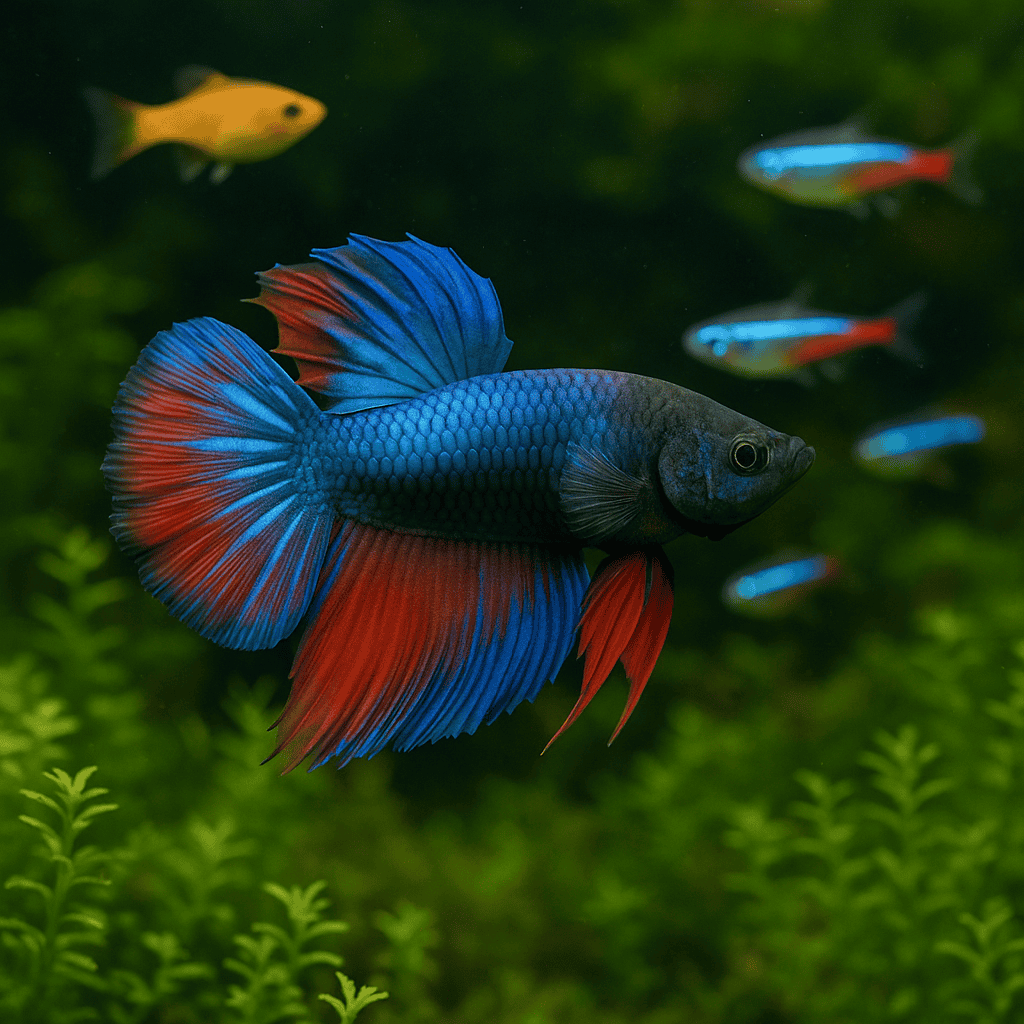
Scarlet badis exhibit fascinating social behaviors that set them apart from similarly colored fish like bettas. These small, vibrant fish, reaching only about 1 inch, showcase a semi-aggressive nature, particularly in males, who are more territorial. Unlike bettas, scarlet badis actively seek peaceful tank mates, fostering a serene environment that minimizes stress and aggression.
This compatibility makes them ideal for community tanks. Their diet primarily consists of live and frozen foods, which require smaller options compared to bettas, highlighting their unique care needs. Observing their behavior reveals their social tendencies; scarlet badis engage more harmoniously, making mistaken identity attacks less likely. Understanding these nuances is essential for anyone looking to create a balanced aquarium.
The Role of Tank Size and Environment
When considering the tank size and environment for betta fish, It’s essential to recognize the impact these factors have on their behavior, especially when housing similar-looking species. A minimum tank size of 5 gallons is critical, as it provides ample swimming space to reduce aggression. Creating a well-planned environment with hiding spots and enrichment items like betta fish toys and visual barriers, this setup not only enhances aesthetics but also minimizes territorial disputes.
Maintaining stable water parameters—temperature and pH—is fundamental for reducing stress, which can trigger aggressive behavior. Regular tank maintenance, including water changes and fish waste removal, guarantees a healthy environment. Finally, introducing new fish gradually into a well-established tank allows for better acclimatization, further supporting peaceful coexistence among bettas and their lookalike companions.
Compatible Tank Mates for Peaceful Coexistence
When considering compatible tank mates for bettas, Selecting species with similar temperaments and environmental needs is essential for harmony. Dwarf gouramis and scarlet badis stand out as ideal companions due to their peaceful behaviors and distinct habitat preferences. Additionally, incorporating ample hiding spots can greatly mitigate aggression and territorial disputes, fostering a serene community tank.
Ideal Tank Mates
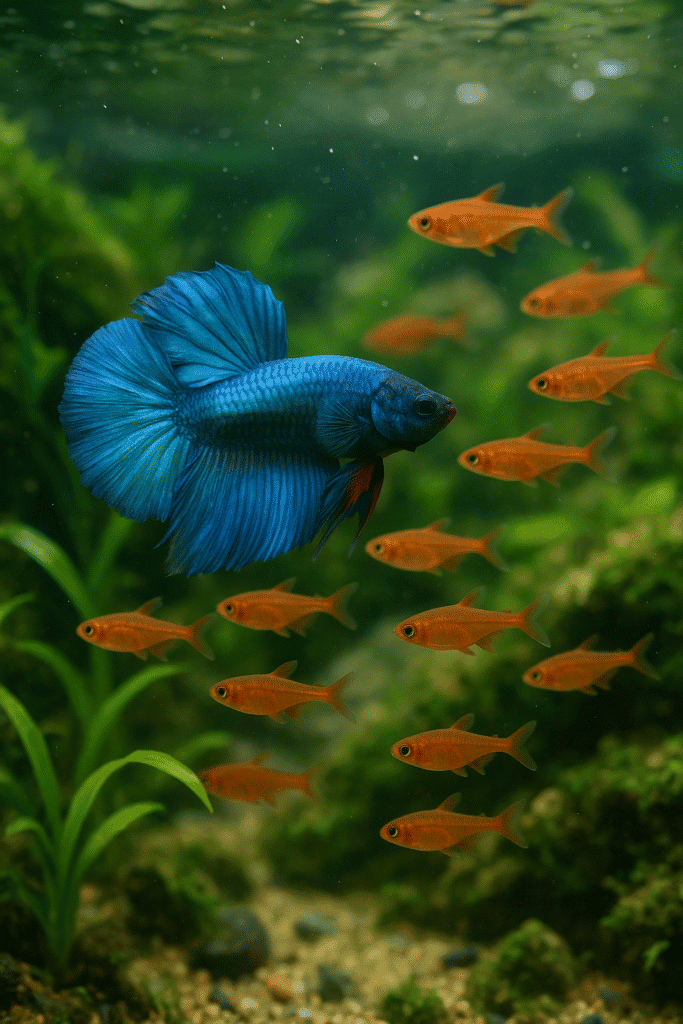
While considering ideal tank mates for bettas, it’s essential to choose species that are not only visually appealing but also compatible in temperament and size. Dwarf gouramis, especially honey gouramis, are excellent choices due to their generally peaceful nature. Pea puffers can coexist in a species-only setup, but Close monitoring is recommended to mitigate any conflicts. Scarlet badis, being vibrant and semi-aggressive, can thrive alongside bettas as they prefer smaller companions.
Additionally, African dwarf frogs, unlike aggressive African cichlid fish, are compatible, given their slow eating habits reduce food competition. To promote harmony, provide ample hiding spots and closely observe interactions, as betta fish exhibit marbling patterns and territorial behavior. By selecting these ideal tank mates, you can foster a tranquil aquatic environment.
Community Fish Options
Finding the right community fish to accompany bettas can enhance the overall experience of maintaining a vibrant aquarium. It’s essential to select compatible tank mates that promote peaceful coexistence. Here are some excellent community fish options:
| Fish Type | Size (inches) | Compatibility |
|---|---|---|
| Dwarf Gourami | 2–3.5 | Peaceful, less aggressive |
| Honey Gourami | 2–3.5 | Peaceful, less aggressive |
| Scarlet Badis | 1 | Small, peaceful fish |
| African Dwarf Frog | N/A | Fully aquatic, needs secure lid |
| Mystery Snail | N/A | Cleanup crew, peaceful |
Signs of Stress and Aggression in Fish

Recognizing signs of stress and aggression in betta fish is essential for maintaining their health and preventing common betta fish diseases, especially since these behaviors often stem from territorial disputes or environmental factors. Stress typically manifests through hiding, rapid gill movement, and disinterest in food. These indicators, common in sick betta fish, suggest anxiety in their environment.
On the other hand, aggressive behavior often appears as flaring fins, chasing, and nipping at similar-looking tank mates, which may trigger their defensive behavior. Additionally, fluctuations and poor water quality exacerbate stress levels, amplifying aggression and discomfort. Rearranging the tank layout can disrupt established territories, providing temporary relief. Finally, I keep an eye out for bubble nests, as their presence indicates a betta’s readiness to breed, often during calmer moments.
Best Practices for Maintaining a Harmonious Aquarium
To maintain a harmonious aquarium, I prioritize creating an environment that minimizes stress and aggression among my fish. It’s important to implement several best practices to promote coexistence, especially with my betta:
- Provide ample hiding spots and visual barriers to reduce perceived threats.
- Introduce new fish gradually, allowing the betta to acclimate to its companions.
- Monitor water quality consistently, as poor conditions can exacerbate stress.
Conclusion
To summarize, understanding the nuanced behaviors of focal fish like bettas and their similar-looking counterparts is essential for maintaining a peaceful aquarium. By accurately identifying species like dwarf gouramis and scarlet badis and recognizing signs of stress and aggression, we can create a harmonious environment.
Prioritizing tank size and selecting compatible tank mates further enhances fish well-being and reduces diseases amongst betta fish. By following these best practices, we can greatly reduce the likelihood of mistaken identity attacks and foster a tranquil aquatic community.