If you’re considering tank mates for your betta healthy fish, watch out for known fin-nippers like Neon Tetras, Serpae Tetras, and Tiger Barbs. These species can provoke aggression and cause damage to your betta’s fins, especially in smaller spaces.
Guppies can also pose challenges due to their active behavior. Selecting compatible species and monitoring interactions closely is essential for maintaining harmony in your aquarium. Explore further to discover safe tankmates and how to create a supportive environment.
Understanding Betta Fish Behavior
When you observe betta active fish in an aquarium, you’ll quickly notice their distinct behaviors, especially their territorial nature. Male bettas, in particular, can be quite aggressive, often displaying hostility towards tankmates that invade their space. This aggression stems from their history of fighting fish, making them prone to conflicts in community tanks.
To foster a peaceful environment, it’s vital to provide adequate space and hiding spots, allowing each betta fish to establish its territory. Individual personalities also play a significant role; some bettas may be more tolerant, while others might exhibit heightened aggression. Understanding these behaviors can help prevent issues like fin nipping and guarantee a harmonious community tank, benefiting both the bettas and their companions.
Common Fin-Nipping Fish Species
Understanding the behaviors of betta fish fins helps in recognizing potential threats from other species in a community tank. Some fish are notorious for fin-nipping, which can harm bettas. Here are common fin-nipping fish species to watch out for:
Neon Tetras: While beautiful, they can nip at fins, especially in smaller groups.
Celestial Pearl Danios: Their playful nature sometimes leads to unwanted fin-nipping. Pictures of fish can help with identification.
Serpae Tetras: Known for their aggressive tendencies, they may stress bettas by targeting their fins.
Tiger Barbs: Highly aggressive fin nippers that can pose a significant threat in limited spaces.
Being aware of these species helps me create a harmonious environment for my betta fish, reducing stress and potential injury.
Compatibility Challenges With Guppies
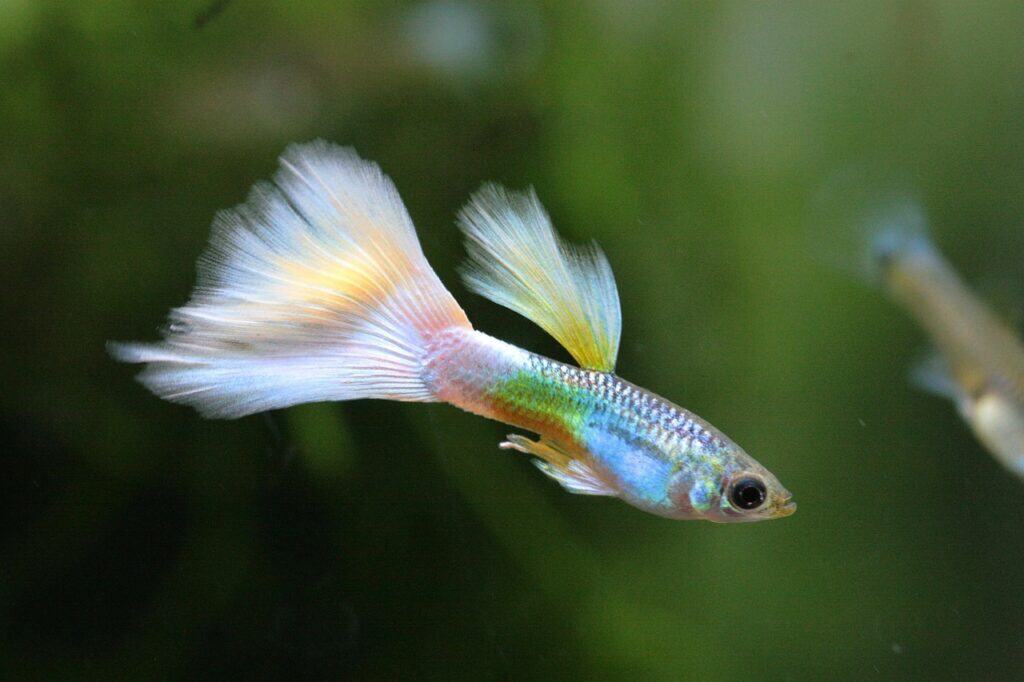
When considering guppies with black fishes, it’s crucial to recognize the factors that contribute to aggression. Guppies’ active behavior can provoke bettas, leading to territorial responses that may harm both species. By observing their interactions and adjusting group sizes, we can better manage compatibility issues and promote a healthier tank environment.
Guppy Aggression Factors
Although guppies are often admired for their vibrant colors and lively behavior, their aggression can pose significant compatibility challenges when housed with betta fish. As someone who values the health and well-being of aquarium fish, it’s essential to understand these factors:
Breeding Behavior: Guppies can become aggressive during breeding seasons, leading to fin-nipping.
Feeding Frenzy: Their voracious eating habits can stress other blue fish, including bettas, escalating aggression. Speedy Swimmers: Guppies’ fast swimming may provoke territorial responses from male bettas.
Competition for Resources: The presence of guppies can lead to competition for food, increasing the risk of fin damage.
In a Fresh Water aquarium, these dynamics can create unpredictability, impacting the overall harmony of your new account.
Betta Compatibility Considerations
While many aquarists are drawn to the vibrant personalities of betta fish and guppies, their compatibility often hinges on specific behavioral dynamics. Betta temperament factors play an essential role in this relationship. Some bettas may tolerate guppies, while others may react aggressively, leading to stress or fin damage.
Guppy school dynamics can influence interactions; keeping them in larger groups might mitigate aggressive behaviors, but it won’t guarantee the safety of your bettas. The striking colors and long fins of guppies can provoke territorial instincts in male bettas, increasing the risk of fin nipping. To prevent fin damage, I recommend closely monitoring their interactions and assuring a peaceful environment for all tank inhabitants.
The Aggressive Nature of Tiger Barbs
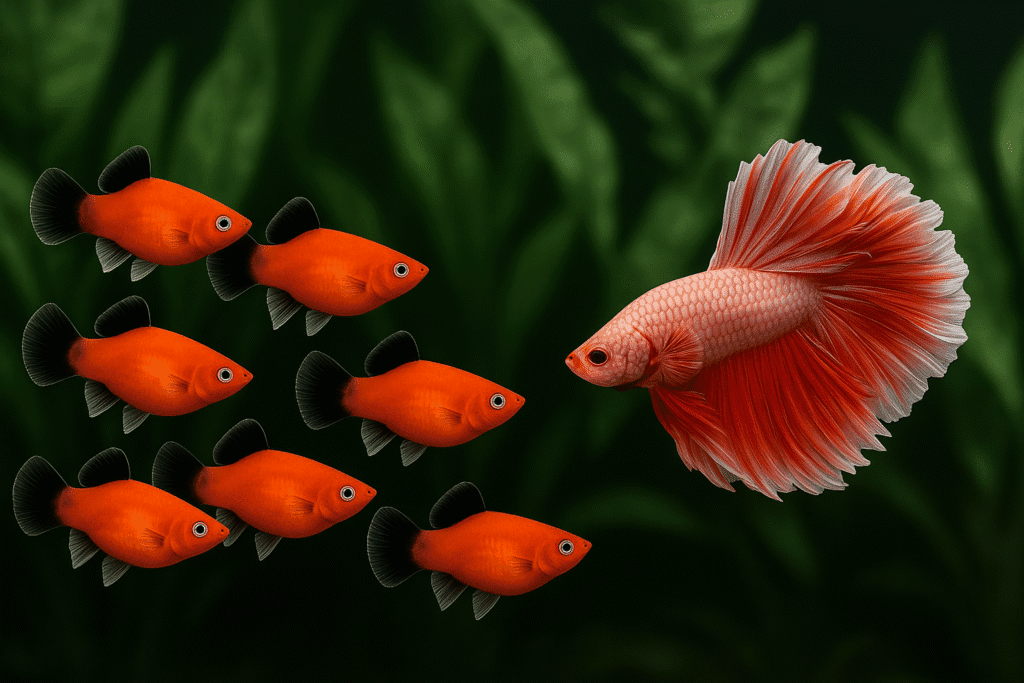
When considering tiger barbs in a community tank, I find their aggressive nature particularly concerning, especially towards slower tankmates like bettas. Their schooling behavior can amplify this aggression, as they tend to nip more frequently in smaller groups. To mitigate potential conflicts, I recommend keeping them in larger schools within adequately sized tanks.
Aggression Towards Tankmates
Understanding the aggressive nature of tiger barbs is essential for anyone considering adding them to a community tank. Their aggression triggers can lead to fin damage, especially towards slower-moving finned fish like bettas. To minimize territorial disputes and guarantee a harmonious environment, consider these key points:
Schooling: Keep at least six tiger barbs to distribute aggression evenly.
Tank Size: Provide a spacious tank to reduce stress and territorial behavior.
Hiding Spots: Incorporate plants and decorations to offer refuge for more docile species.
Monitoring Behavior: Observe interactions closely to promptly address any signs of aggression.
Implementing these strategies can greatly aid in fin damage prevention and promote a healthier tank atmosphere.
Schooling Behavior Impact
The aggressive nature of tiger barbs is greatly influenced by their schooling behavior. When kept in small groups, the aggression distribution dynamics shift, often leading to fin-nipping of more docile fish like bettas.
Observations show that in larger schools of at least six tiger barbs, their natural schooling behavior effects help distribute aggression among themselves, reducing the likelihood of targeting slower tank mates.
Social interactions influence their behavior, allowing for a more balanced community dynamic. In smaller tanks, however, space constraints heighten territorial disputes, escalating aggression levels and stress for all inhabitants.
As a result, maintaining a well-sized aquarium with an adequate number of tiger barbs can greatly mitigate their aggressive tendencies, fostering a more harmonious environment for your bettas.
Serpae Tetras: A Risk for Betta Fins
Although serpae tetras can add vibrancy to a community tank, their notorious fin-nipping behavior poses a significant risk to betta fish. Their long fins make bettas particularly vulnerable to aggression, and serpae tetras are known for their semi-aggressive and territorial tendencies. To guarantee fin damage prevention, consider these tankmate selection strategies:
Assess Individual Temperament: Monitor the specific behavior of both bettas and serpae tetras.
Increase Group Size: Keep serpae tetras in larger groups to reduce their aggression.
Create Hiding Spots: Add plenty of plants and decorations for bettas to escape.
Choose a Larger Tank: Provide ample space to minimize territorial disputes.
Taking these steps can enhance harmony in your aquarium, safeguarding your betta’s beautiful fins.
The Impact of Tank Size on Aggression
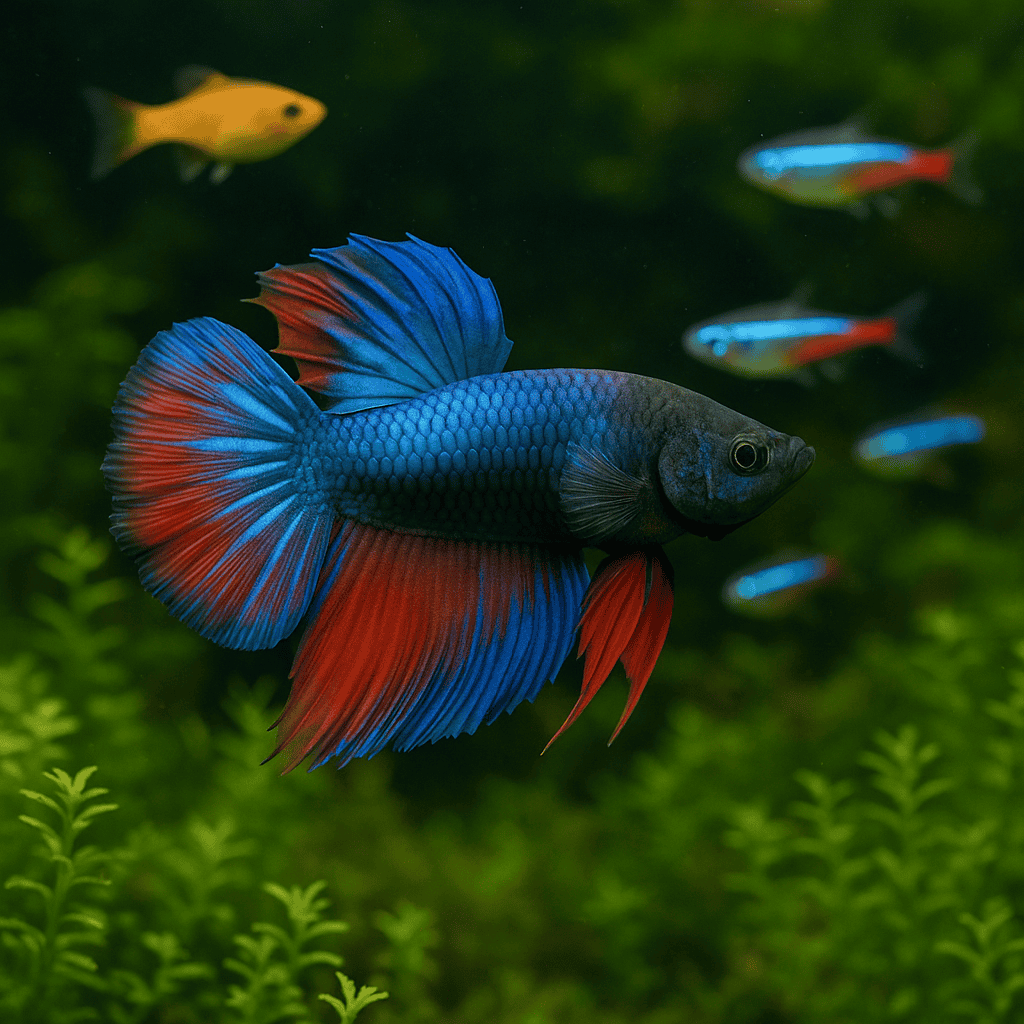
When considering the dynamics of aggression in aquariums, tank size plays an essential role in shaping fish healthy behavior. Larger tank dimensions considerably reduce aggression levels among fish, including fin nipping, as they provide ample space for individuals to establish territories and avoid conflict.
Experience shows that ensuring that tetras are kept in groups of at least seven within these larger environments can promote more stable social dynamics, ultimately decreasing their likelihood of directing aggression toward bettas.
Additionally, adequate space and hiding spots lower stress levels for bettas and minimize the chance of fin-nipping from more aggressive tankmates. Ultimately, the size of the tank influences interaction, leading to less territorial behavior and a reduced risk of damage to bettas’ fins.
Safe Tankmates for Betta Fish
Choosing appropriate tankmates for betta fish is essential for maintaining a harmonious aquarium environment. Experience shows that successful tankmate selection involves selecting species that minimize aggression. Here are some recommendations for safe tankmates:
Rasboras – These schooling fish thrive in groups, promoting a peaceful atmosphere.
Corydoras Catfish – Bottom-dwellers that keep to themselves and won’t bother your betta.
Neon Tetras – Small, peaceful species that should be kept in larger groups to reduce stress.
Ottocinclus – These algae eaters are gentle and won’t make your fish safe.
Remember to avoid long-finned or brightly colored fish, as they may trigger aggression. A well-planned community tank with hiding spots fosters harmony, benefiting all inhabitants.
Observing Fish Interactions in Community Tanks
To maintain a thriving community tank, I find that closely observing fish interactions is vital in identifying fin-nipping behaviors that could stress both betta fish and their tankmates. Utilizing effective fish observation techniques, I monitor how species like ruby and green neon tetras interact with bettas.
Understanding community tank dynamics is important, as individual temperament greatly influences these interactions. Some bettas can coexist peacefully with tetras, while others may display aggression.
Implementing behavioral monitoring strategies after introducing new fish helps prevent territorial disputes and guarantees harmony. By paying attention to these interactions, I can take proactive measures to protect my bettas and create a supportive environment for all tank inhabitants.
Tips for Maintaining a Peaceful Aquarium Environment
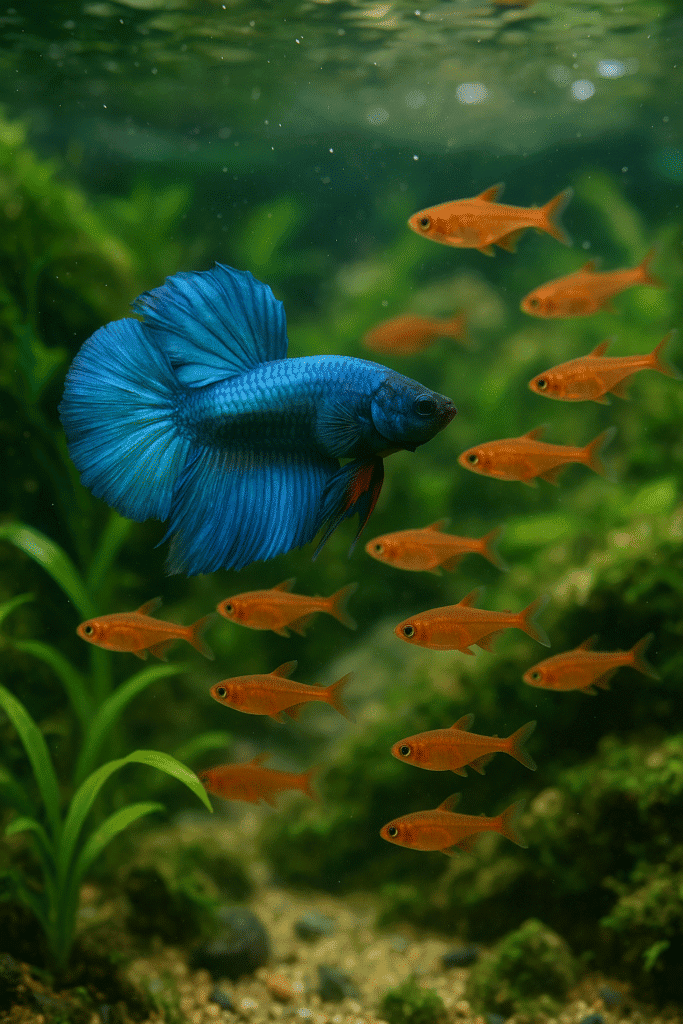
Creating a peaceful aquarium environment is essential for the well-being of both betta fish and their tankmates, as stress can lead to aggressive behaviors. To maintain community tank harmony, I recommend the following tank maintenance tips:
Choose an adequate tank size – A larger tank provides more space for territorial fish, reducing aggression and fin-nipping incidents.
Incorporate hiding spots – Use decorations and plants to create separate territories, helping mitigate stress and territorial disputes.
Monitor interactions closely – After introducing new tankmates, observe for any signs of aggression or stress in your fish.
Select compatible tankmates – Choose species that occupy different levels of the tank to minimize competition and potential aggression.
Conclusion
To sum up, choosing tankmates for your betta fish requires careful consideration to avoid fin-nipping issues. Species like guppies, tiger barbs, and serpae tetras can pose significant risks to your betta’s fins and overall well-being.
By prioritizing a suitable tank size and selecting compatible companions, you can create a harmonious aquarium environment. Always observe interactions closely and be prepared to intervene if aggression arises, ensuring your betta remains healthy and