Mustard Gas Bettas are striking with their vivid blue or teal bodies contrasted by vibrant yellow fins, a result of over 13 years of selective breeding. Growing to around three inches, they display a unique coloration that sets them apart from other varieties.
Their territorial nature requires individual housing, preferably in at least a 10-gallon tank with appropriate water parameters. Investing in high-quality specimens promotes their health and longevity, and there’s plenty more fascinating information to discover.
Mustard Gas Bettas Overview
When I first encountered Mustard Gas Bettas, I was immediately struck by their stunning bi-colored appearance. These beautiful fish exhibit a distinctive color pattern, with striking blue or teal bodies complemented by vibrant yellow fins. Originating from Southeast Asia, they were selectively bred over 13 years, starting in 1999, by Jude Al, which explains their unique coloration.
Though they can be mistaken for chocolate bettas, true Mustard Gas Bettas display that specific blue or green hue paired with orange or yellow fins. Growing to about three inches in length, they typically live for three to five years, with their lifespan extending under ideal care. Their rarity and aesthetic appeal make them a fascinating addition to any aquarium, especially for those seeking an arrival guarantee from reputable breeders.
How Much Do Mustard Gas Bettas Cost?
How much should you expect to pay for a Mustard Gas Betta? Prices for mustard gas bettas typically range from $30 to $59.95, influenced by factors such as coloration and tail type. Specialty breeders often command higher prices for authentic, high-quality mustard gas bettas, reflecting their rarity.
While pet stores may offer these fish at $5 to $20, the lower cost often correlates with inferior health and lifespan. Additionally, purchasing through online auctions can introduce variability in pricing and shipping fees. Investing in high-quality mustard gas bettas not only enhances your aquarium’s aesthetic but also promotes better health and longevity for your fish, ultimately justifying the initial expenditure.
Typical Behavior & Temperament

Although Mustard Gas Betta Fish are visually stunning, their behavior and temperament require careful consideration for successful aquarium keeping. These fish exhibit pronounced territoriality, particularly males, making it vital to house them individually. They thrive in environments large enough to reduce stress, ideally in tanks of at least 5 gallons.
They can coexist with peaceful community species, like ember tetras, but must be separated from fin-nippers and aggressive fish. Notably, they also display playful behaviors and can recognize their caretakers, showing curiosity and interaction. To enhance their well-being, it’s essential to provide well-planted habitats that offer hiding spots, fostering a secure environment for these enchanting aquatic creatures and other active swimmers.
Appearance & Varieties
Mustard Gas Betta Fish is captivated not only by their behavior but also by their striking appearance. Their bodies exhibit a stunning blue or teal hue, complemented by vibrant yellow or orange fins, creating a dramatic visual contrast. This rare color morph—first bred in 1999—can often be mistaken for chocolate bettas due to subtle differences in body color. Among the various tail types, half-moon is the most prevalent, though the full-moon and crown tail varieties also exist.
Additionally, the fish display unique color variations that include blue, green, and dragon scales, enhancing their allure for collectors. The rarity and distinct coloration of this species of fish often leads to higher prices, typically ranging from $30 to over $50, depending on quality and tail type.
How to Take Care of Mustard Gas Bettas
To guarantee the health and vigor of your mustard gas betta, a well-maintained environment is vital. A tank size of at least 10 gallons is recommended to provide ample space. Maintaining a water temperature between 76°F and 82°F, along with a pH level of 6.5 to 7.5, creates an ideal habitat.
A varied diet is essential, including high-quality betta pellets and live foods like bloodworms and brine shrimp to ensure their nutritional needs are met. Regular partial water changes paired with a gentle filtration system are necessary, as these fish are sensitive to poor water quality. Additionally, a heavily planted tank with hiding spots reduces stress, allowing your betta to establish its territory comfortably.
Are Mustard Gas Bettas Good Tank Mates?
When considering tank mates for Mustard Gas Bettas, their territorial nature warrants careful selection. Pairing them with peaceful mid-dwellers like ember tetras or bottom dwellers such as Corydoras catfish minimizes aggression and stress. However, I must caution that introducing dwarf shrimp can pose a risk, as these bettas may perceive them as prey.
Compatibility With Other Fish
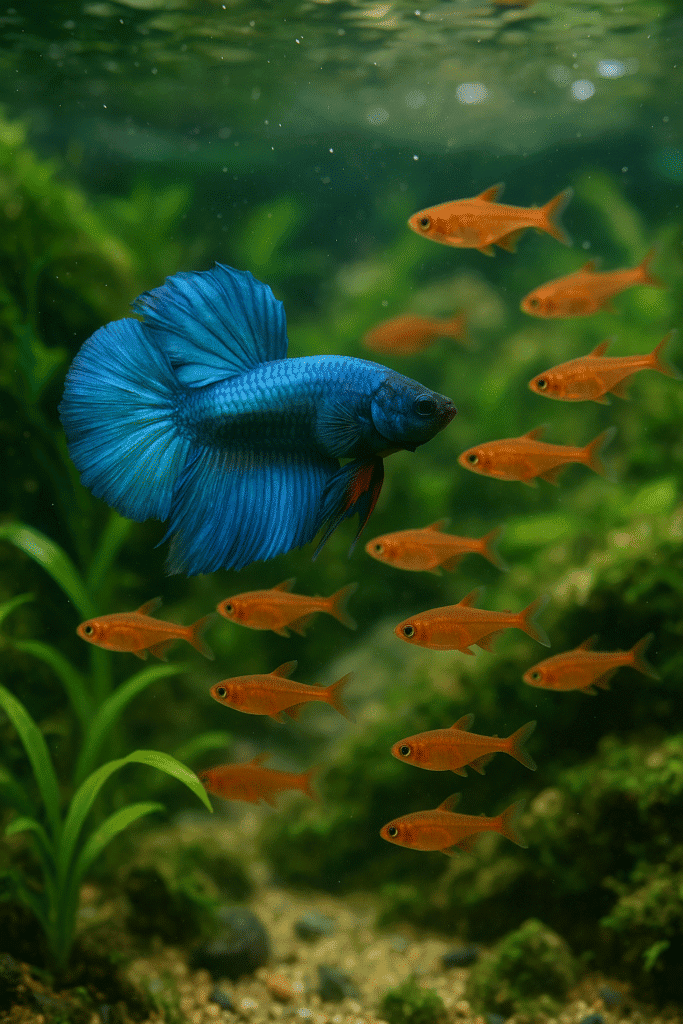
While considering the compatibility of Mustard Gas Betta fish with other aquatic species, it is important to recognize their inherently territorial and aggressive nature. These stunning tropical fish are not good tank mates for other males or similarly aggressive species, as they can provoke conflict. However, they can coexist harmoniously with small, peaceful fish like ember tetras and harlequin rasboras, which are less likely to stress them.
Additionally, bottom dwellers such as Kuhli loaches and Corydoras catfish can be suitable companions, as they occupy different tank levels. It is vital to avoid dwarf shrimp, as these may be perceived as prey. Creating a well-planted environment can mitigate aggression, offering hiding spots and visual barriers for a balanced tank ecosystem.
Territorial Behavior Explained
Mustard gas bettas exhibit pronounced territorial behavior, particularly among males, which greatly impacts their compatibility with other fish species. Their aggressive nature necessitates careful consideration when selecting tank mates. They thrive in spacious environments with ample hiding spots, which can mitigate stress and territorial disputes.
It’s essential to avoid housing them with aggressive fish or fin-nippers, like tiger barbs or fancy guppies, as these interactions can lead to injury and heightened stress levels. Instead, I suggest opting for compatible tank mates such as peaceful mid-dwellers like ember tetras and harlequin rasboras or bottom dwellers like Corydoras catfish, which can coexist harmoniously without triggering the bettas’ territorial instincts.
Ideal Tank Mates
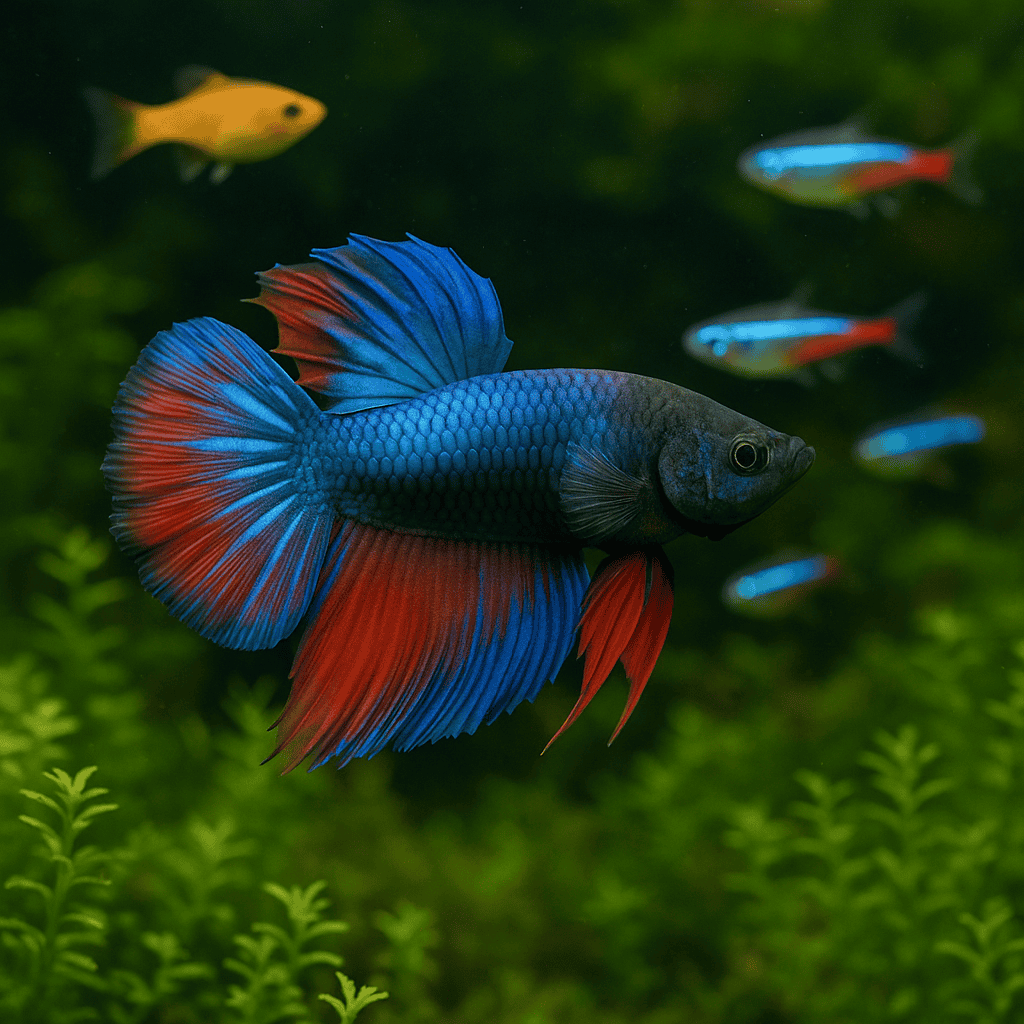
Choosing tank mates for mustard gas bettas requires careful consideration to guarantee a peaceful aquarium environment. Given their aggressive and territorial nature, housing them with other male bettas can lead to fights. Instead, peaceful mid-dwelling nanofish like ember tetras and harlequin rasboras are recommended, and they thrive in community settings without causing stress.
Additionally, bottom-dwellers such as Corydoras catfish and Kuhli loaches can coexist harmoniously as they occupy different tank levels. However, I advise caution with dwarf shrimp, as they’re at risk of being eaten. It’s essential to avoid fin-nipping or aggressive species, such as tiger barbs and fancy guppies, to maintain a tranquil habitat for your mustard gas betta and its compatible tank mates.
Conclusion
Ultimately, Mustard Gas Bettas are not only visually striking with their unique blue bodies and yellow fins, but they also exhibit intriguing behaviors that can enrich any aquarium. Their specific care requirements and temperament make them fascinating companions for aquarists.
When considering tank mates, one must be cautious to guarantee compatibility, as these fish display territorial tendencies. Overall, their vibrant appearance and engaging nature make them a valuable addition to both beginner and experienced fish keepers’ collections.