Understanding the color distribution in Butterfly Bettas is essential for breeding success. A striking 50/50 split in bi-colored patterns or a 33/33/33 ratio in three-colored ones creates attractive aesthetics in Halfmoon Betta varieties. High contrast between fins enhances the visual impact, enchanting both judges and enthusiasts.
Genetics plays a significant role in achieving these patterns, influencing clarity and color variation. By selecting ideal breeding pairs, I’ve found it’s possible to enhance these desired traits in Plakat Betta specimens. You’ll discover further insights into achieving the best results.
The Significance of Color Distribution in Butterfly Bettas
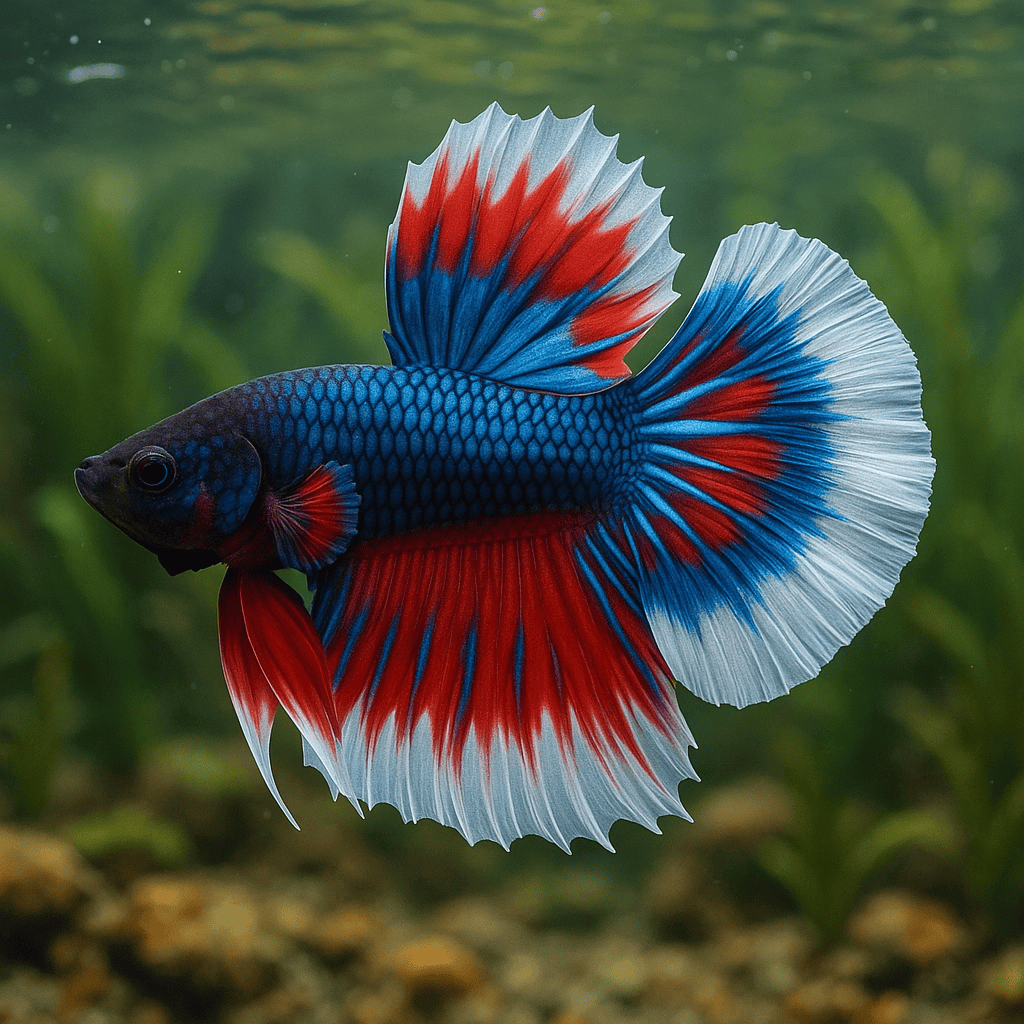
When it comes to breeding Butterfly Bettas, the importance of color distribution can’t be overstated. The Butterfly Pattern is defined by distinct color bands on the fins, where achieving a balanced distribution is essential for Betta splendens. For a two-band pattern, a perfect 50/50 split is necessary, while a three-color pattern demands an even 33/33/33 distribution.
High contrast between these colors enhances visual appeal; judges prefer bold, defined edges over subtle changes. It’s critical to avoid imbalanced band distribution or color bleeding, as these faults detract from the Betta’s show quality. Additionally, harmonious color combinations amplify the overall aesthetic, ensuring that colors complement rather than clash with marble bettas, showing particular complexity. Focusing on these factors will elevate your breeding efforts and serve the community better.
Identifying Ideal Color Patterns
To identify ideal color patterns in Butterfly Bettas, focus on the distinct color distribution that defines their visual appeal, especially when compared to wild bettas. A bi-colored Butterfly Betta should exhibit a precise 50/50 even distribution on non-paired fins, creating a striking visual effect. Alternatively, for a three-colored Butterfly, the ideal distribution is 33/33/33 on non-paired fins, ensuring symmetry and balance.
The Butterfly pattern is marked by sharply defined color bands that don’t bleed into one another, enhancing clarity. High contrast between fin bands is essential; distinct, bold colors are favored over softer changes for competitive appeal. Additionally, achieving harmonious color combinations between the body and fin bands amplifies the overall aesthetic, making the Butterfly Betta truly enchanting with a superior Betta color presentation.
Common Color Combinations and Their Appeal
Although various color combinations exist for Butterfly Bettas, some stand out due to their striking visual impact and appeal. Classic combinations like deep blue with crisp white create a stunning contrast that captures attention. Red and black pairs also exude fierce elegance, while yellow and clear combinations can be surprisingly enchanting in their simplicity when breeding bettas.
To achieve the best visual results, a bi-colored Butterfly should maintain a 50/50 distribution on non-paired fins, whereas three-colored Bettas require a balanced 33/33/33 ratio. Additionally, desirable black borders on fins enhance depth, making colors pop with an impressive tail spread. I’ve observed that harmonious color coordination between the body and fins considerably boosts the overall aesthetic, reflecting the complexities of Betta genetics.
The Impact of Genetics on Color Variation

Understanding the intricate relationship between genetics and color variation in Betta fish is essential for any breeder aiming to achieve specific aesthetic outcomes. The genetic makeup profoundly influences color distribution, with dominant and recessive alleles determining traits like the clarity of fin bands in Butterfly Bettas, particularly affecting the caudal fin. By selecting breeding pairs with distinct color patterns, breeders can increase the likelihood of offspring showcasing desirable traits, including even color distribution.
The two-band and multiple-band Butterfly patterns are particularly affected by genetic combinations, where imbalances can lead to faults in band clarity and symmetry, affecting the dorsal fin structure. Utilizing Punnett squares helps predict potential color outcomes, but I’ve learned that actual results may vary due to genetic variation and environmental factors impacting these beautiful Betta fish.
Tips for Achieving Optimal Color Distribution in Breeding
Achieving ideal color distribution in breeding Butterfly Bettas requires careful attention to specific traits in parent fish. To enhance the chances of producing vibrant offspring, focus on the following:
- Select parent fish with crisp, contrasting fin bands.
- Aim for symmetrical banding patterns in both parents.
- Utilize Punnett squares to predict genetic outcomes, noting potential variations.
- Maintain a clean, stress-free environment to promote the health of yellow fins.
Conclusion
In summary, understanding the color distribution in butterfly pattern betta fish is essential for both breeders and enthusiasts alike. By identifying ideal patterns and common combinations, we can appreciate the beauty of these fish while also recognizing the genetic factors at play.
If you’re breeding, focusing on the best color distribution can greatly enhance your outcomes. With the right knowledge and techniques, you can truly elevate the artistry of your butterfly bettas and create stunning aquatic displays.