Betta fish thrive in gentle water movement because their natural habitats consist of calm, slow-moving waters, which minimize stress. Strong currents can tire them out and encourage hiding behavior. Choosing low-flow filters, like a default filter with a pre-filter sponge, promotes better oxygen access and supports natural behaviors such as exploring and resting. By creating a peaceful environment, you help guarantee your betta’s well-being.
Understanding Betta Fish Behavior
Understanding betta fish behavior is essential for creating a suitable environment for these unique creatures. I’ve observed that betta fish thrive in slow-moving waters, so high water flow can cause stress and lead to hiding behavior. Their long fins make them less capable of swimming against harsh currents, emphasizing the need for gentle movement. Additionally, bettas are territorial and appreciate calm spots where they can rest. Observing their response near filter outputs helps gauge their comfort.
Importance of Gentle Water Movement
While creating a suitable habitat for betta fish, it is important to recognize the significance of gentle water movement. By managing water flow effectively, we can enhance their well-being and promote stress reduction. Gentle surface agitation aids respiration by facilitating gas exchange at the surface and supports live plants by distributing nutrients without creating strong currents.
Recommended Filter Types for Betta Tanks
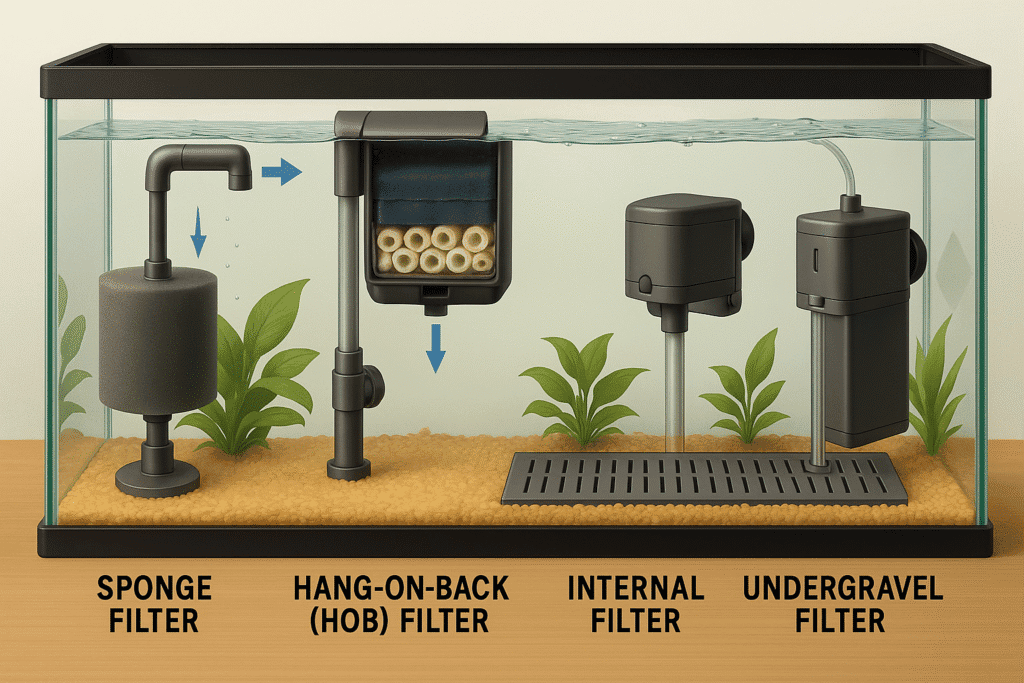
Choosing the right filter for your betta tank is essential for creating a comfortable environment that meets their specific needs. Here’s a quick comparison of recommended filter types:
| Filter Type | Key Features |
|---|---|
| Sponge Filter | Gentle water movement, excellent oxygenation; a double sponge filter maximizes biofiltration |
| Canister Filter | Adjustable flow, efficient filtration; adding a stronger filter model can improve clarity |
| HOB Filters | Can be modified for reduced flow with foam inserts |
| Internal Filter | Generally low flow, adjustable options; decent corner filters help create calm zones |
Techniques to Reduce Water Flow
To guarantee your betta feels safe and comfortable, implement baffle techniques and strategic plant arrangements to reduce water flow in the tank.
Baffle Techniques for Flow
- Use a pre-filter sponge to soften filter output and reduce water movement.
- Attach a spray bar to distribute water flow evenly, minimizing strong currents.
- Position decorative elements like rocks or live plants in front of filter outputs to diffuse flow.
Plant Arrangement Strategies
While baffle techniques help manage water flow, plant arrangement strategies can further enhance your betta’s environment. Using floating plants like duckweed or water sprite effectively diffuses surface movement and supports cherry shrimp habitats by providing shelter.
Enhancing Plant Growth in Low-Flow Environments

In low-flow environments, plants like Anubias and Bucephalandra flourish as they thrive in gentle water movement that promotes healthy growth without stress. Here are some ways to enhance plant growth:
- Incorporate floating plants to diffuse water movement and provide shade.
- Choose species like Cryptocoryne that stabilize the substrate and support beneficial microorganisms.
- Utilize hardscape elements like rocks or driftwood to create sheltered areas around plants.
- Minimize water flow to guarantee better nutrient absorption from the substrate.
Monitoring Water Quality and Oxygen Levels
Monitoring water quality and oxygen levels is essential for keeping betta fish healthy and happy. I test regularly to maintain the right parameters, ensuring ammonia and nitrite levels stay at zero while nitrates remain in check. Ensuring proper oxygenation through gentle aeration can prevent gasping for air, promoting a vibrant and active life.
Importance of Oxygenation
Ensuring your betta fish thrive hinges on maintaining well-oxygenated water, as these vibrant creatures possess a unique labyrinth organ that enables them to breathe air directly from the surface. Use an air pump or air stone to create surface agitation and maintain proper filtration to keep the tank environment clean and balanced.
Regular Water Testing

Regular water testing is crucial for maintaining a healthy environment for your betta fish, especially since these delicate creatures are sensitive to changes in water quality. Ammonia should be at zero ppm, while nitrates should range between 10–25 ppm for peak health.
Creating a Balanced Ecosystem for Bettas and Plants
Creating a balanced ecosystem for bettas and plants is vital to promote their health and well-being. By focusing on gentle water movement and proper filtration, we can create a nurturing environment:
- A default filter guarantees gentle water movement while providing effective filtration.
- Aquatic plants like Anubias and Cryptocoryne offer shelter and improve water quality.
- Calm zones can be established with hardscape elements to redirect flow.
- Regular monitoring of water parameters is critical to maintaining ideal conditions for both bettas and plants.
Conclusion
In summary, creating a gentle environment for your betta is essential for their well-being. By choosing the right aquarium filter and implementing techniques to reduce water movement, you can foster a thriving habitat. Remember, a balanced ecosystem with healthy plants not only supports your fish but also enhances their quality of life. With a little effort, you can provide the perfect home for your aquatic companion.