The King Betta fish, or giant bettas, catch my attention with their impressive size of 4 to 6 inches and their remarkably shorter fins that resemble Plakat bettas. This unique body structure results from selective breeding aimed at enhancing their ornamental appeal.
With their vibrant colors and patterns, these fish stand out in the aquarium hobby. If you’re curious about their behavior, care requirements, and dietary needs, you’ll find valuable insights ahead.
Overview of King Betta Fish
The King Betta fish stands out in the betta family due to its striking appearance (larger size) and robust build. As a larger variant, these fish can grow between 4 to 6 inches, remarkably surpassing the average size of 2.5 inches typical of standard bettas, also known as regular bettas.
Often labeled as “giant bettas,” their size results from selective breeding practices aimed at enhancing their physical traits. Their vibrant colors and unique patterns make them a popular choice for the aquarium hobby. With a lifespan of 2 to 3 years, newer bloodlines may even influence their longevity, ensuring they remain enchanting additions to any aquatic setup.
Origins and Background of King Betta
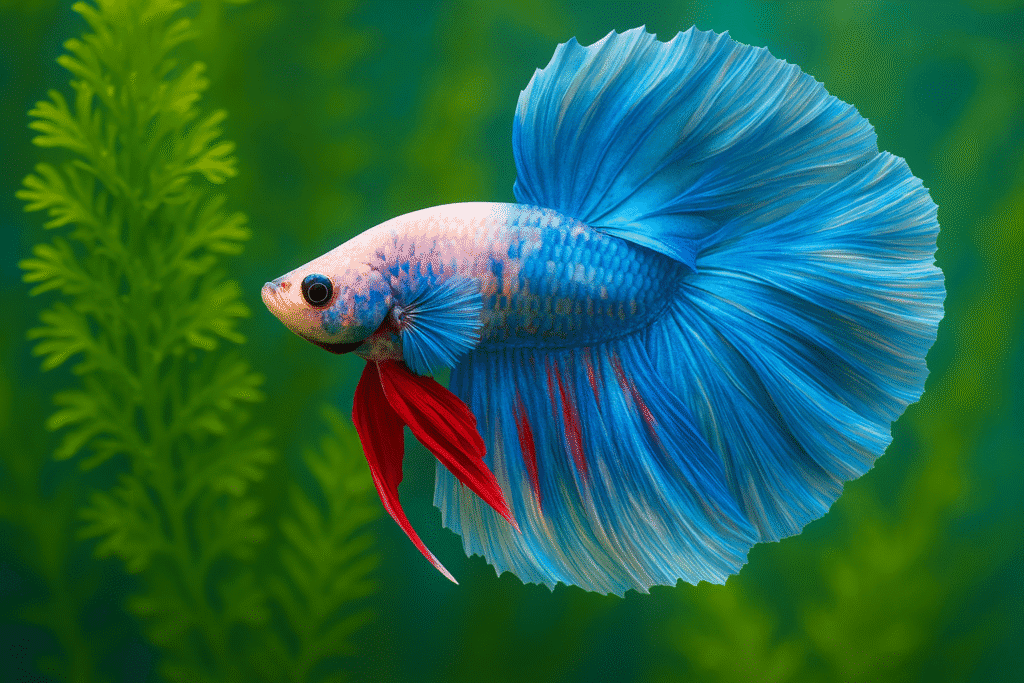
King Betta fish originated from selective breeding and primarily developed from fighting plakat lineage in Thailand. Unlike their wild counterparts, these fish are crafted for their striking colors and compact fin structures, which reflect their heritage. As we explore their habitat and distribution, it’s crucial to understand how these breeding practices influence their behavior and needs.
Selective Breeding History
While exploring the origins of the King Betta fish, it’s essential to recognize that their development stems from selective breeding practices aimed at enhancing specific physical traits. Originating in Thailand, these fish were primarily derived from the fighting plakat lineage of Betta splendens, focusing on creating larger bodies and shorter fins for ornamental purposes.
This controlled breeding resulted in King Bettas typically growing between 4 to 6 inches. The genetic diversity achieved through selective breeding has led to a stunning array of vibrant colors and unique fin patterns, making them visually striking aquarium specimens. Unlike their wild counterparts, King Betta fish exist solely as a result of these intentional breeding efforts, showcasing the beauty that careful selection can yield.
Habitat and Distribution
Originating from Thailand, King Betta fish thrive in carefully controlled environments that replicate their natural habitat. These stunning fish, a product of selective breeding, aren’t found in the wild. Instead, their lineage comes from fighting plakat Betta splendens, bred mainly in captivity to enhance their larger bodies and vibrant colors.
To guarantee their well-being, King Bettas require a minimum tank size of 5 gallons, mimicking tropical conditions akin to their native environment. The focus on fin development during breeding further differentiates them from standard bettas, also known as regular bettas, which typically average around 2.5 inches. Consequently, understanding their habitat and needs is essential for those who wish to care for these unique and visually enchanting fish.
Distinctive Characteristics of King Betta
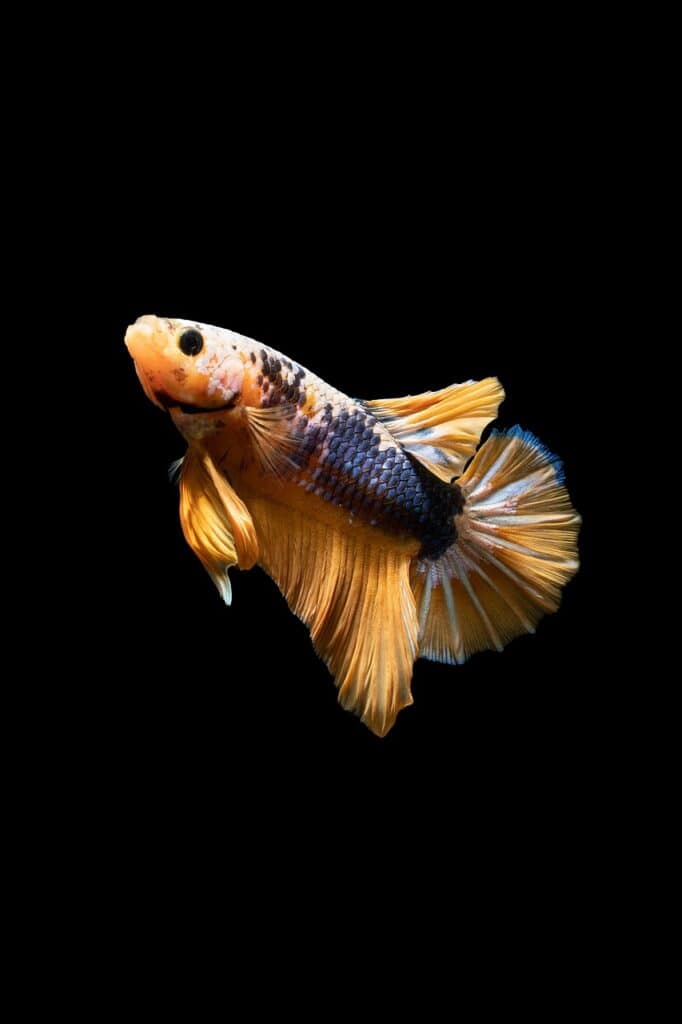
The King Betta fish stands out in the world of aquatics due to its impressive size and distinct physical traits. Typically growing to 4–6 inches, they are considerably larger than standard bettas, which average around 2.5 inches. Unlike their longer-finned counterparts, King Bettas possess shorter fins, resembling the plakat form and blade swim fins. Their vibrant coloration features striking hues like red, blue, and green, often displaying unique patterns such as koi and half-moon. Bred through selective breeding practices, these fish retain characteristics from their fighting plakat lineage. Their fin structure, notably with a flat edge, can influence their natural race speeds in strong currents. While their aggressive temperament mirrors that of other betta varieties, careful consideration of tank mates is essential to minimize territorial disputes and guarantee a harmonious environment.
Behavior and Temperament of King Betta
King Betta fish exhibit fascinating behavior patterns that can be both intriguing and challenging for aquarists. Known for their aggressive and territorial nature, especially among males, king bettas often prefer solitude and can be quite non-social. However, they can be compatible in community tanks with a careful selection of tank mates (blade swim fins). It’s vital to understand that individual personality varies greatly; some king bettas display docile behaviors depending on their environment and tank conditions.
Providing adequate hiding spots is essential, as these fish appreciate security and can experience stress without adequate cover. By recognizing their unique behavior, including their wider kick in swimming, we can create a nurturing habitat that respects their territorial instincts while promoting a balanced aquarium community for both King bettas and regular bettas.
Diet and Nutrition for King Betta
While ensuring a balanced diet for your King Betta, you’ll find that variety is key to their health and well-being. A diverse diet that includes high-quality pellets, live foods, and frozen foods is essential for promoting vibrant colors and active behavior.
I typically feed my King Betta 8-10 pellets daily. Monitoring their eating habits closely allows me to adjust portions based on their activity level and health, ensuring they thrive in their environment.
Care and Requirements for King Betta

To guarantee your King Betta thrives, it’s important to understand their specific care requirements. A minimum tank size of 5 gallons is significant, but I recommend 10 gallons to allow ample swimming space. Maintaining a water temperature between 78°F and 82°F, along with a pH level between 5 and 7.5, is crucial for their health. Regular water changes and a reliable filtration system guarantee stable water quality, water resistance is less of a concern, and support ideal propulsion in their swimming.
Additionally, a varied diet of high-quality pellets, supplemented with live or frozen foods, supports their nutritional needs and experienced swimmers among aquatic species. Don’t forget to include hiding spots with aquatic plants and decorations; these help reduce stress and promote natural behaviors in King Bettas, ultimately enhancing their overall quality of life. Even dryland training is sometimes recommended by swim coaches.
King Betta Fish Varieties and Appearance
Understanding the care of King Betta fish naturally leads to appreciating their remarkable varieties and appearances. With their larger bodies and shorter fins, these fish showcase a unique charm. I find it fascinating how selective breeding has produced diverse color combinations and fin shapes, enhancing their visual appeal.
Here’s a breakdown of some popular varieties:
Betta Fish Varieties: Colorations and Fin Shapes
| Variety | Distinct Colorations | Fin Shapes |
|---|---|---|
| King Koi | Orange, white, black | Short and rounded |
| Half-Moon | Deep blue, green, red | Semi-circular |
| Dragon | Metallic hues | Short and wide |
| Butterfly | Multicolored patterns | Elegant and flowing |
| Plakat | Solid vibrant hues | Compact and agile |
Each type reflects the enchanting beauty of king betta fish, making them a delight for enthusiasts and casual keepers alike.
Conclusion
In conclusion, King Betta fish are a fascinating and enchanting species that stand out due to their larger bodies and unique fin structures. Understanding their origins, behavior, and care requirements is essential for any hobbyist. By providing a suitable environment and proper nutrition, you can guarantee that these stunning fish thrive.
Whether you’re drawn to their beauty or their intriguing personalities, keeping a King Betta can be a rewarding experience for any aquarist accustomed to regular bettas and Giant bettas.