In an analysis of Betta fish chromosome studies, I found that domesticated varieties show markedly reduced genetic diversity compared to wild populations, with an 80-fold decrease in rare alleles. The chromosome-level assembly revealed a genome size of 465.24 Mb and identified nearly 3.4 million SNPs across various Betta strains.
The impact of selective breeding on aggression and physical traits becomes evident through this genetic analysis, leading to critical insights into their evolutionary significance in the Siamese fighting fish model. There’s much more to uncover.
Overview of Betta Fish Genetic Diversity

As I explore the genetic diversity of Betta fish, it’s evident that domestication has profoundly altered the genetic landscape of Betta species. Domesticated Betta fish exhibit markedly reduced genetic diversity compared to their wild counterparts. Nucleotide diversity shows domesticated fish at 0.0003, while wild populations reach 0.0025.
Genetic bottlenecks during domestication led to an 80-fold decrease in rare single nucleotide polymorphisms, with domesticated fish retaining only 4,290 rare alleles versus 349,824 in the wild.
Chromosome-Level Assembly and Annotation
While exploring the chromosome-level assembly and annotation of Betta splendens, I saw that the genome has been meticulously assembled to 21 chromosomes with 99.93% coverage and a total size of 465.24 Mb. Six DNA and five RNA-seq libraries generated 52.34 Gb of clean reads via the BGISEQ-500 platform, and the de novo assembly yielded an N50 scaffold size of 949.03 Kb. This detailed assembly also permitted analysis of variation in body size across strains.
SNP and Indel Variation in Betta Varieties
In resequencing five distinct Betta varieties, I discovered approximately 3.4 million SNPs and 27,305 indels. Domesticated fish show a concerning loss of diversity, with nucleotide diversity at 0.0003 compared to 0.0025 in wild populations. I also identified a sex-determination locus on chromosome 2 that correlates with sex-specific patterns.
Genetic Control of Aggression and Territorial Behavior
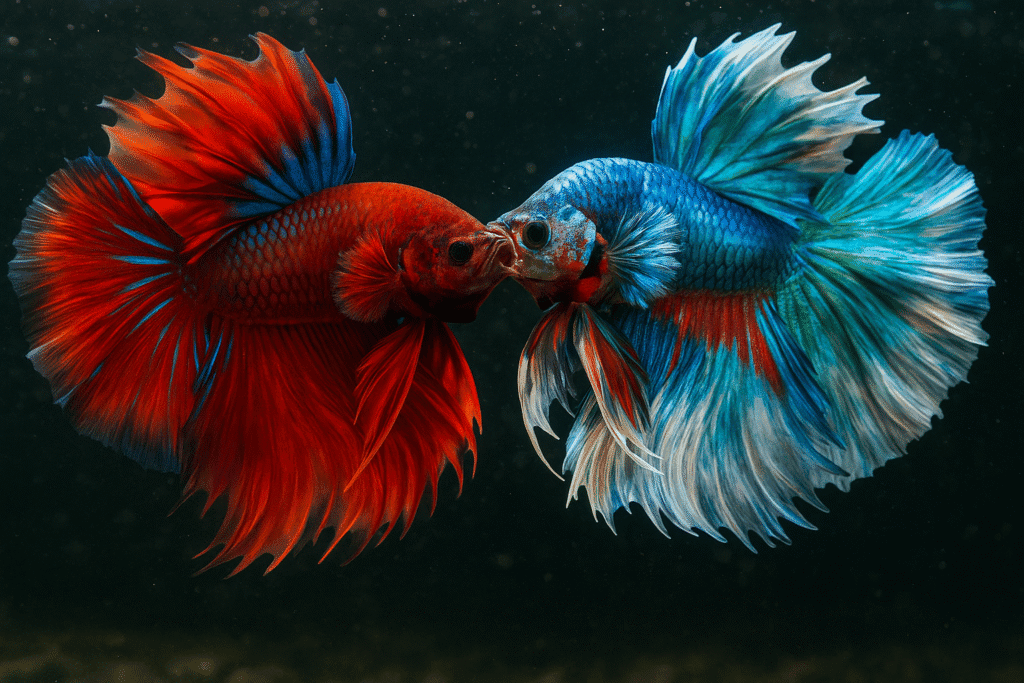
I investigated the genetic control of aggression and territorial behavior in Betta splendens by measuring traits like gill flaring in experimental setups. Genetic studies highlight loci linked to aggression and territoriality, with genes such as CACNB2 and DISC1 playing key roles. These findings mirror genetic factors implicated in other vertebrate behavioral traits.
Insights From CRISPR/Cas9 Editing
Through CRISPR/Cas9 editing experiments, I demonstrated the knockout of genes such as alkal2l, bco1l, and mitfa, directly impacting pigmentation and viability. A proof-of-principle knock-in of a fluorescent protein into the mitfa locus was performed, and a bicistronic plasmid for heart-specific expression of red fluorescent protein was created. Microsatellite markers were also tested to track lineage and confirm successful edits.
Population Structure Analysis of Domesticated vs. Wild Betta
I conducted admixture analysis and observed three distinct genetic clusters among domesticated Betta fish, reflecting a complex breeding history influenced by wild populations. Nucleotide diversity and rare allele counts were drastically reduced, illustrating genetic bottlenecks from selective breeding in Betta species.
Genetic Divergence Insights
While analyzing the divergence between domesticated and wild Betta splendens, I observed that selective breeding has significantly shaped their genetic architecture. Nucleotide diversity is 0.0025 in wild fish versus 0.0003 in domesticated strains, and domesticated fish exhibited 80-fold fewer rare SNPs due to bottlenecks.
Admixture Analysis Findings
I found that principal component and admixture analyses revealed distinct genetic clusters and significant divergence between domesticated and wild populations. Reductions in nucleotide diversity and rare alleles were quantified, with unbiased metrics of 0.0004 for domesticated versus 0.0033 for wild fish.
Trait Variation Patterns
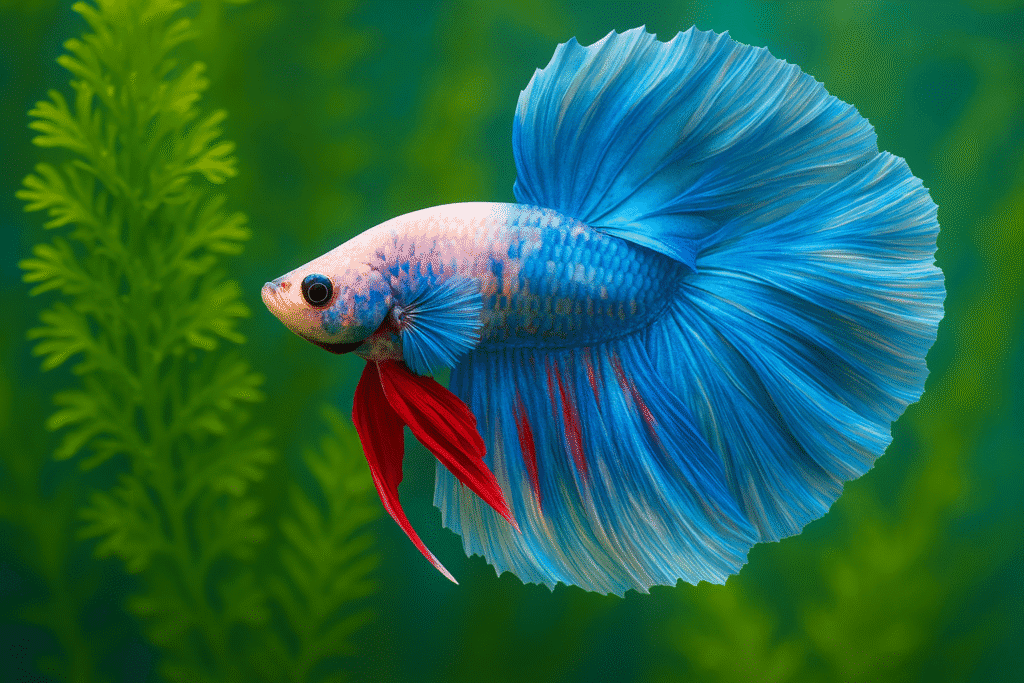
I evaluated how selective breeding shaped trait variation, noting clusters targeting fin shape and color traits. Pectoral fin outgrowth was particularly variable, and coloration patterns exhibited a wide range of pigment distributions. Nucleotide diversity varied significantly between domesticated (0.0003) and wild (0.0025) populations.
Impacts of Selective Breeding on Genetic Health
In examining the impacts of selective breeding on Betta fish, I find that genetic bottlenecks have severely limited genetic diversity. The drastic reduction in rare alleles raises concerns about adaptability, disease vulnerability, and long-term viability.
Evolutionary Significance of Color and Fin Morphology
As we explore the evolutionary significance of color and fin morphology in Betta splendens, I note these traits have been shaped by both natural and artificial selection. Loci such as mitfa influence pigmentation and KCNJ15 is associated with the long-fin phenotype. However, selective breeding reduces genetic diversity and may jeopardize the adaptability of these traits.
Future Directions in Betta Fish Genetic Research
In exploring future directions in Betta fish genetic research, I see significant potential in utilizing advanced genetic tools like CRISPR/Cas9 to dissect the genetic basis of complex traits and behaviors. Genome-wide association studies will further illuminate connections between genotype and phenotype, improving conservation and breeding strategies.
Resources for Betta Fish Genomic Studies
I recommend the GigaScience Database (GigaDB) for complete genome assemblies and SNP data and the NCBI BioProject PRJNA416843 for supplementary materials. Comparative genomic analyses detailing gene family expansions further support this research.
Conclusion
In summary, my exploration of Betta fish chromosomes reveals the profound effects of selective breeding on genetic diversity, the power of genome assembly for functional insights, and the potential of advanced genetic tools to advance our understanding of this model organism.