When I think about creating a thriving betta tank, incorporating low-light plants stands out as a game changer. These plants, like Anubias and Java Fern, mimic the natural habitats of bettas, providing a comforting environment that reduces stress. They’re fantastic at improving water quality by absorbing excess nutrients, which prevents algae growth and helps maintain a balanced ecosystem. Plus, most low-light plants require minimal maintenance, making them perfect for beginner aquarists.
Ultimately, adding low-light plants not only enhances the aesthetic appeal of your betta fish tank but also creates a richer, more engaging habitat that benefits your fish’s overall health and well-being while fostering a natural environment.
Top Low-Light Plant Choices for Betta Fish
When selecting low-light plants for your betta tank, focus on traits like hardiness, low maintenance, and their ability to enhance aesthetics in light tanks. Each of the top choices provides shelter for your betta and contributes to a thriving tank environment. Let’s explore these ideal plants and their specific care requirements to help create a beautiful underwater habitat.
Ideal Plant Traits
Since creating a comfortable and stimulating environment is essential for betta fish, choosing the right low-light aquatic plants can greatly enhance their habitat. Ideal traits include adaptability and low maintenance, as seen in Anubias Nana and Java Fern, which thrive in minimal lighting. I’ve found that Cryptocoryne Wendtii offers excellent hiding spots, which betta fish appreciate for reducing stress.
Marimo Moss Balls not only look great but also provide resting spots for your bettas. Additionally, fast-growing Water Wisteria helps improve tank water conditions, while floating plants like Hornwort and Amazon Frogbit add shade and surface cover. These traits guarantee a healthy, vibrant environment for your beloved fish.
Care Requirements Overview
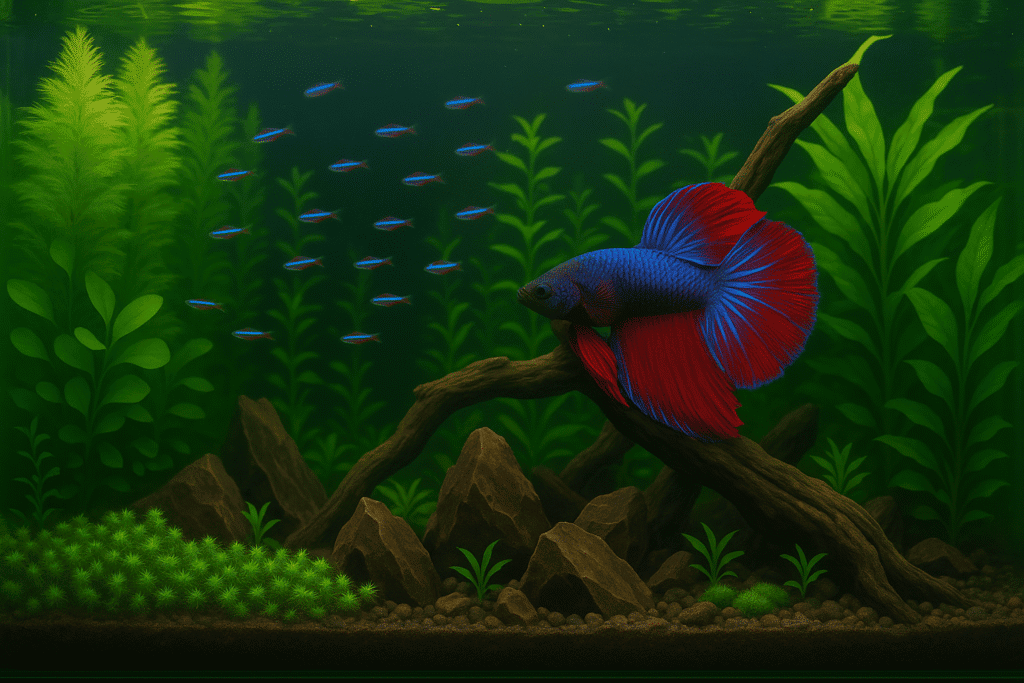
I’ve found Marimo Moss Balls are an easy plant that thrives in low light, providing a perfect resting spot for your betta while needing minimal maintenance. Anubias Nana is another hardy choice; it grows well in low light and can be attached to rocks or driftwood, offering essential shelter. I monitor water conditions to ensure all plants stay healthy.
Java Fern excels in low-light conditions, requiring little care while providing excellent cover. Cryptocoryne Wendtii adapts smoothly to varying light, creating hiding spots for your betta and preventing crypt melt. Finally, Hornwort, a fast-growing floating plant, thrives in low light, improving water quality while offering shade. Your betta will appreciate it!
Aesthetic Benefits Explained
Adding low-light plants to your betta tank not only creates a stunning visual display but also fosters a healthier environment for your fish. Plants like Marimo Moss Balls not only enhance aesthetic appeal with their unique form but also serve as cozy resting spots for bettas. I often admire the contrast of red root floaters against broad leaves in shaded areas.
The grass-like Hygroryza Aristata mimics natural habitats, adding visual interest while inviting exploration. Floating Antler Ferns bring elegance with their delicate leaves, while Giant Willow Moss creates an intricate playground for your fish. Together, these plants elevate the overall beauty of your aquarium, ensuring a mesmerizing environment for your betta.
Care and Maintenance of Low-Light Aquarium Plants
When it comes to caring for low-light aquarium plants, choosing the right varieties is just the beginning. I find that regular pruning and understanding their fertilization needs are key to maintaining a thriving aquatic environment. By keeping an eye on nutrient levels and plant health, I can guarantee my betta tank remains vibrant and beautiful.
Choosing Suitable Plant Varieties
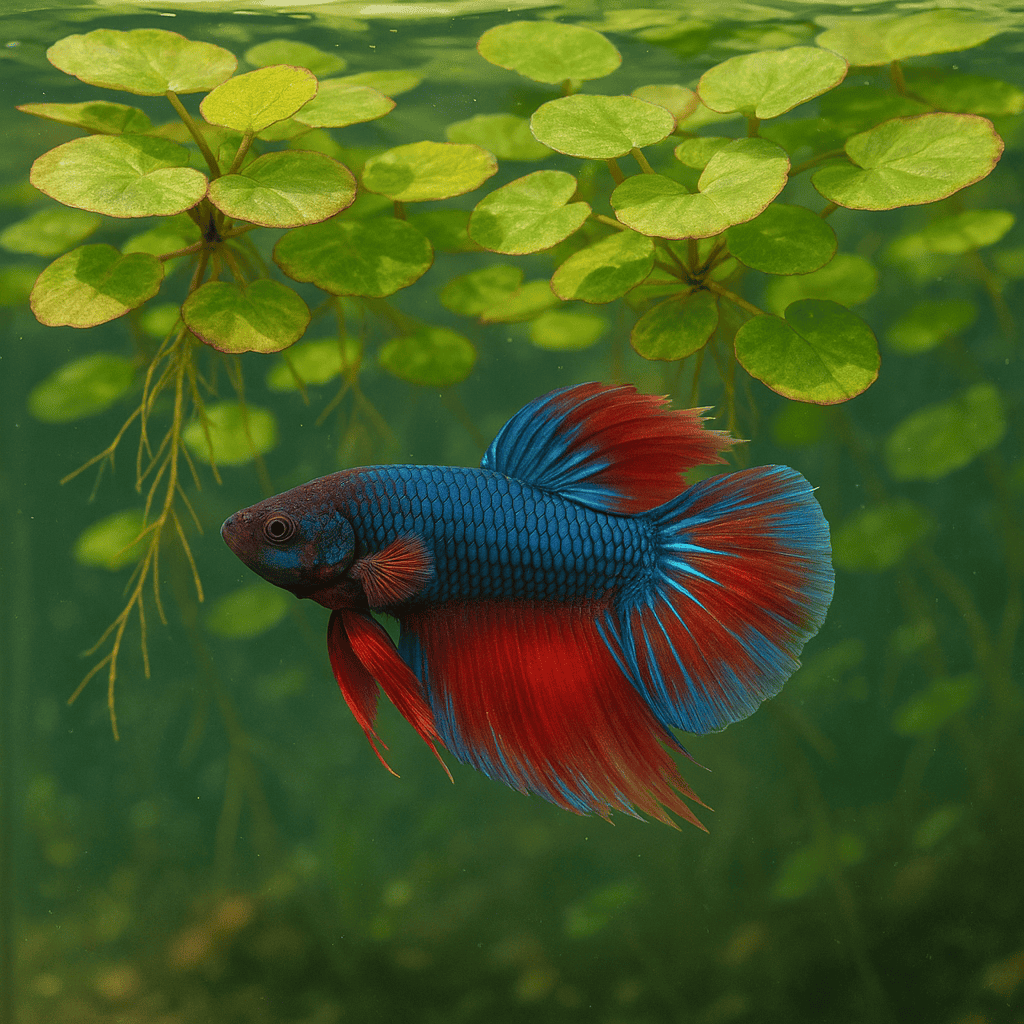
While selecting the right plant varieties for your betta tank, it’s essential to prioritize low-light options that not only thrive in subdued lighting but also complement the unique needs of your aquatic pets. I recommend considering Java Fern, Anubias, and Cryptocoryne, as they flourish in low-light environments and require minimal maintenance. These plants are easy to propagate, making them perfect for those looking to expand their aquatic garden effortlessly.
Additionally, varieties like Hornwort and Water Wisteria can enhance water quality by absorbing excess nutrients, benefiting the entire tank ecosystem. When placing these plants, remember that attaching them to rocks or driftwood provides essential shelter for your bettas, promoting their natural behaviors and reducing stress.
Regular Pruning and Maintenance
Pruning your low-light aquarium plants is vital for maintaining a healthy and vibrant tank environment. Regular pruning encourages healthy growth, keeps plants in shape, and prevents overcrowding that can block light for other plants. I recommend trimming dead or yellowing leaves promptly to promote overall plant health and avoid decay, which can affect water quality. Typically, I prune every 4–6 weeks, depending on growth rates and tank conditions.
Using clean, sharp scissors is important to prevent the introduction of harmful bacteria. Consistent maintenance, including monitoring plant health and trimming, guarantees peak nutrient absorption, contributing to a stable and inviting habitat for your betta fish.
Fertilization and Nutrient Needs
Fertilizing low-light aquarium plants is vital for their growth and overall health, especially in setups where light and nutrients may be limited. I’ve found that using liquid fertilizers works wonders, providing essential nutrients without overwhelming the ecosystem. For heavy root feeders like Cryptocoryne and Echinodorus, root tabs can be a game changer.
Regular water changes are also important; they maintain water quality and help prevent algae growth while supporting a healthy growth rate. I monitor for signs of nutrient deficiency, like yellowing leaves, and adjust fertilization accordingly to maintain plant vigor.
Creating a Natural Habitat With Live Plants
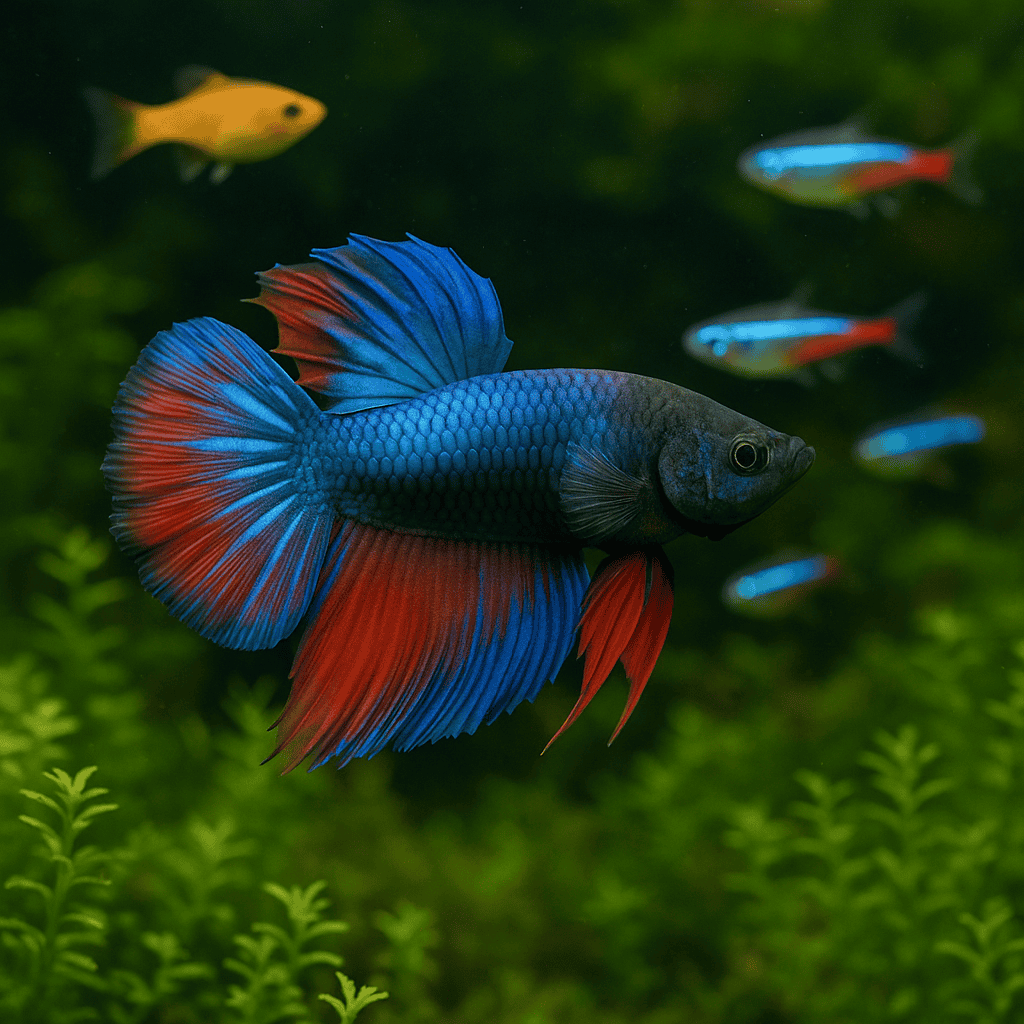
Creating a natural habitat with live plants not only enhances the visual appeal of your betta tank but also provides essential benefits for your fish’s well-being. I enjoy the lush green leaves of Anubias Nana, creating cozy resting spots, while Java Fern and Cryptocoryne Wendtii offer natural cover that reduces stress. Floating plants such as Red Root Floaters improve water quality and add diversity, while Hornwort and Amazon Frogbit contribute to a varied landscape.
| Plant Type | Benefits | Low-Light Requirement |
|---|---|---|
| Marimo Moss Balls | Aesthetic appeal | Yes |
| Anubias Nana | Resting spots | Yes |
| Java Fern | Natural cover | Yes |
| Hornwort | Encourages exploration | Yes |
| Red Root Floaters | Improves water quality | Yes |
Enhancing Betta Fish Behavior With Plant Selection
While choosing the right plants for your betta tank, keep in mind how they can greatly enhance your fish’s behavior. I’ve noticed that selecting low-light plants like Marimo Moss and Java Fern creates a comfortable environment, encouraging natural behaviors such as exploring and resting. Hiding Spots: Plants like Anubias and Red Root Floaters provide essential cover, reducing stress and offering security. Bubble Nests:
Incorporating Anubias enhances visual appeal while supplying spaces for bettas to build bubble nests, promoting reproductive behaviors. Activity Levels: Dense foliage from Water Wisteria allows bettas to swim and interact, stimulating mental and physical activity.
Troubleshooting Common Issues With Low-Light Plants
I recommend maintaining water quality through regular changes and good circulation to prevent algae growth. If you notice yellowing leaves or stunted growth, your plants may be facing nutrient deficiencies; adding root tabs or liquid fertilizers can rejuvenate them.
Additionally, if your plants appear leggy, consider adjusting their lighting to a low to moderate source for 8–10 hours daily. Finally, repositioning struggling plants within the tank can cater to their specific light needs, ensuring a thriving aquatic ecosystem.
Conclusion
I encourage you to incorporate low-light plants into your betta tank to enhance both the aesthetic and the well-being of your fish. Not only do these plants thrive in low light, but they also create a natural habitat that encourages healthy behaviors.
With proper care and the right selection, you’ll find that your betta thrives in a lush, vibrant environment. So, immerse yourself and transform your tank into a flourishing underwater oasis that both you and your betta will love!