As a betta owner, I’ve learned that secure tank covers are essential for preventing jumps and escapes. Bettas often leap due to excitement or stress, especially in poorly maintained environments. Mesh or acrylic covers eliminate gaps while allowing light and airflow. I make sure to maintain these covers regularly to guarantee their effectiveness and create a comfortable habitat with hiding spots to reduce incidents.
Understanding Betta Jumping Behavior
Have you ever wondered why betta fish seem to leap out of their tanks? I’ve noticed this behavior often occurs when they’re excited or startled. Environmental stressors like poor water quality or abrupt changes can escalate jumping, and some types—particularly plakats—are more prone to it. I’ve observed that feeding times can trigger jumps as they instinctively leap to catch food. To minimize this risk, maintaining stable water quality and providing hiding spots is essential.
Importance of a Secure Tank Cover
Understanding betta jumping behavior highlights the necessity of effective tank management, particularly regarding a secure cover. A lid is crucial for preventing escapes, as even a small gap can lead to injury or death. Bettas, especially plakats, are notorious jumpers, so a cover is vital for their safety. I always check my tank lid for snugness and durability.
| Benefit | Description | Impact on Bettas |
|---|---|---|
| Prevents Escapes | Eliminates gaps for jumping out | Reduces injury risk |
| Enhances Security | Covers plus floating plants create a safe space | Lowers stress levels |
| Peace of Mind | Fewer jumping incidents with a proper lid | Boosts owner confidence |
Types of Tank Covers for Bettas
When choosing a cover for your betta tank, I find that mesh covers offer excellent breathability and light penetration while keeping fish safe. Acrylic sheets provide clear visibility and security. For a customized approach, lids made from egg crate material can fit specific tank sizes effectively.
Mesh Covers Benefits
I find mesh covers stand out for their unique benefits. They allow light penetration and airflow while preventing jumps. Mesh covers also reduce evaporation, helping maintain stable water parameters.
| Benefit | Description |
|---|---|
| Light Penetration | Allows natural light for plant growth |
| Custom Fit | Adapts to various tank sizes and shapes |
| Evaporation Reduction | Helps maintain stable water parameters |
| Pet Protection | Deters birds and other pets from accessing tank |
Acrylic Sheet Options
Acrylic sheets offer a practical and visually appealing solution. I’ve found these covers prevent escapes and provide a clear view of the tank. Key benefits include:
- Available in thicknesses from 5 mm to 10 mm for durability
- Custom-cut options for a perfect fit on rimless tanks
- Secured with clips or hinges for a tight seal
- They are less prone to shattering than glass, making them safer in homes with pets or children
- Its lightweight nature allows easy installation
Custom Lid Solutions
Custom lids are ideal for tailored needs. I’ve used mesh combined with egg crate and fine netting to create durable, breathable covers for rimless tanks. Acrylic or perspex lids secured with clear clips also work well. Incorporating floating plants adds a natural barrier that enhances security and aesthetics. Regular maintenance ensures these solutions continue to protect your bettas.
Recommended Materials for Betta Tank Covers
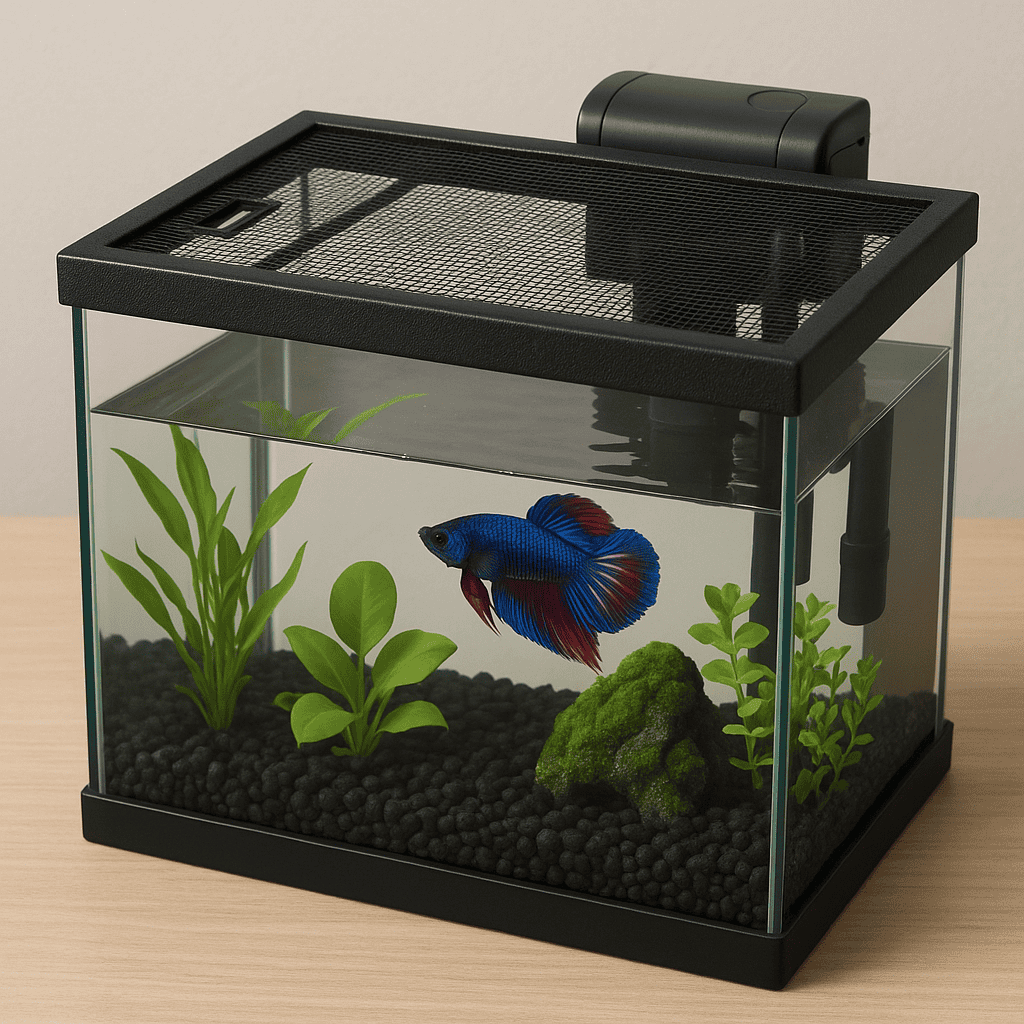
Selecting the right material is essential for safety and well-being. Here are some options I recommend:
- Nylon mesh: Durable, breathable, and tear-resistant
- Acrylic sheets: Thick (around 10 mm) for sturdiness and minimal evaporation
- Egg crate: DIY covers using fine netting balance visibility and safety
- Transparent perspex: Minimal light obstruction but may need reshaping over time
- Marine mesh lids: Designed for aquariums to allow air circulation while preventing jumps
Tips for Installing and Maintaining Tank Covers
I recommend proper installation and regular maintenance to ensure effectiveness. Make sure the cover fits snugly without gaps, as small openings can still allow escapes.
| Tip | Details |
|---|---|
| Installation | Use adjustable mesh or acrylic covers tailored to fit |
| Check Regularly | Inspect for wear and tear to guarantee effectiveness |
| Clean | Remove algae buildup to maintain airflow and visibility |
| Monitor Water Level | Keep water level consistent to avoid dislodging |
Enhancing Tank Environment to Reduce Jumping
To reduce jumping, I recommend incorporating floating plants, which provide security and diffuse light. Creating hiding spots with decor like driftwood and rocks enriches the habitat and lowers stress levels. Addressing these factors greatly minimizes unexpected leaps.
Floating Plants Benefits
Floating plants play a key role in enrichment. I’ve found the following:
- Create a dense cover at the surface for security
- Diffuse light to lower stress triggers
- Improve water quality by absorbing excess nutrients
- Encourage natural foraging behavior, reducing boredom
- Thrive in various conditions with minimal upkeep
Hiding Spots Importance

Creating at least three distinct hiding spots enhances security. Bettas feel safer with plants, wood, and rocks to establish territories. I often rearrange these spots to keep the environment engaging and promote natural behaviors, further reducing stress and jumping.
Case Studies: Bettas and Jumping Incidents
In observing my bettas, I noticed jumps were common but often preventable. Key insights include:
- Environmental stressors like poor water quality trigger jumps
- Species such as Betta imbellis slip through small openings
- Even covered tanks can have gaps that lead to escapes
- Floating plants serve as effective deterrents
- Regular tank monitoring is crucial
Best Fish Practices for Open-Tank Environments
Maintaining an open-tank setup requires best practices to keep bettas safe. I recommend:
- Regular water changes and parameter checks to lower stress
- Adequate hiding spots and floating plants for security
- Mesh covers that allow light while preventing jumps
- Selecting less jump-prone species to minimize escape risks
Conclusion
Securing a proper tank cover is essential to prevent betta jumps and escapes. By understanding their behavior, choosing suitable materials, and ensuring correct installation, you can create a safer habitat. Enhancing the environment with plants and hiding spots further reduces jumps, contributing to your betta’s health and happiness. Prioritize these measures for a thriving aquatic home.