When training betta fish to jump, I start with food just 1-2 inches above the water’s surface. This height keeps fish safe and comfortable. The height can be gradually increased to a maximum of 2-3 inches, always monitoring for signs of stress, like clamped fins or lethargy.
I also use a feeding stick to make this process smooth and maintain a calm environment. There’s a lot more to reflect on for effective training techniques.
Understanding Betta Jumping Behavior
While many aquarium enthusiasts might be surprised by a Betta Splendens’ propensity to leap, it’s crucial to understand that this behavior stems from their natural instincts. In the wild, these fighting fish jump to escape drying ponds or catch insects.
Under ideal conditions, a betta can learn to jump several inches, typically 2 to 3 inches, with male bettas often achieving greater heights than females. Factors like age, health, and water quality greatly influence their ability to jump. Stress from poor tank conditions can trigger this behavior as they seek an escape route.
By providing proper care, including clean water and a secure tank lid, you can prevent unwanted jumps while encouraging your Betta’s natural instincts. Look for signs of stress to maintain a healthy environment.
Preparing for Jump Training
Understanding your Betta’s natural instincts sets the foundation for effective jump training. Before starting, ensure the Betta is well-acclimated to its environment, allowing at least a week for it to recognize you and feel comfortable.
During training sessions, I use a feeding stick to gradually raise the height of the food above the water’s surface, encouraging the Betta to stretch and jump over time. It’s important to make certain that the tank has a secure lid, leaving only an inch or two of space at the top for safety.
Conducting training in a calm environment minimizes stress, and sessions should be kept short—about 3 to 5 minutes. Finally, I closely monitor the Betta’s health for any signs of stress, as poor water quality can significantly impact training success.
Building Trust Through Hand-Feeding
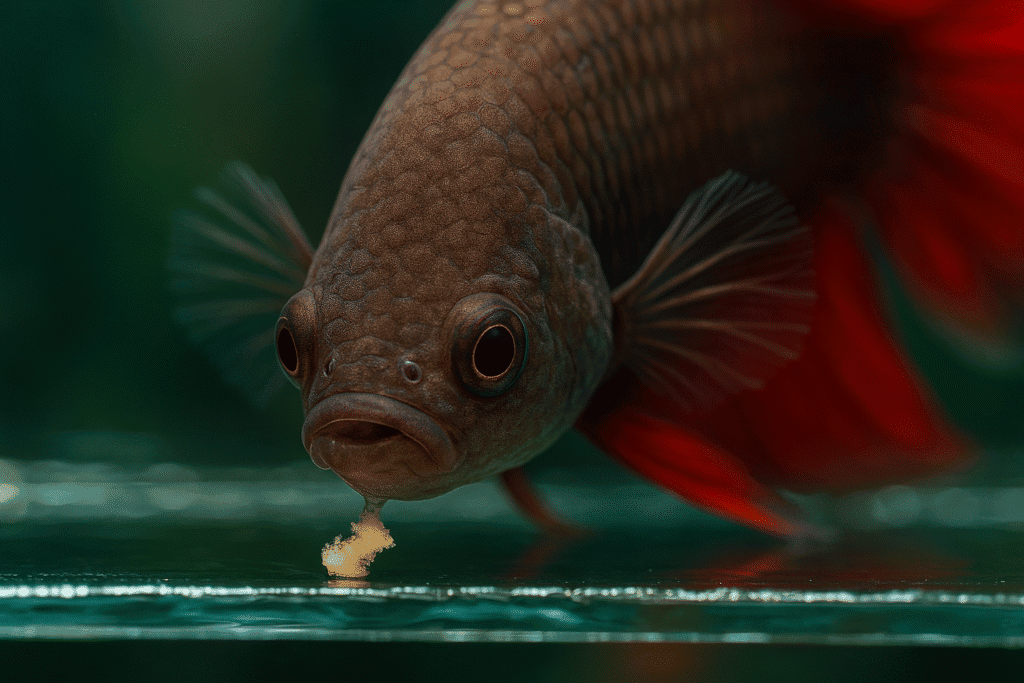
To effectively build trust with your betta fish, I recommend establishing a consistent feeding routine. This helps your Betta associate you with positive experiences. Hand-feeding can be done by offering food directly from your fingers just below the water’s surface, allowing your Betta to approach at its comfort level.
Patience is key, as some bettas may initially hesitate to take food from your hand, with female Betta often being more cautious than males. Monitor signs of enjoyment, like enthusiasm to eat and active participation, while watching for stress behaviors such as hiding.
Once your Betta seems comfortable, you can gradually raise the food above the water’s surface to encourage jumping. This technique not only enhances trust but also makes training more engaging and effective.
Starting With Low Heights
After establishing trust through hand-feeding, it’s time to introduce jumping training. I recommend starting with a height of around 1-2 inches above the water’s surface. This low height encourages the Betta to jump without overwhelming it, reducing the risk of stress.
To implement this training routine, hold food just above the water to motivate your Betta to stretch upwards. It’s vital to monitor your fish’s response closely; if it seems reluctant or stressed, adjust the height or technique accordingly.
Practice this a few times a week to reinforce the behavior while avoiding fatigue. By taking it slow, you build your Betta’s confidence and guarantee a successful shift into more advanced jumping techniques later on.
Gradually Increasing Jump Height
As you become more comfortable with your Betta’s jumping abilities, it’s important to gradually increase the jump height to encourage further development without overwhelming your fish. Start by holding food just above the water’s surface to entice the Betta, and incrementally raise the height over several training sessions.
Limit these sessions to 3-5 minutes to keep your Betta engaged and stress-free. Aim for a maximum jump height of 2-3 inches above the water. Pair a verbal cue, like “Jump!” or “Up!”, with the action to help your fish follow the command. This positive reinforcement will make jumping a rewarding experience for them, solidifying the desired behavior and enhancing their skills.
Using Treats to Encourage Jumps
Using treats effectively can greatly enhance your Betta’s jumping skills. To train your betta fish, start by holding betta pellets or freeze-dried treats just above the water’s surface. This encourages upward stretching, gradually increasing the height over several days to promote higher jumps.
I find that using the teasing method works wonders; gently tap the water’s surface, then pull the treat away, prompting your Betta to jump for it. When your Betta successfully jumps, immediately reinforce the behavior with praise and a treat, creating positive associations with jumping behavior.
This rewarding experience not only motivates your fish but can also help it learn to swim through a hoop in the future. Consistency is key!
Incorporating Verbal Cues
To further enhance your Betta’s jumping training, incorporating verbal cues can greatly improve its responsiveness. Start by using commands like “Jump!” or “Up!” as your Betta begins to jump for treats. This creates an association between the cue and the action, helping to train a betta fish effectively.
Consistency is key—use the same verbal cues in each session to reinforce the behavior. Maintain a calm tone to promote a stimulating environment that reduces stress. As your betta masters jumping, you can introduce commands for other tricks, like “Hoop!” for swimming through a hoop. By encouraging your Betta to follow your finger while using verbal cues, you’ll strengthen the bond and enhance its learning experience.
Maintaining a Comfortable Training Environment
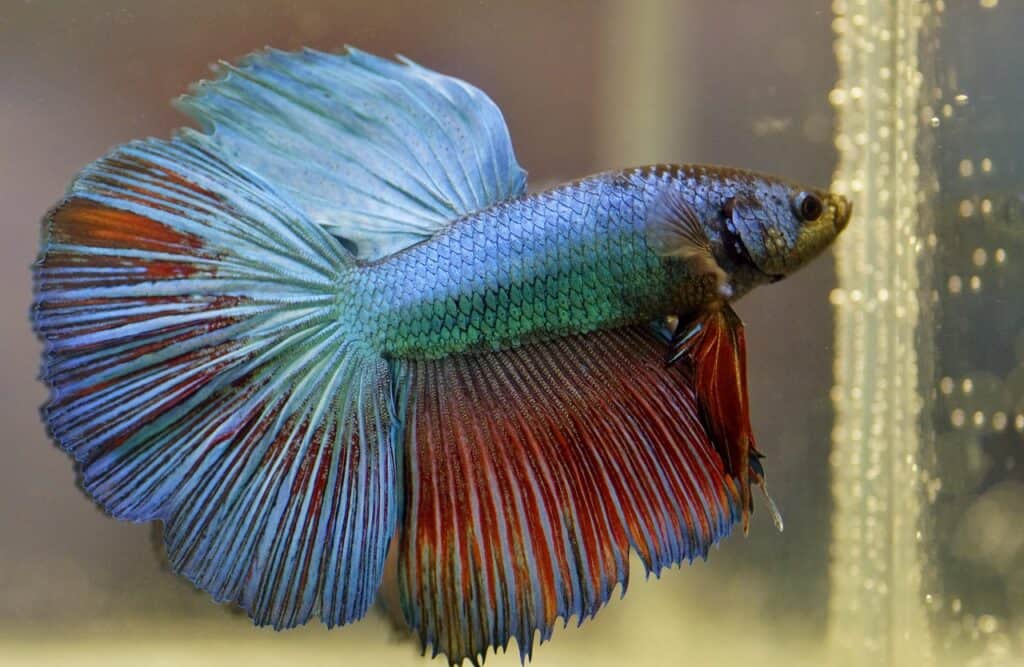
To maintain a comfortable training environment for your Betta, I recommend ensuring the tank is at least 5 gallons and keeping the water temperature between 76 and 81 degrees Fahrenheit. Incorporating stress reduction techniques, like using a gentle filter and adding live plants, can greatly enhance your Betta’s comfort. Additionally, regular interaction in a calm setting helps your fish feel secure, which is essential for effective training.
Optimal Tank Conditions
Creating ideal tank conditions is vital for training your betta fish effectively, as it directly impacts their willingness and ability to jump. I recommend maintaining a tank size of at least 5 gallons to guarantee ample space for swimming and jumping exercises.
Keep the water temperature between 76 and 81 degrees Fahrenheit, and aim for a stable pH level around 7.0. A gentle filter is essential to avoid strong currents that can deter jumping. Additionally, incorporating live plants and hiding spots enriches the environment and reduces stress, while regular water changes maintain optimal conditions.
| Condition | Recommendation |
|---|---|
| Tank Size | At least 5 gallons |
| Water Temperature | 76-81 degrees Fahrenheit |
| pH Level | Stable at 7.0 |
| Filter Type | Gentle filter |
| Enrichment Elements | Live plants & hiding spots |
Stress Reduction Techniques
Maintaining a comfortable training environment is essential for your betta fish’s success and well-being. To implement effective stress reduction techniques, start with a well-kept betta tank of at least 5 gallons, ensuring a consistent water temperature between 76 and 81 degrees Fahrenheit.
Incorporate live plants and hiding spots to provide a sense of security, allowing your Betta to feel comfortable during training. It’s vital to limit noise and disturbances, as a calm environment helps your Betta focus better on training tasks. Always monitor the Betta’s behavior for signs of stress, such as loss of color or lethargy, and perform a water change if water parameters are off.
Conduct training sessions in short bursts of 3 to 5 minutes to prevent overstimulation and keep your Betta engaged and comfortable throughout the process.
Routine Interaction Importance
While establishing a routine may seem simple, it plays a vital role in your betta fish’s training success and overall well-being. The routine interaction importance lies in helping your Betta to recognize you as a positive presence.
By maintaining consistent feeding times, you encourage your individual fish to associate your presence with enjoyable experiences, enhancing engagement during training. It’s important to remember that short sessions of 3 to 5 minutes, several times a week, keep your Betta comfortable and receptive.
Always monitor for signs of stress, like clamped fins or color loss, to guarantee a healthy training environment. With proper care and attention, you can increase the height of your training goals while fostering trust and active participation in your Betta.
Monitoring Your Betta’s Reaction
When monitoring the Betta’s reaction during jumping training, I pay close attention to its body language for signs of excitement. Vibrant colors and active swimming indicate readiness, while enthusiasm to approach the food target shows engagement. It’s essential to observe for stress indicators like clamped fins or lethargy, which suggest adjustments to the training routine might be necessary.
| Observation Type | Signs of Excitement | Stress Indicators |
|---|---|---|
| Color | Vibrant, bright hues | Dull or faded colors |
| Swimming Activity | Energetic, fast movements | Slow, lethargic behavior |
| Jump Height | 2-3 inches or more | Inconsistent jump heights |
| Session Duration | 3-5 minutes | Extended sessions |
| Progress Documentation | Improved responsiveness | Decreased activity |
Monitoring these aspects helps guarantee my Betta remains happy and healthy throughout its training journey.
Safety Tips for Jump Training
Training my Betta to jump can be exciting, but safety is a top priority. First, make certain your tank has a secure lid with a gap at the top to prevent escapes while allowing for jumps. Start with a low jump height, gradually increasing as your Betta adapts; they typically jump 2 to 3 inches.
Use a feeding stick to present food just above the water’s surface, raising it slowly to encourage safe jumps. During training sessions, which should last only 3-5 minutes, monitor behavior closely for signs of stress or fatigue.
Finally, always check water quality and tank conditions before and after sessions, as poor quality can heighten stress, potentially lead to fin rot, and affect jumping behavior.
Conclusion
To sum up, training your Siamese fighting fish to jump can be a rewarding experience when approached with care and respect for their well-being. By understanding their behavior, building trust, and gradually increasing jump heights, you’ll create a positive training environment.
Always monitor your Betta’s reactions and prioritize safety to prevent injury. With patience and consistency, you’ll not only enhance your fish’s skills but also strengthen your bond, making training an enjoyable activity for both of you.