Maintaining a stable temperature for your betta fish during winter is essential for their health. Keeping your tank between 76-80°F, with an ideal range of around 79°F, is recommended for tropical fish. Use a suitable heater—25 watts for smaller tanks and 50 watts for larger tanks.
Install a submerged thermometer to monitor the temperature consistently, avoiding drafts and direct heat sources that cause fluctuations. Regular water changes also help maintain water quality. There’s more to learn about keeping your betta thriving, so let’s explore further.
Maintaining the Temperature of the Tank
Maintaining the temperature of your betta fish tank is essential for their health and well-being. Bettas need a stable water temp between 76-80 degrees Fahrenheit, with an optimal range target of around 79 degrees. To achieve this, using an appropriate aquarium heater based on your tank size is recommended—25 watts for 2.5-4 gallon tanks and 50 watts for 5-10 gallon tanks.
For smaller tanks under 2.5 gallons, a 7.5-watt heater pad works best, but you must monitor the temperature frequently, as these setups are more sensitive to fluctuations. Avoid using lamps for heating; instead, focus on maintaining warm water to reduce stress. I find that good water quality and a stable temperature are crucial for your betta’s overall health.
Adding a Thermometer and Monitoring Temperature
To guarantee your betta thrives, adding a thermometer to your tank is essential for accurate temperature monitoring. Installing a submerged thermometer in an easily readable location ensures you can keep tabs on the water temperature effectively.
The optimal range for bettas is between 78 and 82 degrees Fahrenheit, with a target of 79 degrees Fahrenheit. Regularly checking the thermometer helps maintain stable temperatures and prevent stress from temperature fluctuations. Fluctuations in temperature can cause significant stress to your fish.
| Temperature (°F) | Betta’s Mood | Health Impact |
|---|---|---|
| Below 76 | Lethargic | Stress and illness |
| 76-78 | Neutral | Stable but cautious |
| 78-82 | Active | Ideal health |
| Above 82 | Stressed | Risk of mortality |
| 85+ | Critical | High mortality risk |
I recommend monitoring temperature frequently to ensure your betta fish remains healthy and vibrant.
Choosing a Good Location for the Tank
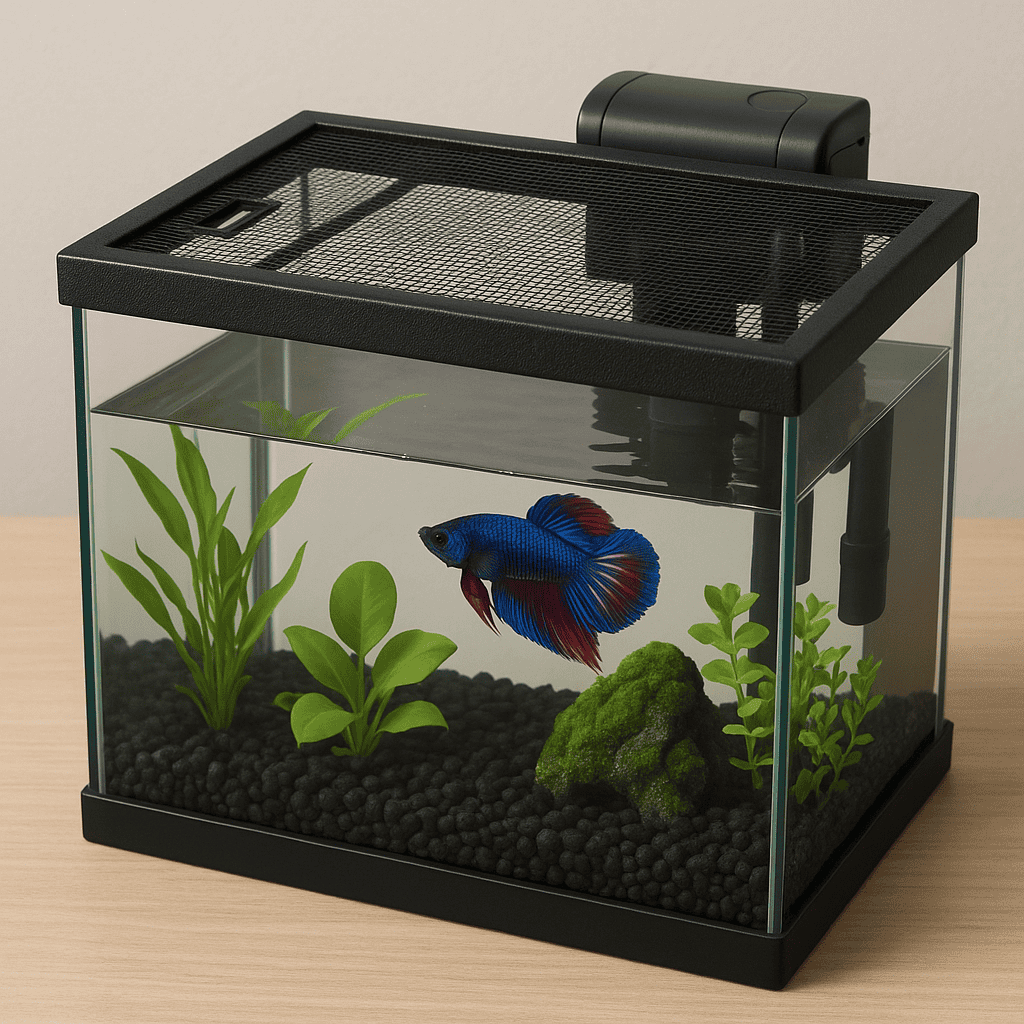
After confirming accurate temperature monitoring with a thermometer, the next step is selecting the right location for your betta tank. It’s essential to find a spot that maintains stable temperatures. Avoid drafty windows and areas that cool down quickly during winter. Additionally, steer clear of direct heat sources like radiators to prevent sudden temperature fluctuations.
Placing the tank in direct sunlight can cause temperature spikes and encourage algae growth, so choose a location with consistent temperature that mimics their natural habitats. Assess natural light exposure to guarantee a comfortable environment for your betta, promoting their health without the risk of overheating or cooling. A well-chosen location will greatly contribute to your betta’s overall well-being.
Maintaining Water Quality
While ensuring your betta’s environment is comfortable, it’s equally essential to maintain high water quality. Regularly monitoring the pH level of your betta’s tank, aiming for a neutral pH of 7, is important. To keep the tank water clean, changing 50% of it twice a week while ensuring the new water matches the existing water temperatures is recommended.
Clean the tank based on its size—every other day for 1-gallon tanks, every 3-4 days for 2.5-gallon tanks, and every 5-7 days for 5-gallon tanks. Always use dechlorination tablets for new water and let it sit for 24 hours before adding it. I always leave at least 20% of the existing tank water to preserve beneficial bacteria, which are vital for a healthy ecosystem. Each gallon of water should be treated with care.
Monitoring Betta Health and Expert Insights
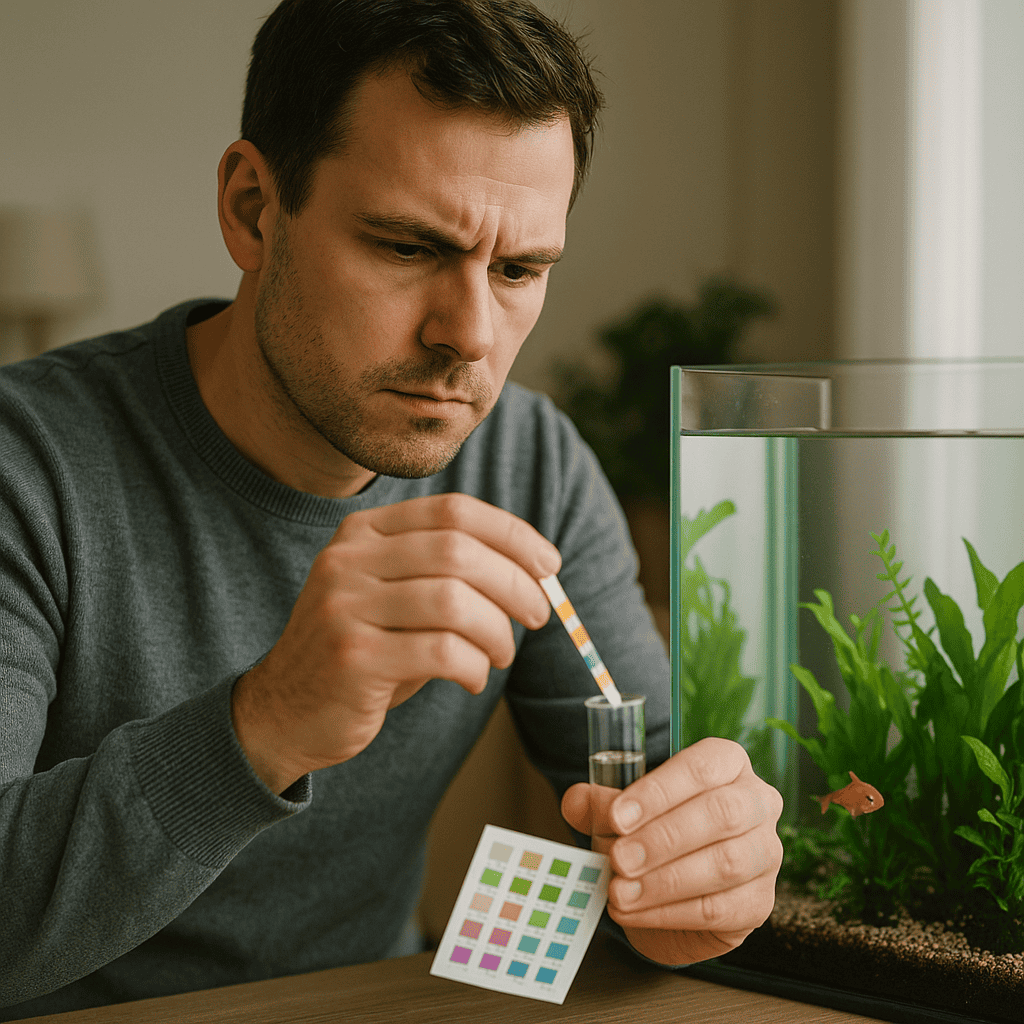
How can you guarantee your betta remains healthy throughout the winter months? Regular monitoring is key. Closely observing your betta for any signs of health issues, like changes in coloration or abnormal swimming patterns, is essential. Maintaining a consistent temperature between 76°F and 80°F is vital; fluctuations can stress your fish and make them susceptible to disease.
If you notice swim bladder disorder, adjusting the temperature slightly to 84°F (28°C) can aid recovery. I find that consistently checking water parameters is essential, especially during winter when heater reliability can wane. Here’s a quick reference table to guide you:
| Health Issue | Sign to Monitor | Action to Take |
|---|---|---|
| Swim Bladder Disorder | Abnormal swimming | Adjust temperature to 84°F |
| Color Change | Fading or darkening | Check water parameters |
| Lethargy | Reduced activity levels | Inspect for stress factors |
Conclusion
In summary, maintaining stable temperatures for your betta fish is essential for their health and well-being. By adding a reliable thermometer, choosing an ideal tank location, and guaranteeing water quality, you can create a comfortable environment for your betta. Regular monitoring of temperature and fish health will help you catch any issues early. Remember, a happy betta is a healthy betta, so take these steps seriously to make sure your aquatic friend thrives through the winter months.