To control phosphates in your betta fish aquarium and prevent algae growth, keep levels below 0.5 ppm. Regular testing is essential, and I recommend doing it weekly, especially after feeding quality fish food. Conduct water changes of 10-20% weekly, using phosphate-free water.
Incorporate live plants like hornwort or Anubias for nutrient absorption, and consider algae-eating species such as Amano shrimp or Nerite snails to maintain water quality. There’s much more to explore on maintaining a balanced ecosystem.
Understanding Phosphates and Algae Growth
While it’s easy to overlook, understanding the role of phosphates in your aquarium is important for maintaining a healthy environment for your betta fish. Phosphates (PO₄) are essential nutrients, but when levels exceed 0.5 ppm, they greatly increase the risk of algae growth. Algae thrive on excess phosphates, often resulting from overfeeding, infrequent water changes, and inadequate filtration.
To combat unwanted algae blooms, I make it a habit to monitor phosphate levels closely. Using phosphate-free water for changes becomes critical, especially since tap water can introduce these nutrients.
By managing phosphate levels through proper feeding and regular maintenance, stable environments can be created to prevent harmful algae growth, ensuring the well-being of betta fish.
Testing and Monitoring Phosphate Levels
To guarantee the health of my betta fish, consistently testing and monitoring phosphate levels in the aquarium is vital. Keeping phosphate levels below 0.5 ppm prevents algae growth, which can disrupt the ecosystem. Reliable test kits should be used following the manufacturer’s instructions for accuracy. Weekly or bi-weekly monitoring is essential, especially after feeding, as uneaten food can spike phosphate levels. Here’s a quick overview of phosphate tracking: **Table**
| Date | Phosphate Level (ppm) | Action Taken |
|---|---|---|
| 2023-10-01 | 0.3 | Normal, no action needed |
| 2023-10-08 | 0.6 | Added phosguard |
| 2023-10-15 | 0.4 | Adjusted feeding amount |
Effective Water Change Strategies
Maintaining phosphate control requires effective water change strategies that directly influence the overall health of betta fish. I find that performing regular water changes of 10-20% weekly considerably helps keep phosphate levels low, thereby preventing excessive algae growth.
Before using tap water, always test it for phosphate; some sources can contain high levels that feed algae. Reverse osmosis water is preferred for changes, reducing nutrient buildup. During each water change, combining it with substrate vacuuming removes uneaten food and organic debris, which further controls phosphate levels.
I also make sure to gradually adjust water parameters to minimize stress on bettas, creating a stable environment that supports their health and curtails algae proliferation.
Incorporating Live Plants for Nutrient Control
Incorporating live plants into betta fish tanks not only enhances the visual appeal but also plays an important role in nutrient control. Fast-growing species like hornwort and wisteria absorb excess nitrates and phosphates, effectively reducing algae growth.
By including plants such as Anubias and Java fern, I create competition for nutrients, fostering a balanced ecosystem. Here are some key considerations:
- Regularly test water parameters to maintain nitrate levels below 10 ppm and phosphate levels around 0.5 ppm.
- Utilize floating plants to limit light exposure, vital for controlling algae.
- Guarantee proper lighting for 6-12 hours to encourage healthy plant growth.
- Monitor plant health, as thriving plants can greatly mitigate algae issues.
These strategies support a healthier aquarium environment.
Utilizing Algae-Eating Species
While managing a betta fish tank, introducing algae-eating species can greatly enhance water quality and reduce phosphate levels. Species like Amano shrimp and Nerite snails are particularly effective; they consume algae without harming plants, making them ideal for planted tanks.
Amano shrimp excel at tackling hair algae, while Nerite snails act as efficient grazers, keeping surfaces clean. Additionally, incorporating algae-eating fish, such as Siamese algae eaters, can considerably diminish green algae presence. However, it’s essential to monitor their populations, as overstocking can lead to increased waste and dissolved organics, inadvertently elevating nutrient levels and promoting further algae growth.
Balancing these species helps maintain a healthy aquarium environment for bettas and associates.
Maintaining a Balanced Ecosystem
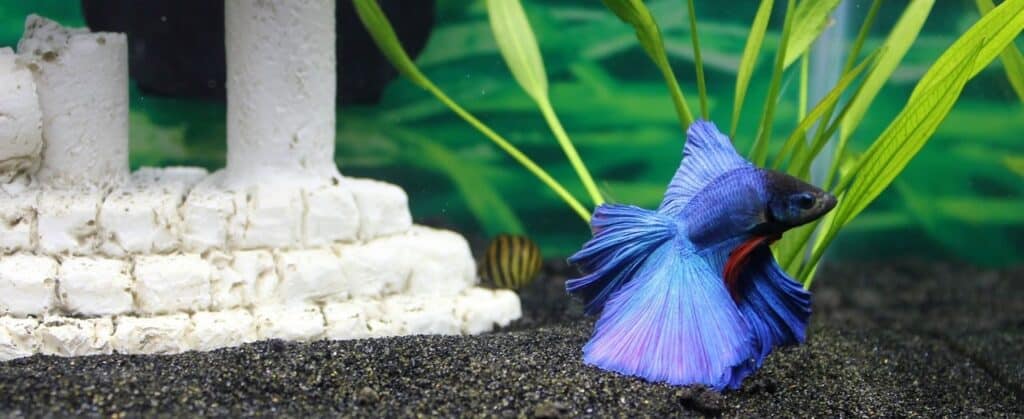
Achieving a balanced ecosystem in a betta fish tank goes beyond just introducing algae-eating species; it requires a thorough approach to water quality management. To maintain ideal phosphate levels and prevent algae growth, I focus on several key practices:
- Regular water changes to keep phosphates below 0.5 ppm.
- Introducing fast-growing plants like hornwort and wisteria to absorb excess nutrients.
- Monitoring feeding habits to guarantee bettas only consume what they can eat in minutes.
- Managing lighting duration to 6-8 hours for unplanted tanks to limit excessive light exposure.
- Using quality filter media and UV sterilizer systems can also help maintain water clarity and reduce harmful microorganisms.
Conclusion
In summary, controlling phosphate levels is essential for preventing algae growth in your betta fish tank. By regularly testing phosphate levels, implementing effective water change strategies, and incorporating live plants, you can maintain a balanced ecosystem.
Additionally, utilizing algae-eating species can significantly contribute to algae management. By taking these steps, you’ll not only guarantee a healthier environment for your betta but also enhance the overall aesthetic of your aquarium. A proactive approach truly makes a difference.