To recreate a Southeast Asian betta biotope, the focus is on mimicking their natural habitat by maintaining slightly acidic water (pH 6.5-7.5) and stable temperatures (77-82°F). I incorporate native flora like Java moss and Indian Almond Leaves for shelter and beneficial tannins.
A substrate mix of peat moss and sand is vital for plant growth. Regular water changes and appropriate lighting support ecosystem balance. Understanding these elements is essential; there’s more to explore about creating a thriving aquatic environment.
Understanding the Southeast Asian Betta Habitat
As I explore the diverse habitats of Southeast Asian bettas, I can’t help but appreciate the intricate balance of their ecosystems. The water in these blackwater ponds and streams is often acidic, with a pH ranging from 5 to 7, which is essential for their health. Peat swamps play an important role, as decomposing organic matter enriches the water with tannins, creating a natural blackwater effect. This environment is generally low in hardness, making it ideal for bettas.
Additionally, the tropical forest streams, surrounded by lush plants, offer clearer water and a dynamic water movement, promoting a stable temperature of 77 to 82°F. Understanding these factors helps us create environments that mimic their natural habitats, ensuring their well-being in captivity.
Key Biotic Components for Your Betta Biotope
When creating biotope setups for a Southeast Asian Betta biotope, the focus is on the essential biotic components that mimic their natural environment. Selecting native flora like Java moss and Anubias is vital, as these plants provide shelter and enhance ecosystem health.
Additionally, incorporating compatible fish species and microorganisms enriches the habitat, fostering a balanced and thriving aquatic community.
Native Flora Selection
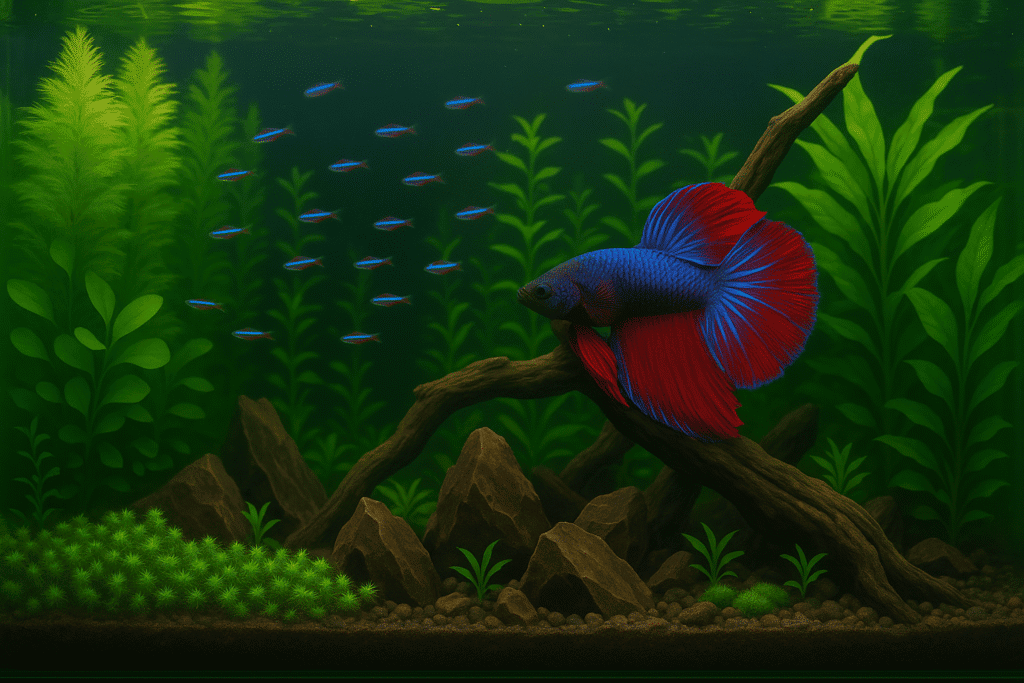
Selecting native flora for your Southeast Asian Betta biotope is crucial for creating an authentic and beneficial environment. It is recommended to incorporate native plants like Java fern, Anubias, and Cryptocoryne, as they thrive in the soft, acidic water conditions typical of Betta habitats. Additionally, floating plants such as duckweed and water lettuce offer cover and shade, reducing stress for your Betta.
Leaf litter from Indian Almond Leaves enhances aesthetics while releasing beneficial tannins, promoting a blackwater environment. Including grassy species like Cyperus helferi can create a natural look and provide hiding and foraging opportunities. Limiting your selection to 2-4 compatible species guarantees each plant thrives, contributing to the overall stability of your biotope’s substrate and ecosystem.
Compatible Fish Species
Creating a harmonious Southeast Asian Betta biotope requires careful consideration of compatible fish species. I’ve found that harlequin rasboras are excellent additions, as they thrive in groups and bring vibrant colors to the tank. Kuhli loaches, being bottom-dwellers, help maintain substrate cleanliness while exhibiting fascinating natural behavior. Wild-type three-spot gouramis serve as peaceful feature fish, enhancing the aesthetic of the biotope.
Glass catfish contribute a dynamic mid-water element, thriving in stable conditions. Additionally, dwarf gouramis, like honey gouramis, are small and generally docile, making them ideal companions for Betta fish. However, it’s essential to avoid aggressive species, such as certain barbs, to guarantee a tranquil environment for all inhabitants.
Microorganisms and Invertebrates
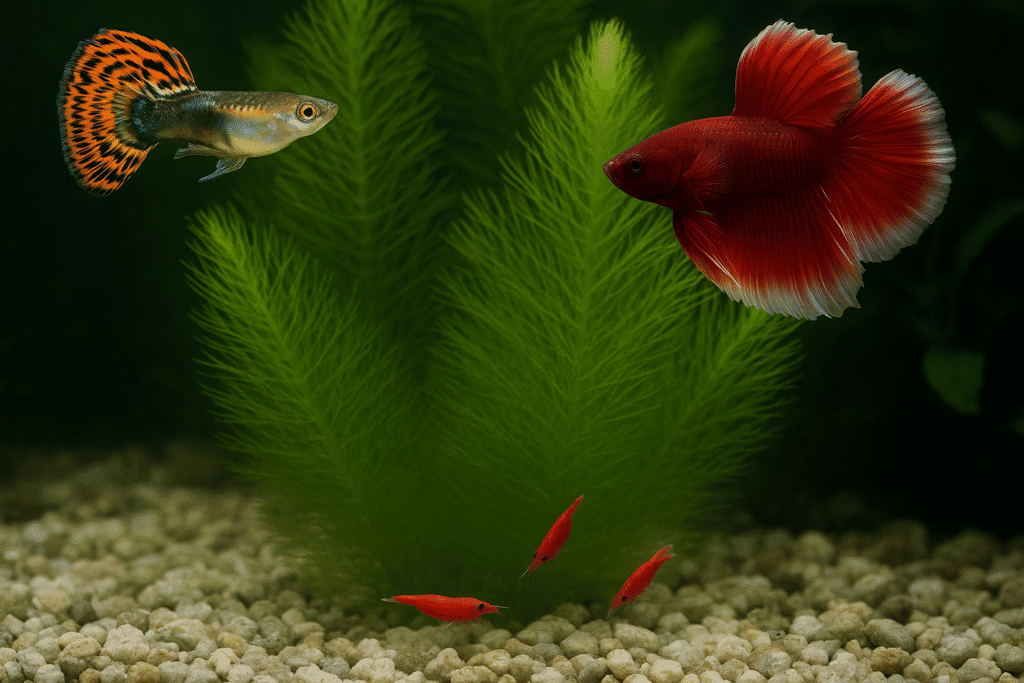
In a well-balanced Southeast Asian Betta biotope, the role of microorganisms and invertebrates can’t be overlooked. These tiny yet essential biotic components contribute considerably to establishing a thriving ecosystem that mirrors the betta’s natural habitat.
- Beneficial microorganisms break down organic matter, maintaining water quality and oxygen levels essential for bettas’ health.
- Invertebrates like copepods and daphnia serve as a natural food source while helping control algae and detritus levels.
- Integrating leaf litter and natural elements enhances habitat complexity, fostering both microorganisms and invertebrates.
Incorporating species such as shrimp not only supports cleanliness by consuming uneaten food but also enriches the ecological dynamics. Understanding these interactions is critical for creating aquarium setups that genuinely benefit our bettas, promoting their well-being and natural behaviors.
Essential Abiotic Factors to Consider
When setting up a Southeast Asian betta biotope, it’s essential to take into account the specific abiotic factors that influence the health of these fish. I focus on achieving the right water chemistry, maintaining a stable temperature, and selecting appropriate substrate and decor, as these elements greatly affect their well-being. Each component must work synergistically to replicate the natural conditions in which bettas thrive.
Water Chemistry Parameters
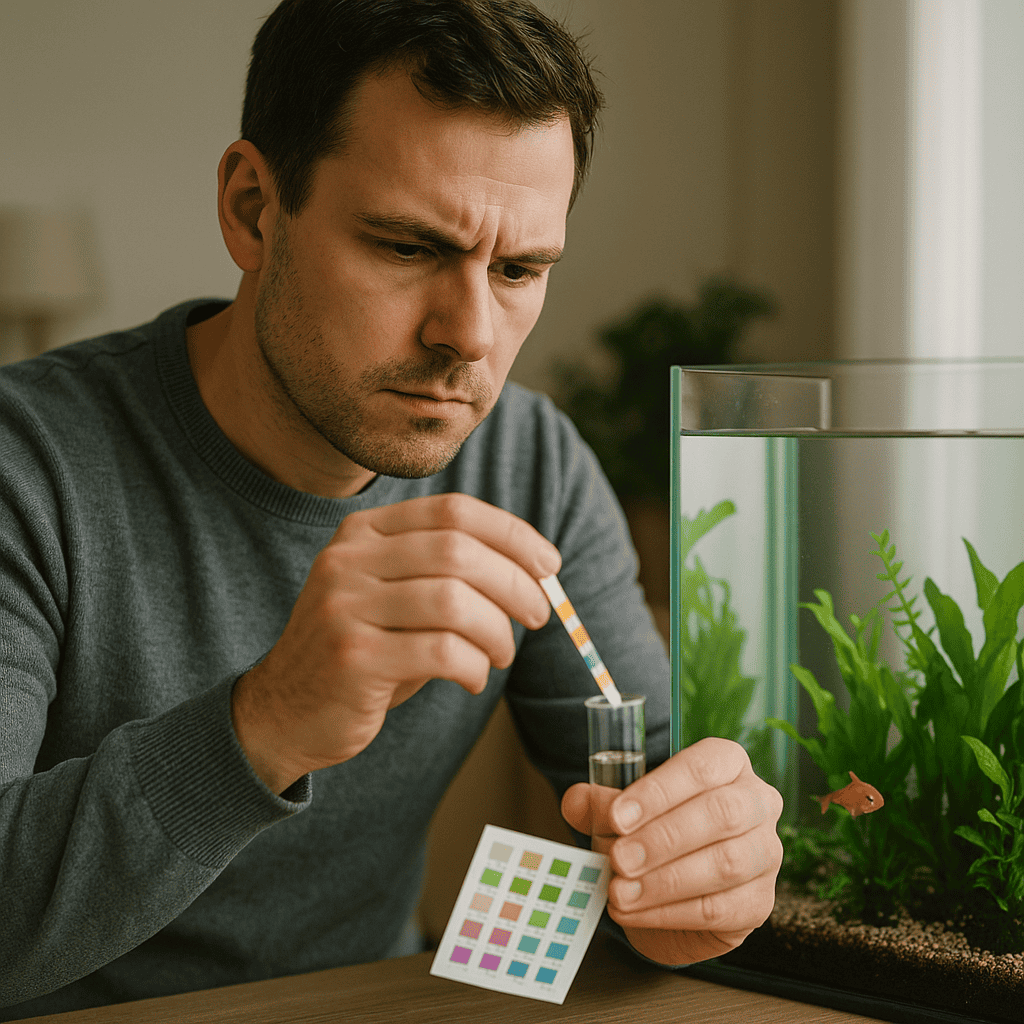
Understanding the water chemistry parameters is essential for maintaining a healthy Southeast Asian Betta biotope. I’ve found that replicating their natural environment requires careful attention to specific factors. The ideal pH should be between 6.5 and 7.5, creating slightly acidic conditions. Water hardness, measured in dGH, needs to be maintained between 3 and 9, reflecting the soft to moderate water typical in Southeast Asia.
- Regularly test water parameters to guarantee stability.
- Introduce tannins using Indian Almond Leaves to mimic blackwater habitats.
- Avoid drastic fluctuations in water chemistry, which can stress Betta fish.
Temperature and Lighting
Temperature and lighting are critical components in creating a thriving Southeast Asian Betta biotope, as they directly influence the health and behavior of these fish. It is recommended to maintain a temperature range between 77 to 82°F (25 to 28°C) to mimic their natural habitat and promote ideal activity. When it comes to lighting, it’s important to tailor it to the specific aquatic plants present.
A combination of bright light for light-loving species and indirect light for shade-tolerant plants guarantees a balanced ecosystem. Aim for a photoperiod of 10 to 12 hours daily, simulating natural cycles. Using LED grow lights can enhance plant growth while minimizing heat fluctuations, protecting Betta sp. from stress. Consistent monitoring of light intensity is crucial to prevent algae growth and maintain overall health.
Substrate and Decor Choices
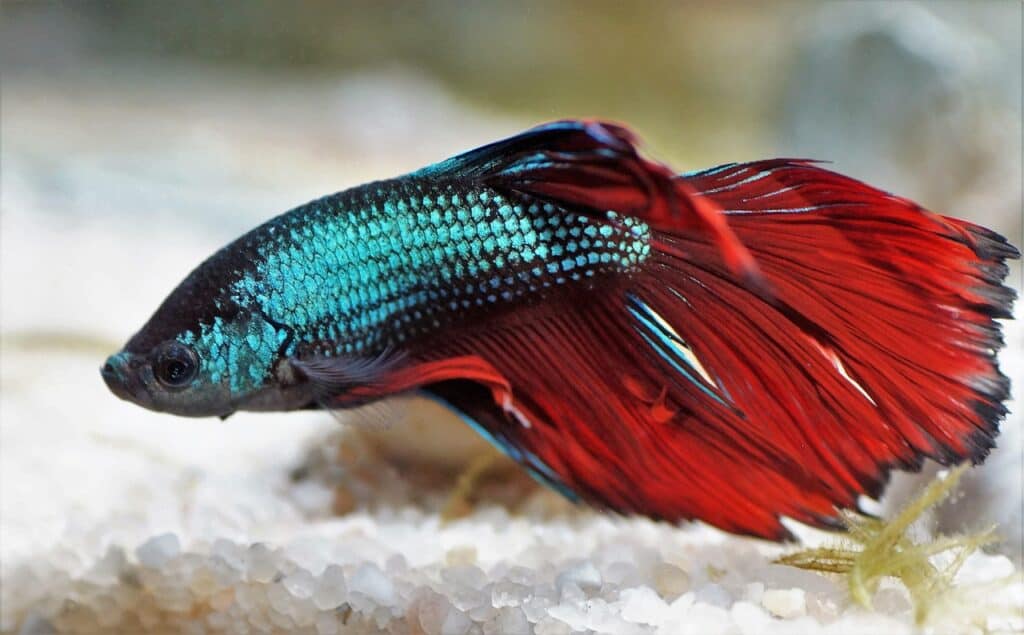
Creating an authentic Southeast Asian Betta biotope requires careful consideration of substrate and decor choices, as these elements play a significant role in the overall health and behavior of Betta fish. To replicate their natural habitat, It is recommended to use a substrate mix that includes peat moss and a topping of sand and black gravel.
This setup not only supports plant growth but also maintains low pH levels. Additionally, incorporating driftwood and leaf litter, such as Indian Almond Leaves, enhances the environment, providing hiding spots and releasing beneficial tannins.
- Substrate would ideally consist of nutrient-rich layers beneath the top layer.
- Driftwood offers surfaces for beneficial bacteria.
- Leaf litter contributes to the blackwater effect, promoting Betta health.
Choosing the Right Substrate and Decor
When setting up a Southeast Asian Betta biotope, selecting the right substrate and decor is essential for replicating the fish’s natural environment. It is recommended to use a substrate of peat moss topped with fine sand or black gravel. This combination helps maintain low pH levels and supports healthy plant growth. Incorporating
Indian almond leaves not only beautifies the tank but also releases tannins, creating the blackwater effect in which Betta fish thrive. For decor, driftwood and mangrove root wood provide natural hiding spots, promoting comfort. Adding smooth, rounded stones mimics riverbeds while ensuring they’re fin-safe. Ultimately, maintaining an open swimming area with strategically placed decor allows the Betta to exhibit natural behaviors, enhancing their well-being and enriching your aquarium experience.
Selecting Compatible Fish and Plant Species
Selecting compatible fish and plant species is crucial for establishing a thriving Southeast Asian Betta biotope. I focus on choosing fish that coexist peacefully with Betta behavior and complement their natural environment. For example, harlequin rasboras and kuhli loaches thrive in similar conditions without provoking aggression. Additionally, incorporating native plants like Java fern and Cryptocoryne wendtii not only enhances the visual appeal but also provides essential hiding spots that promote Betta comfort.
- Guarantee the addition of 2-4 plant species to prevent overcrowding.
- Utilize floating plants like duckweed for shade and cover.
- Maintain a balanced community dynamic to support natural behaviors.
Maintaining Water Quality and Parameters

To guarantee the health and vitality of your Southeast Asian Betta biotope, it is important to maintain ideal water quality and parameters that closely mimic their natural environment. Aim for a pH range of 6.5 to 7.5, and make sure general hardness (GH) stays between 3 to 9. A stable temperature of 77 to 82°F (25 to 28°C) is essential since Betta thrives in warm waters.
Regular water changes of 20-30% weekly are necessary for maintaining water quality, replenishing minerals, and reducing toxins. Incorporating Indian Almond Leaves can create a beneficial blackwater effect, providing antibacterial properties. Finally, use a reliable test kit to regularly monitor and adjust water parameters, ensuring a suitable environment for your Betta and any companions.
Lighting Considerations for a Healthy Ecosystem
Lighting plays an essential role in establishing a healthy natural ecosystem for your Southeast Asian Betta biotope, as it directly impacts plant growth and overall tank dynamics. To create an ideal environment, It is recommended to the following:
- Use a high-quality LED grow light panel to enhance plant health while matching light intensity to your specific aquatic plants.
- Mimic natural conditions provide bright light on half the tank and indirect light on the other, fostering diverse plant growth and fish shelter.
- Adjust light duration to 8-10 hours daily, promoting balanced ecosystems and keeping water parameters stable.
Regularly monitor plant health in relation to lighting, as inadequate exposure can lead to poor growth and algae blooms, ultimately affecting the entire biotope.
Tips for Successful Biotope Maintenance
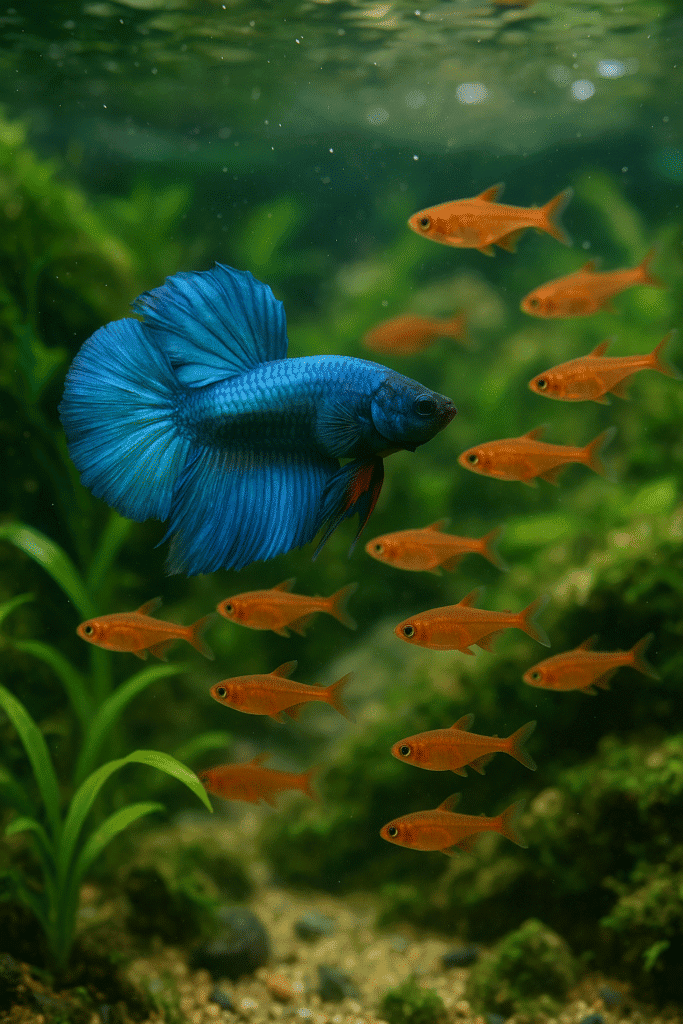
While maintaining a Southeast Asian Betta biotope may seem intimidating, a focused approach can guarantee a thriving environment for both the fish and plants. First, Regularly monitor and adjust water parameters, aiming for a pH between 6.5 and 7.5 while ensuring soft to moderate hardness (GH 3 to 9). Weekly water changes of 20-30% are essential for stability and Always treat or dilute added water with reverse osmosis water.
Additionally, I add plants like Java moss and Cryptocoryne to enhance aesthetics and provide shelter. Implementing leaf litter, such as Indian Almond Leaves, mimics the natural blackwater habitat while supporting beneficial bacteria. Ultimately, I will keep a close eye on plant health, adjust light levels, and replace botanicals as needed.
Conclusion
Creating a Southeast Asian betta biotope requires careful consideration of both biotic and abiotic factors to truly mimic their natural habitat. By selecting compatible fish and plant species, maintaining ideal water quality, and providing the right substrate and decor, I’ve found that my bettas thrive in a balanced ecosystem.
Regular maintenance and attention to lighting further enhance their environment. Ultimately, this holistic approach not only supports the health of my bettas but also enriches my own aquatic experience.