When deciding between silk and live aquarium plants for your betta fish tank, I’ve found each has its perks and drawbacks. Live plants improve water quality and water surface conditions, offering hiding spots, but require regular maintenance and can be challenging to manage.
On the other hand, silk plants are low-maintenance and provide a safe, soft environment, but they can fray over time. If you want to know more about making the best choice for your betta’s habitat, keep exploring!
Understanding Silk and Live Plants
When it comes to creating a vibrant and healthy environment for your betta fish, understanding the differences between silk and live plants is crucial. Silk plants offer a soft, fabric-like appearance that mimics real foliage, enhancing the aesthetic of your aquarium without the maintenance demands of live plants. However, while they’re easier to care for, they can fray over time, posing potential risks to delicate bettas.
On the other hand, live plants contribute considerably to water quality, absorbing toxins and producing oxygen. They also provide essential hiding spots and breeding grounds, promoting comfort and reducing stress for your betta fish. Ultimately, your choice between silk and live plants will depend on your commitment to aquarium maintenance and your fish’s well-being.
Benefits of Live Plants for Betta Fish
When I think about the benefits of live plants for betta fish, I’m struck by how they transform the aquarium into a thriving ecosystem. Not only do these plants improve water quality by absorbing nitrates and releasing oxygen, but they also create a rich environment for bettas to explore and hide in. This natural habitat not only enhances their well-being but also makes your tank visually stunning.
Natural Water Quality Improvement
While many aquarists may overlook the role of live plants, it’s certain that incorporating them into your betta fish tank is a game changer for water quality. Live plants like Anacharis and Java Moss actively absorb harmful nitrates, enhancing the overall health of your aquarium. Through photosynthesis, they provide essential oxygen, creating a stable environment that minimizes pH and ammonia fluctuations. This stability is vital for your betta’s well-being.
Additionally, the natural decomposition of these plants fosters beneficial bacterial colonies, which contribute to effective biological filtration. Regular maintenance, including trimming and monitoring plant health, guarantees that these benefits persist. By prioritizing live plants, you’re not just improving water quality; you’re fostering a thriving ecosystem for your betta.
Enhanced Fish Habitat Enrichment
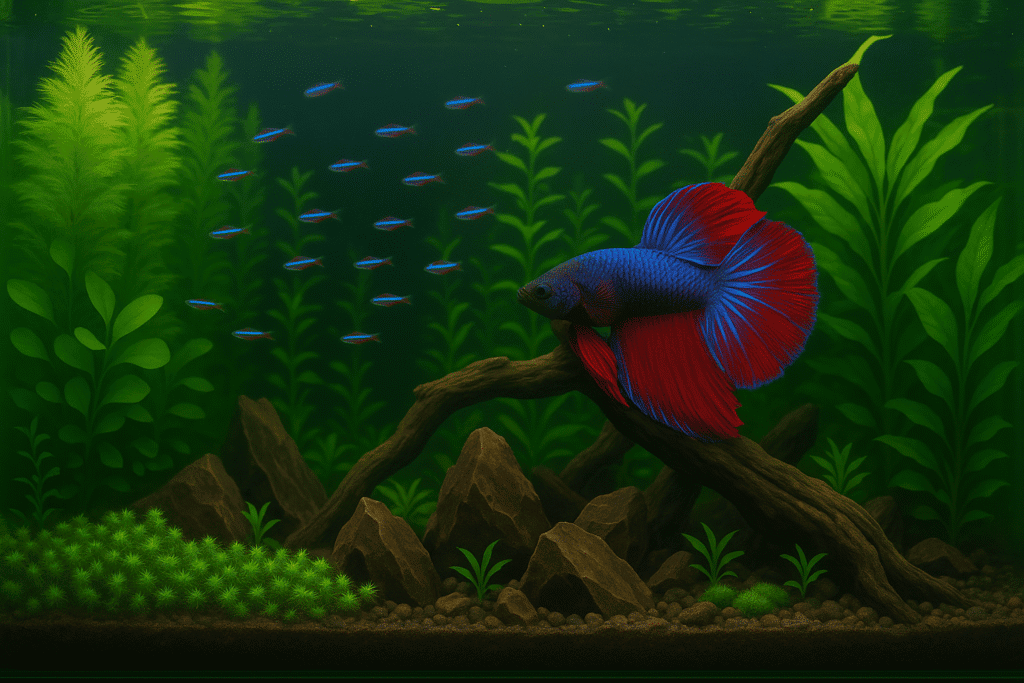
Incorporating live plants into your betta fish tank not only beautifies the environment but also greatly enriches the habitat for your fish. Here are some key benefits I’ve observed: Water Quality: Live plants absorb nitrates and produce oxygen, creating a healthier environment.
- Natural Behaviors: Bettas thrive when they can hide and explore, which live plants facilitate.
- Breeding Grounds: They provide safe spaces for betta fry, reducing stress for both parents and their young.
- Aesthetic Appeal: The natural look of the broad leaves of live plants enhances the visual charm of your aquarium, making it enjoyable for everyone.
Drawbacks of Live Plants in Betta Tanks
While appreciating the beauty that live plants can bring to a betta tank, it’s important to consider the maintenance challenges they pose. They often require specific lighting and water conditions that might not be ideal for your fish, and some plants can even grow too large, taking up precious swimming space. Plus, one must be cautious about plant toxicity and the potential for pests, which complicates tank management.
Maintenance Requirements
Although live plants can enhance the beauty of a betta tank, their maintenance requirements can be quite demanding. Here’s what has been learned about keeping them thriving: Regular Trimming: One must trim dead leaves frequently to maintain health and aesthetics. Specific Lighting: Unlike silk plants, live plants require specific lighting conditions, which complicates setup.
Algae Management: It’s necessary to manage algae growth, involving extra cleaning and sometimes chemical treatments to keep water quality in check. Pest Prevention: Sourcing live plants carefully is essential, as they can introduce pests or diseases, necessitating quarantine measures. While live plants add vibrancy, their maintenance requirements can be a serious commitment for any enthusiastic aquarist.
Fish Compatibility Issues
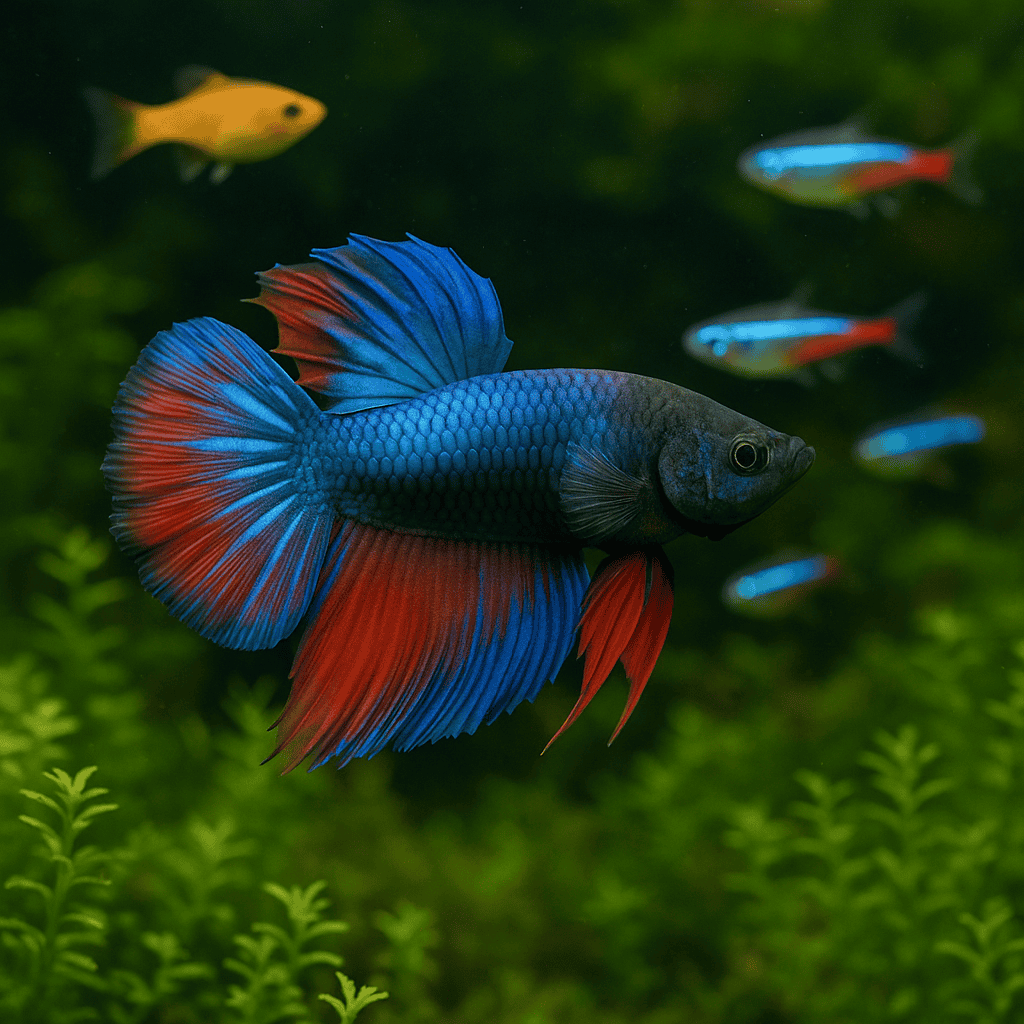
How do live plants impact the dynamics of a betta tank? While they can enhance aesthetics, I’ve noticed several compatibility issues with bettas. First, live plants require specific lighting and water conditions, which may not always be ideal for your fish. I’ve seen bettas aggressively pick at or uproot these plants, disrupting growth and making the tank look messy. Some live plants even have sharp edges or toxic properties, posing risks to delicate fins.
Additionally, they can attract pests or algae, complicating maintenance and affecting water quality. Finally, the extensive root systems of certain plants can limit swimming space and hiding spots, which are essential for your betta’s comfort. In contrast, plastic plants offer a safer, hassle-free alternative.
Advantages of Silk Plants for Bettas
When it comes to creating a comfortable habitat for your betta fish, silk plants offer several key advantages that make them a standout choice. Here are four benefits found particularly compelling in experience:
Gentle Environment: Silk plants provide a soft surface, reducing the risk of fin injuries that can occur with sharper plastic options. Natural Aesthetics: They mimic the look of real plants, enhancing the beauty of your betta tank while creating a serene atmosphere.
Low Maintenance: Unlike live plants, silk plants don’t require special lighting or nutrients, making upkeep a breeze.
Durability: They are generally more resilient, allowing for easy cleaning and long-lasting enjoyment in your aquarium. Incorporating silk plants truly enriches your betta’s environment!
Disadvantages of Silk Plants for Bettas
While silk plants can enhance the aesthetics and comfort of your betta’s habitat, they do come with several disadvantages that shouldn’t be overlooked. To begin with, silk and plastic plants can fray over time, creating rough edges that may harm your betta’s delicate fins, increasing the risk of injury or infection.
Bettas often pick at these plants, which can lead to further damage and expose them to sharp materials that could be ingested. Additionally, the soft fabric of silk plants can attract algae, necessitating more frequent cleaning. Some cheaper options may even leach harmful chemicals into the water. Unlike live plants, silk plants don’t contribute to the aquarium’s ecosystem or improve water quality, which is essential for your fish’s health.
Aesthetic Appeal of Live vs. Silk Plants
Although both silk and live plants offer unique aesthetic qualities for a betta fish aquarium, studies show that live plants create a truly immersive environment that silk alternatives can’t quite match. Live plants not only enhance the visual appeal but also bring dynamic movement and life to the tank.
Here’s why I prefer them:
- Authenticity: Live plants mimic natural habitats, enriching the betta’s experience.
- Natural Movement: They sway with water currents, adding a fascinating element.
- Variety: Live plants come in diverse shapes and colors, albeit less uniform than silk.
- Enrichment: Bettas love hiding and exploring among live plants, promoting their well-being.
In my experience, the aesthetic appeal of live plants far surpasses that of silk, making them a worthy investment for any betta enthusiast.
Maintenance Requirements for Both Plant Types
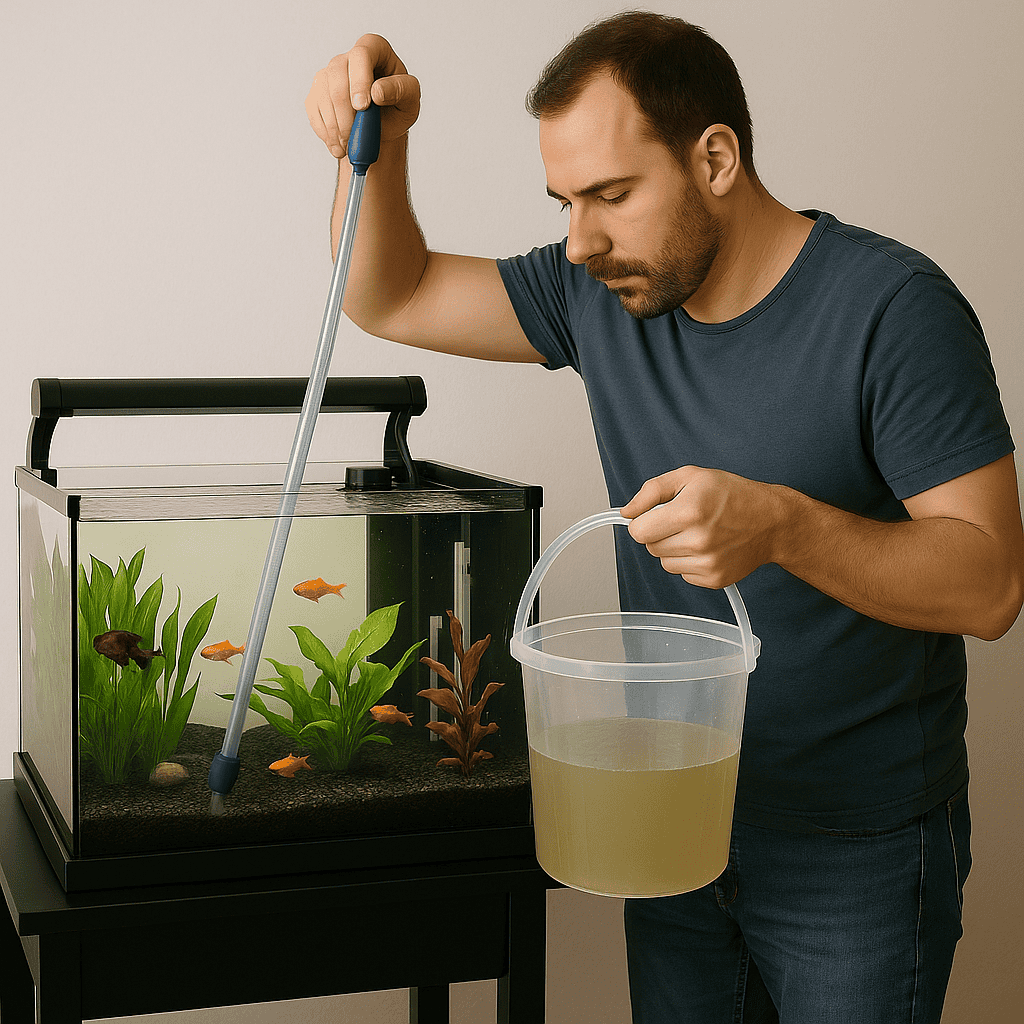
Maintaining a healthy aquarium environment is essential, and the maintenance requirements for silk and live plants differ considerably. Silk plants require gentle cleaning to prevent fraying, which can be labor-intensive. They might also accumulate algae stains, needing occasional washing to keep them looking fresh. In contrast, live plants offer ecological benefits and improve water quality but come with their own set of challenges.
They need regular monitoring, specific lighting, and sometimes fertilization, adding to their maintenance demands. While plastic plants are durable, requiring only simple rinsing, live plants demand more attention. Ultimately, choosing between silk and live plants depends on how much time and effort you’re willing to invest in their maintenance.
Safety Considerations for Betta Fish
When choosing plants for betta fish, it’s important to always prioritize safety, especially regarding sharp edges. Silk plants have soft materials that help prevent fin injuries, which are essential for keeping bettas healthy. I also make it a habit to inspect any artificial plants for potential hazards, ensuring a safe environment for fish.
Sharp Edges Risks
Many betta owners may not realize the potential dangers posed by sharp edges on artificial plants. These risks can greatly impact our fish’s health and well-being.
Here are some key points to take into account: Snagging Fins: Sharp edges on plastic plants can catch and tear your betta’s delicate fins.
Fin Trauma: Bettas are vulnerable to injuries from rough surfaces, which can lead to stress or infection.
Testing Safety: Always run your hand or tissue over plant surfaces to spot any sharp edges before introducing them to the tank.
Regular Inspections: Check both plastic and silk plants for frayed edges, as these can cause ingestion issues, leading to serious health complications.
Soft Materials Benefits
Choosing the right plants for your betta’s tank can make all the difference in their health and happiness. Silk ones offer a fantastic option because their soft, fabric-like materials considerably reduce the risk of fin damage. Bettas have long, delicate fins that can easily tear on sharper plastic plants. With silk plants, the gentle texture minimizes the chance of fraying, preventing the potential ingestion of harmful materials.
It’s important to regularly check silk plants to verify they remain free from frayed edges. Not only do these soft materials enhance your betta’s comfort and security, but they also create an enriching environment where your fish tend to thrive. By prioritizing their safety, you’re truly serving the well-being of your beloved pet.
How to Choose the Right Plants for Your Betta

How can I guarantee my betta’s environment is both safe and stimulating? Choosing the right plants is essential. Here’s how I approach it:
- Opt for Betta-Safe Silk Plants: Look for silk plants labeled as “betta-safe” to prevent fin injuries.
- Incorporate Live Aquatic Plants: Consider Anacharis or Java Moss, which enhance aesthetics and improve water quality.
- Check Material Safety: Confirm artificial plants are non-toxic and free from sharp edges or wires.
- Evaluate Size and Growth: Choose smaller varieties to maintain open swimming space, encouraging exploration.
Community Experiences and Recommendations
As I explored the vibrant world of betta care, I found that the community’s experiences with silk and live plants were invaluable. Many enthusiasts swear by silk plants for their soft texture, which reduces the risk of fin injuries. They also appreciate the aesthetic appeal, creating a natural environment that bettas love.
Some hobbyists even use silk plants temporarily while waiting for real plants to be established, ensuring their fish’s safety without sacrificing beauty. Here’s a quick comparison: Silk Plants Live Plants Soft texture, safe Natural filtration Immediate decor Enhances water quality Aesthetic appeal Requires maintenance Good for temporary use Provides hiding spots Integrating both can enrich your betta’s habitat!
Conclusion
To summarize, choosing between silk and live plants for your betta fish largely depends on your priorities and lifestyle. While live plants offer natural benefits and enhance tank aesthetics, they require more maintenance.
On the other hand, silk plants provide a hassle-free option, though they may lack some advantages that live plants bring. Ultimately, consider your betta’s needs and your capacity for upkeep to create a thriving, beautiful environment for your aquatic companion.