A monthly deep cleaning of your Betta fish tank is essential to ensure healthy, clear water. Start by transferring 50-80% of the water to a bowl for your betta’s comfort. Remove and rinse decorations and scrub the gravel and walls to eliminate algae. After reinstalling everything, refill the tank with dechlorinated water, ensuring the temperature is between 72-80°F before returning your betta. With regular maintenance, you can create a thriving environment. Let’s explore more about maintaining water quality and your betta’s health.
Importance of Regular Tank Cleaning
When it comes to keeping your betta fish healthy, regular tank cleaning is essential. A clean tank greatly improves water quality, preventing toxic buildup of ammonia, nitrites, and nitrates that can harm your fish. I’ve noticed that a well-maintained aquarium reduces the risk of disease and stress, contributing to a vibrant betta that can live 3-5 years. Monthly deep cleaning, especially in unfiltered setups, is vital for removing waste and uneaten food that negatively impacts water conditions. Consistent cleaning routines, including water changes and substrate vacuuming, support beneficial bacteria growth while eliminating harmful contaminants. By maintaining a clean tank, you not only enhance the aesthetic appeal of your aquarium but also create a thriving habitat for your betta fish.
Step-by-Step Cleaning Process
Maintaining a clean environment for your betta fish is key, and knowing the right steps to follow makes the cleaning process straightforward. Here’s how to do it:
- Transfer 50% to 80% of the tank water into a bowl, keeping your betta in familiar water.
- Carefully remove decorations and artificial plants, organizing them to avoid damage before rinsing.
- Rinse the gravel and tank walls with hot water, using a scrubber to eliminate algae and debris without chemicals.
- Reinstall decorations and plants, ensuring they’re stable, then gradually refill the tank with treated new water.
Finally, once the temperature stabilizes between 72 to 80°F, I gently reintroduce the betta and monitor its behavior for stress. Keeping things clean makes all the difference!
Recommended Cleaning Frequency
Every betta tank has its own cleaning rhythm based on factors like size and filtration. For instance, if you have a 19-litre betta tank without a filter, you’ll need to clean the tank every 4 to 5 weeks due to waste buildup. In contrast, a filtered tank typically requires a full clean every 6 to 8 months. To maintain a healthy environment, aligning cleaning frequency with regular water changes is recommended, which should happen weekly or bi-monthly, with larger changes every couple of months. It’s essential to consistently monitor tank conditions with water test strips, ensuring your betta’s overall health. I remember that a well-maintained tank not only benefits your fish but also enhances your enjoyment of this beautiful hobby!
Essential Tools for Tank Maintenance
To guarantee your betta tank stays healthy and visually appealing, having the right tools on hand makes all the difference. Here are some essentials recommended for effective maintenance:
- Siphon vacuum: This is invaluable for efficiently cleaning aquarium gravel and removing debris, securing a healthy environment.
- Tank scrubber: A magnetic cleaner helps maintain clear tank walls without scratching the surfaces.
- Water conditioner: Always treat tap water with this to neutralize harmful chemicals like chlorine before adding it to the tank.
- Fish net: Use this to safely transfer your betta during cleaning, minimizing stress on their delicate fins.
- Paper towel: Keep these handy for wiping down tank exteriors and cleaning up spills during maintenance.
Having these tools ready secures your betta’s habitat remains pristine and inviting!
Monitoring Water Quality
While guaranteeing a thriving environment for your betta fish, monitoring water quality is essential. Regularly testing water parameters, focusing on ammonia, nitrite levels, and pH, is crucial. Ideally, keep ammonia levels below 0.25 ppm and maintain a pH between 6.5 and 8.2 to reduce stress. Weekly, 10% water changes are performed, increasing to 25% monthly, while vacuuming gravel to remove waste buildup.
This practice helps maintain overall aquarium water quality. I also use a de-chlorinator to treat tap water before adding it to the tank, as chlorine can be harmful. Additionally, monitoring water hardness, aiming for a moderate range of 100-250 mg/L, guarantees your betta thrives. Consistency in these tasks makes all the difference!
Signs of a Healthy Betta
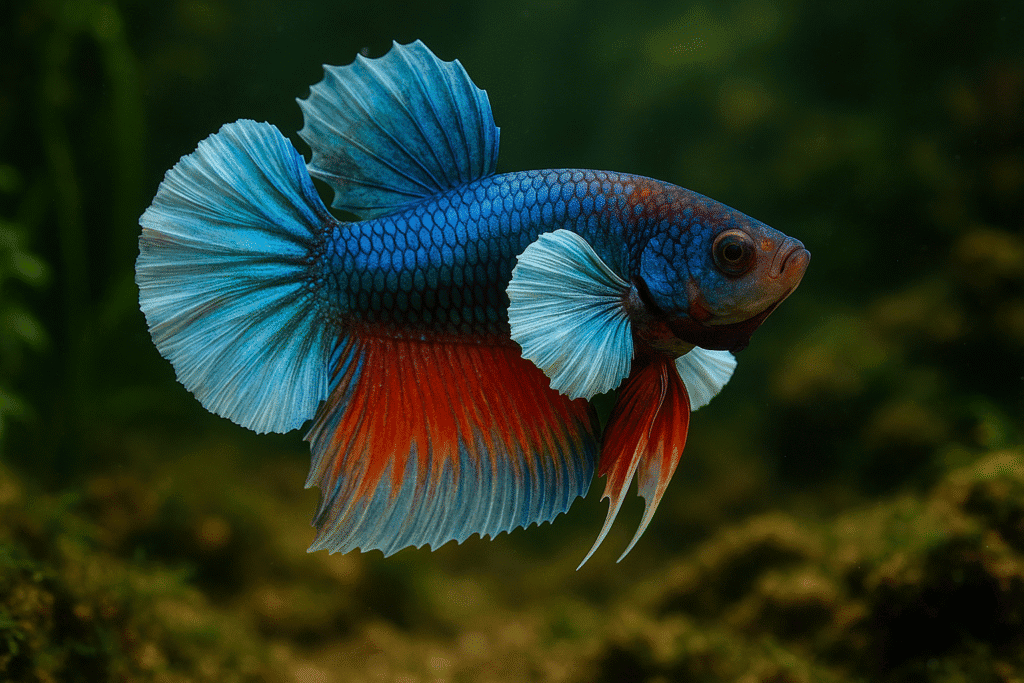
When observing a betta fish, look for vibrant coloration and intact fins as key indicators of its health. Active swimming behavior, like darting around the tank, shows it’s happy and engaged in its environment. Additionally, a healthy appetite is essential; a betta that enthusiastically eats without leaving fresh water untouched is a strong sign of well-being.
Vibrant Coloration and Fins
A betta’s vibrant coloration and well-maintained fins are among the most telling signs of its health and well-being. When I observe my betta, I always check for these indicators:
- Vibrant coloration: Bright, rich colors signify good health and ideal water conditions.
- Intact fins: Fully extended fins indicate that the betta is free from injuries or stress-related issues.
- Proper water temperature: Consistent temperature helps maintain the betta’s vibrant appearance.
- Effective filtration system: A clean tank reduces harmful bacteria, promoting a healthy environment.
Active Swimming Behavior
Active swimming behavior is an essential indicator of a betta’s health, and recognizing the signs that show a fish is thriving is important. When observing a betta moving actively throughout the tank, exploring different levels and areas, you know it’s comfortable in its environment. New fish often take time to adjust, so keep in mind that regular movement is vital for their well-being. A healthy betta will swim freely, flare its fins, and display vibrant colors, showing that it feels secure. I also notice playful behaviors, like chasing reflections or interacting with decorations. To support this active swimming, make sure to clean the tank every month and provide fresh water, as things can go downhill quickly without proper maintenance.
Healthy Eating Habits

Observing a betta’s eating habits offers valuable insights into its overall health. A healthy betta not only displays vibrant colors but also shows enthusiasm during feeding time. I pay close attention to its appetite and behavior, as these can reveal much about its well-being. Here are some key signs of a healthy betta:
- Active swimming and exploration of the tank
- Willingness to consume food without hesitation
- Intact fins, free from discoloration or damage
- Minimal signs of lethargy or unusual behavior
Ensuring clean water, healthy food, and plenty of artificial plants in the tank contributes considerably to a betta’s vitality. By monitoring these eating habits, you can better serve your fish and maintain its happy, thriving environment.
Tips for Maintaining a Balanced Ecosystem
While setting up your betta tank, it’s essential to establish a balanced ecosystem that supports your fish’s health and well-being. Start by ensuring a proper nitrogen cycle, which converts harmful ammonia into beneficial nitrates, creating a stable environment. Performing water changes of 10-25% weekly to maintain water quality and keep ammonia levels below 0.25 ppm is recommended.
I suggest incorporating live plants in your aquarium as they not only absorb nitrates but also provide oxygen and hiding spots, enhancing the ecosystem. Additionally, water parameters like pH (between 6.5 and 8.2) and hardness (100-250 mg/L) should be monitored for stability. Finally, introduce beneficial bacteria with products like Nutrafin Cycle to support this delicate balance and improve your aquarium’s overall health.
Conclusion
In summary, committing to a monthly deep cleaning of your betta tank is essential for your fish’s health and happiness. By following the step-by-step cleaning process and using the right tools, you can create a thriving environment for your betta. Remember to monitor water quality regularly and watch for signs of a healthy fish. With these practices in place, you’ll maintain a balanced ecosystem, ensuring your betta flourishes for years to come. Happy cleaning!