Recent advancements in CRISPR technology have enabled precise genetic modifications in Betta fish, targeting genes related to pigmentation and viability. By using techniques like CRISPR/Cas9 for gene knockouts and Tol2-mediated transgenesis, researchers can create vibrant, transgenic fish.
The effects of knocking out genes like alkal2l and bco1l reveal significant insights into color patterns and fish viability. These innovations pave the way for further exploration of genetic traits in Betta fish, and there’s much more to uncover.
Overview of Betta Fish
Betta fish, scientifically known as Betta splendens, are striking creatures that capture the attention of both aquarists and researchers alike. Originating from Southeast Asia, these Siamese fighting fish have a rich history of domestication, primarily for fighting contests and ornamental displays. Their compact genome, approximately 430 Mb, allows for extensive genetic studies.
I find it fascinating how their aggressive behavior has driven selective breeding, resulting in remarkable morphological diversity among domesticated varieties. The ornamental qualities of bettas, including vibrant colors and unique fin shapes, are products of this genetic manipulation. Consequently, researchers increasingly utilize bettas in scientific research due to their distinct genetic characteristics and manageable care requirements, making them ideal subjects for behavioral and neurobiological investigations. Recent genome sequencing efforts have further enhanced our understanding of these aquaculture species.
Genetic Manipulation Technologies
Several innovative technologies have emerged to facilitate precise genetic manipulation in Betta splendens. Remarkably, CRISPR/Cas9-mediated knockout allows researchers to target specific genes like alkal2l, bco1l, and mitfa, providing insights into fish viability and pigmentation. I find that gene editing techniques have revolutionized how we approach genetic studies in ornamental fish.
Additionally, the CRISPR/Cas9-mediated knockin technique has successfully introduced a fluorescent protein into the mitfa locus, showcasing the ability to modify specific genetic traits effectively. Moreover, Tol2 transgenesis has enabled ubiquitous expression of GFP in Betta fish, which is invaluable for tracking gene expression. These genetic manipulation technologies greatly enhance our understanding of the genetic basis behind phenotypic traits in Betta fish, paving the way for future genetic studies and insights into evolutionary biology.
Gene Knockout Effects
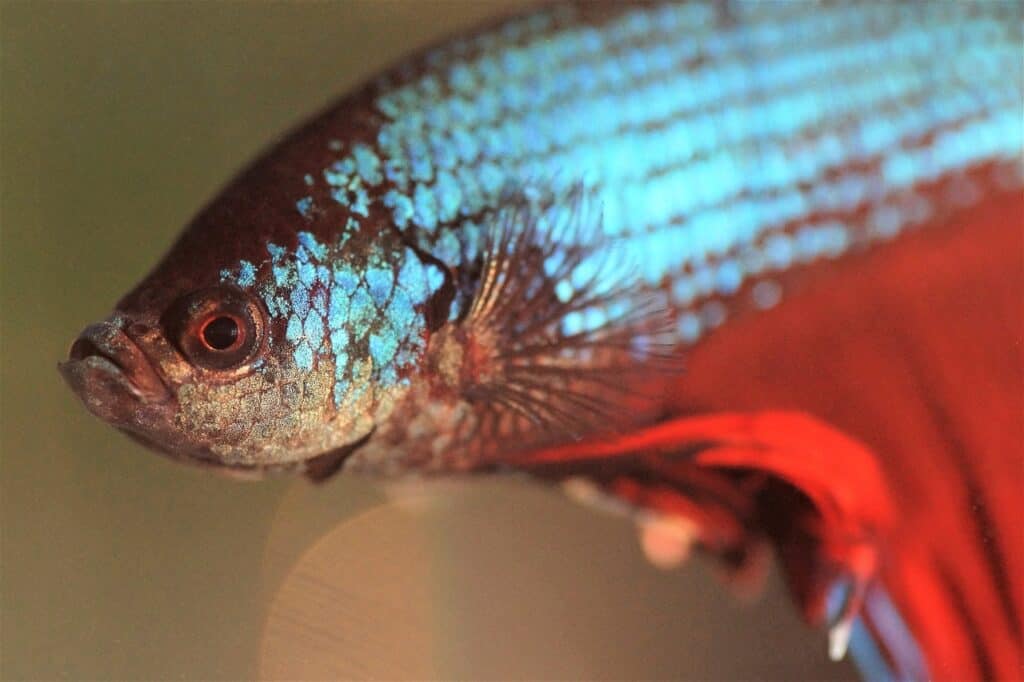
Understanding the effects of gene knockout in Betta splendens provides valuable insights into the relationship between specific genes and phenotypic traits. The knockout of the alkal2l gene markedly reduces blue pigmentation coverage, with mutants showing only 25% of the wild type’s blue coverage. In contrast, homozygous bco1l mutants are absent from the F3 generation, indicating a lethal phenotype linked to this gene knockout.
I’ve observed that heterozygous bco1l mutants display fewer blue pixels and diminished coloration, underscoring the gene’s importance for pigmentation intensity. Notably, alkal2l −/− mutants appear darker, revealing deeper pigment layers. These knockout studies enhance our understanding of the genetic basis of coloration and viability in Betta splendens, offering pathways for targeted genetic modification via CRISPR technology. Similar genome editing approaches have been successfully applied to rainbow trout for genetic improvement studies.
Transgenic Betta Development
Through innovative techniques such as Tol2-based transgenesis, researchers have successfully developed transgenic Betta fish that express a green fluorescent protein (GFP) ubiquitously. This genetic modification serves as a powerful tool for advancing genetic studies. By employing a bicistronic plasmid, we can co-express both GFP and mCherry, facilitating heart-specific visualization of transgene integration during the early developmental stages.
I find that experiments involving 1-4 cell embryos and the injection of the pAB-16 plasmid lead to robust mCherry expression along with ubiquitous GFP expression by three days post-fertilization. Remarkably, this transgenic development displayed high efficiency across six clutches, confirming successful transgene integration. The betta actb gene promoter has proven particularly useful for driving consistent expression in these studies. These methods greatly enhance our experimental capabilities to study developmental processes and genetic functions in Betta fish, aligning with CRISPR technology advancements.
Research Implications

The advancements in transgenic Betta development have significant implications for research, particularly in genetic studies. By utilizing CRISPR technology, we can enhance our understanding of Betta splendens, focusing on traits essential for evolutionary biology. Here are some key points:
- Genetic manipulation allows the exploration of pigmentation and aggression traits.
- Knockouts of specific genes, like alkal2l and mitfa, reveal impacts on viability and phenotypes.
- Transgenic Betta expressing fluorescent proteins facilitates in vivo gene function studies.
- Research capabilities expand to include sex determination and aggression genetics.
- Insights gained can lead to broader applications in developmental biology.
I believe these innovations not only deepen our knowledge of Betta fish but also provide a model for understanding complex genetic interactions in various organisms. The reference genome development for Betta splendens has accelerated this research, similar to advances seen with Atlantic salmon in the aquaculture industry.
Conclusion
To sum up, CRISPR technology offers a groundbreaking approach to genetic modification in Betta fish, enabling researchers to explore gene knockout effects and create transgenic varieties with specific traits. This not only enhances our understanding of genetic functions but also opens doors for innovations in aquaculture and biodiversity conservation.
As we continue to investigate the implications of these advancements, it’s clear that CRISPR will play a pivotal role in shaping the future of genetic research in aquatic species. The potential for disease resistance development through these techniques represents a significant opportunity for the aquaculture industry worldwide.