Environmental enrichment is essential for your Siamese fighting fish’s mental stimulation and overall health. I’ve noticed that stimulating tanks encourage natural behaviors like exploring and foraging. Adding decorations, such as safe ornaments and dense plants, creates a dynamic environment for them.
Exercise mirrors can spark their curiosity and engage their instincts. Regularly changing their surroundings and introducing varied feeding techniques keeps things fresh. If you’re interested in enhancing your betta’s quality of life, you’ll find more valuable insights ahead.
Importance of Environmental Enrichment for Bettas
While many people think of betta fish as low-maintenance pets, the truth is that environmental enrichment is essential for their well-being. Creating a stimulating betta fish tank is key to promoting their natural behaviors. By adding caves, plants, and other decorations, you can observe bettas exploring and foraging, which is vital for their mental health.
Introducing interactive elements, like exercise mirrors, encourages physical activity and can prevent lethargy and aggression. Additionally, rearranging their environment or introducing new plants keeps things fresh and engaging. Social interactions with compatible tank mates for betta fish can further enhance their experience, allowing them to express social behaviors. Investing time in environmental enrichment truly benefits our vibrant aquatic companions.
Recognizing Signs of Boredom in Fish
When I observe my betta fish, I pay close attention to their swimming patterns and social interactions. If they start aimlessly swimming up and down the tank or isolating themselves, it often signals boredom. Recognizing these subtle changes is essential for ensuring their mental and emotional well-being.
Swimming Patterns Observation
Observing your betta fish’s swimming patterns can reveal much about its mental state and overall well-being. If you notice aimless swimming, like moving up and down without purpose, it often indicates boredom. Bettas are naturally curious, so frequent isolation or a lack of exploration in their tank can signal disengagement. Watch for changes in behavior; lethargy or increased aggression may reflect boredom rather than illness.
Aggressive betta fish might also exhibit repetitive swimming in the same area, emphasizing mental stagnation. By regularly monitoring these patterns, you can identify signs of boredom and take action to enrich your environment. Providing stimulation is essential for your betta’s happiness and health, ensuring they thrive in their aquatic home.
Social Interaction Changes
Changes in social interaction can be a clear indicator of a betta fish’s mental state. If I notice my betta hiding in corners or avoiding interaction, it often screams boredom. Aimless swimming in repetitive patterns suggests that the fish isn’t mentally engaged. Lethargy can lead to irritability and potential aggression, making regular behavior monitoring essential.
To combat these signs, you can consider compatible tank mates or various enrichment ideas. Here’s a quick reference table:
| Behavior | Possible Sign | Recommended Action |
|---|---|---|
| Hiding in corners | Boredom or stress | Introduce tank mates |
| Repetitive swimming | Lack of mental stimulation | Add plants or decorations |
| Lethargy | Potential illness or boredom | Change environment or add enrichment |
Enhancing the Aquarium With Decorations

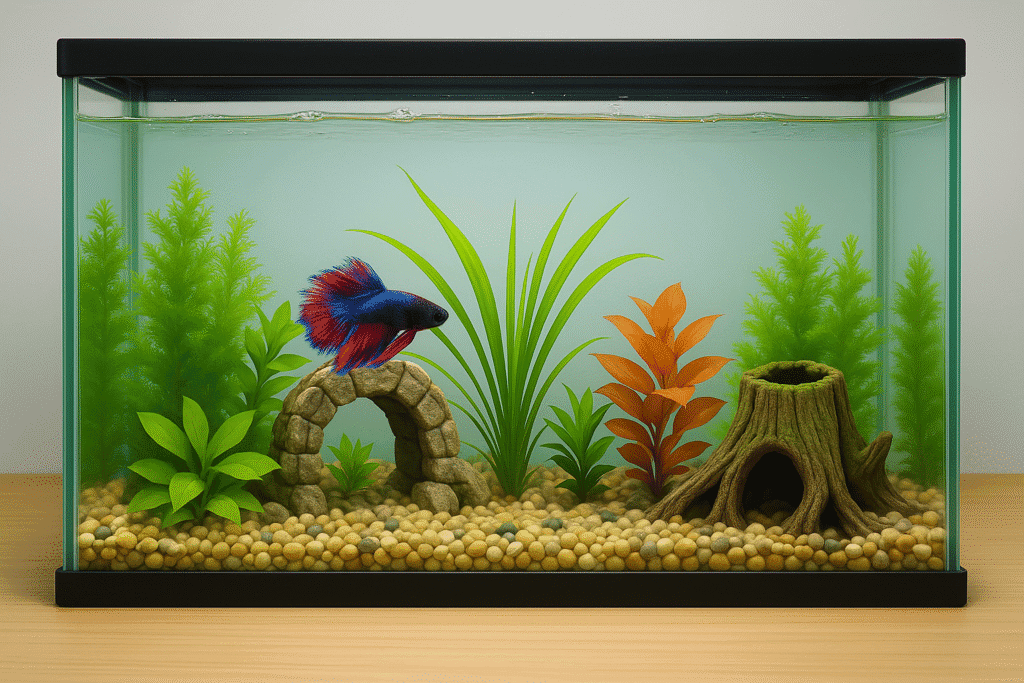
When enhancing a betta’s aquarium with safe ornaments and interactive caves, I notice a remarkable change in behavior. These carefully chosen decorations not only provide a safe environment for exploration but also stimulate their natural instincts. By creating a space that encourages activity and resting spots, you truly enrich their life and well-being. The proper tank size is crucial for these decorations to be effective, with a minimum of 5 gallons recommended for a single betta to thrive.
Safe Ornament Selection
Creating a vibrant and safe environment for your betta fish starts with selecting the right ornaments for their aquarium. When choosing decorations, make certain they’re free of sharp edges to prevent injury. Incorporating items that provide exploration opportunities encourages natural behaviors and enhances your betta’s well-being. Here are some ideas for safe ornament selection:
- Use floating betta logs for resting and bubble nesting.
- Opt for caves with large openings for easy access during feeding.
- Add dense vegetation like anubias plants and Christmas moss to create cozy hiding places.
Interactive Cave Benefits
Interactive caves play an essential role in enhancing the well-being of betta fish. They mimic natural habitats, allowing fish to explore and engage in instinctive behaviors. With large openings and no sharp edges, they provide safe retreat spots, contributing to stress reduction. Interactive fish particularly benefit from these features as they satisfy their curious nature.
| Benefit | Description |
|---|---|
| Exploration | Mimics natural habitat, encouraging instinctive behavior |
| Security | Hiding spots reduce stress, promoting comfort |
| Aesthetic Appeal | Enhances aquarium visuals, stimulating curiosity |
Regularly rearranging these caves offers novel experiences, keeping bettas mentally engaged. By prioritizing their environment, we can truly support their health and happiness.
Utilizing Exercise Mirrors for Physical Activity
How can we enhance the physical activity of our betta fish? One effective method is using exercise mirrors. These mirrors allow bettas to see their reflections, stimulating their protective instincts and encouraging them to flare their gills and stretch their fins. This activity is essential for their physical health and agility.
Exercise mirrors provide mental stimulation, as bettas engage in natural territorial displays. A few minutes of mirror time can prevent boredom and lethargy.
- Rewarding your betta with a treat after mirror sessions reinforces positive behavior.
- Incorporating exercise mirrors into your betta’s routine not only promotes physical activity but also enriches their environment, contributing to their overall well-being and health.
The Role of Live Food in Stimulating Natural Behaviors
One of the most effective ways to enhance your betta fish’s environment is by incorporating live food into their diet. Offering live foods like blackworms, baby brine shrimp, and daphnia taps into your betta’s instincts, encouraging them to engage in natural hunting behaviors. This not only provides crucial physical and mental stimulation but also allows bettas to practice their predatory skills, which are essential for their overall well-being.
The lively movement of these foods prompts bettas to chase and capture, mimicking their wild behaviors. Additionally, using a worm feeder cone for frozen bloodworms can simulate a hunting experience, enhancing foraging behavior. Various fish foods can be used to create this stimulation, with live options being particularly effective for these warm-blooded fish. By offering live food intermittently, you’ll appreciably enrich your betta’s quality of life, breaking the monotony of standard feeding routines.
Incorporating Aquatic Plants for a Natural Habitat
Incorporating aquatic plants into your betta fish’s tank not only beautifies the environment but also plays an essential role in their overall well-being. By adding plants like anubias and Christmas moss, I create hiding spots and resting areas that mimic their natural habitat. Dense vegetation stimulates exploration and foraging behaviors, enhancing their mental health.
Consider these benefits of aquatic plants:
- They provide interesting structures for swimming, fostering physical activity.
- Background and floating plants create varied territories, preventing boredom in your betta fish.
- Adding Catappa leaves not only enhances aesthetics but also releases tannins that promote better health for these delicate aquatic animals.
- Regularly changing or rearranging the plants keeps your betta engaged and active.
Selecting Compatible Tank Mates for Social Interaction
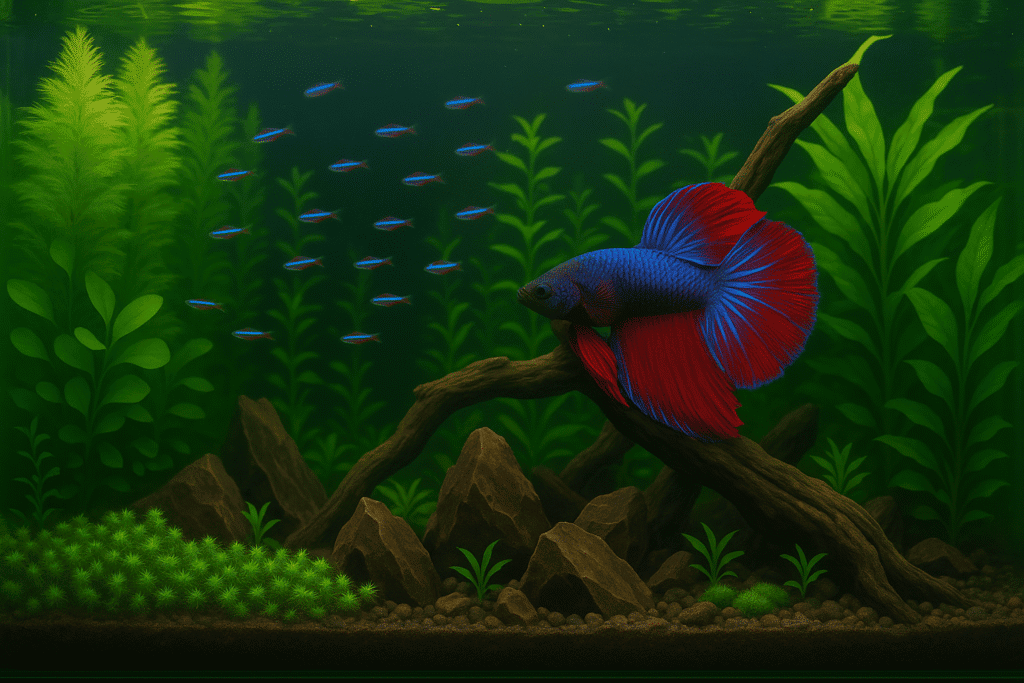
When selecting tank mates for your betta fish, it’s crucial to prioritize their social interaction and overall comfort. A community tank with compatible tank mates can create a vibrant environment. Peaceful schooling nanofish like neon tetras or rasboras add movement and color without provoking aggression.
Make sure your tank is at least 10 gallons to provide adequate space, minimizing stress. Be cautious to avoid colorful or finned species, such as guppies, as they might trigger territorial disputes. It’s important to research compatibility before introducing new fish and monitor their interactions closely. This way, you’ll help maintain harmony in your tank, making certain your betta thrives alongside its companions.
Creative Ways to Alter Feeding Routines
To keep your betta fish engaged and healthy, I consider altering their feeding routines in creative ways. Adding a bit of extra stimulation during feeding not only satisfies their nutritional needs but also enhances their overall well-being. Here are some ideas to keep mealtime exciting:
- Introduce live foods like blackworms or baby brine shrimp to activate their hunting instincts.
- Use a worm feeder cone for frozen bloodworms, encouraging foraging behavior.
- Incorporate feeding toys, such as mazes or floating treat balls, to challenge their problem-solving skills.
Observing and Adjusting to Your Betta’s Needs
While observing betta fish, paying close attention to their behavior can reveal much about their needs and well-being. I’ve noticed signs of boredom—like isolation and lethargy—that prompted me to adjust to their environment. Here’s how to approach it:
| Behavior | Action Taken | Result |
|---|---|---|
| Isolation | Added more decorations | Increased exploration |
| Aimless swimming | Introduced floating logs | Enhanced physical activity |
| Lethargy | Varied diet with live foods | Boosted engagement |
| Lack of interaction | Monitored tank mates closely | Improved social dynamics |
| Disinterest in toys |
Conclusion
To sum up, providing environmental enrichment for your betta fish isn’t just a luxury; it’s essential for their mental well-being. By recognizing signs of boredom and incorporating various stimuli—like decorations, live plants, and social interactions—you can create a vibrant habitat that mimics their natural environment.
Remember, a happy betta is an engaged betta. By observing and adjusting to their needs, I’ve fostered a healthier, more active fish that truly thrives in care.