Setting up a betta fish tank starts with selecting a minimum 5-gallon tank for ideal health. You’ll need a gentle filter that circulates water 3–5 times per hour, along with a heater to maintain 78–82 °F. Create a cozy environment with smooth decorations and live plants. Always condition the water and monitor parameters like ammonia and pH. By ensuring water quality, you’ll help your betta thrive. Discover more details for an even smoother setup.
Understanding Betta Fish
When it comes to understanding betta fish, it’s essential to recognize their unique characteristics and needs. The beautiful betta, or Betta splendens, typically grows to about 3 inches and can live up to 3 years with proper care. Male bettas are notoriously territorial, so it’s important to keep them alone in their tank for the best happiness.
However, you can house multiple female bettas in a sorority tank of at least 5 gallons. Excellent water quality is critical, as bettas have a labyrinth organ that allows them to breathe air, making them adaptable to shallow waters. Observing a new betta building bubble nests indicates a comfortable, stress-free environment, highlighting the significance of a suitable tank.
Choosing the Right Tank Size
When choosing the right tank size for your betta fish, I recommend a minimum of 5 gallons to guarantee adequate swimming space and promote health. Ideally, opting for a tank of 10 gallons or more will greatly enhance water quality and stability. Keeping your betta in anything less than 3 gallons can lead to stress and serious health issues.
Minimum Tank Requirements
Choosing the right tank size is essential for the well-being of your betta fish. The minimum tank requirements recommend at least 5 gallons, as larger tanks promote better water quality and allow your betta to explore. While a 10-gallon tank is ideal for maintaining a stable environment, smaller options like one or 2-gallon bowls can lead to poor conditions, requiring daily water changes.
Male bettas are territorial and should be housed alone, whereas multiple females can thrive in a properly sized sorority tank of at least 10 gallons. Ensuring proper tank size not only enhances your betta’s quality of life but also reduces stress and fosters healthier behavior.
Ideal Betta Tank Size
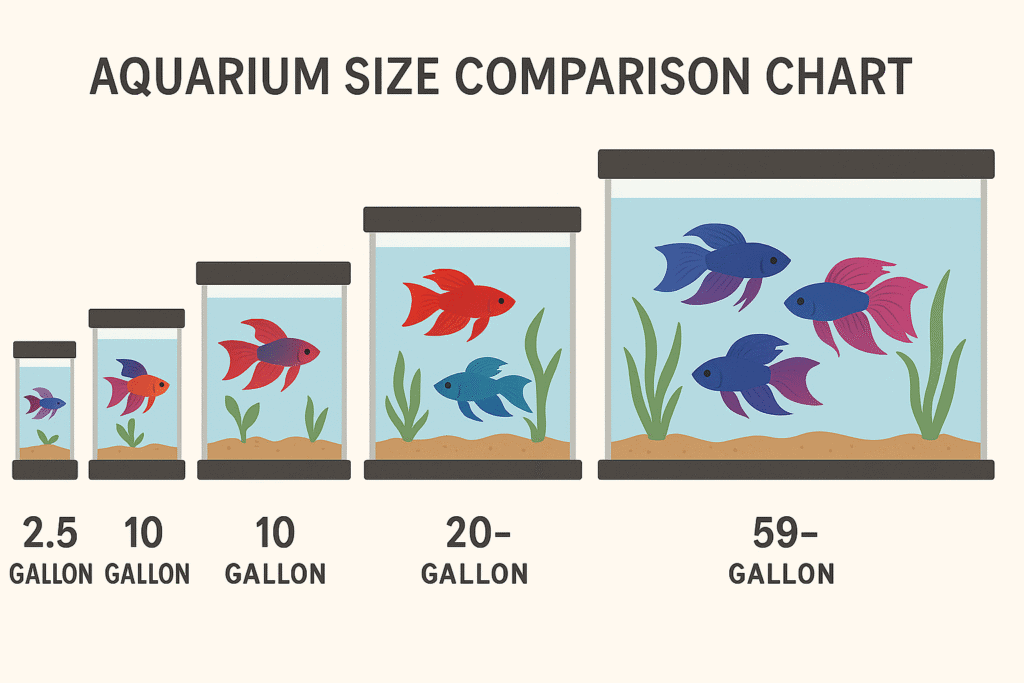
Understanding the ideal tank size for your betta fish is vital for fostering a healthy and stimulating environment. I recommend a minimum of 5 gallons, as larger tanks provide better water quality and ample swimming space. Key considerations include:
- Smaller tanks can lead to rapid water quality deterioration.
- 10-gallon tanks greatly enhance happiness and activity levels.
- Adequate tank size is important when selecting tankmates to prevent stress and aggression.
- Decorations and plants in larger tanks create a stimulating environment that supports natural behaviors.
Essential Equipment for Your Betta Tank
As you set up your betta tank, having the right equipment is crucial to guarantee a healthy and thriving environment for your fish. Start with a minimum 5-gallon tank to promote exploration and maintain cleaner water conditions. A gentle filter, like a sponge or nano hang-on-back filter, is essential, processing the tank water 3 to 5 times per hour for ideal quality.
You’ll also need a tropical fish heater to maintain a stable water temperature between 78 to 82 °F, ensuring your betta feels at home. Don’t forget an aquarium lid to prevent jumping, a common betta behavior. Finally, provide high-quality betta food, such as pellets or freeze-dried bloodworms, for proper nutrition and tank maintenance.
Setting Up the Tank Environment
When setting up the tank environment for your betta fish, I recommend starting with a minimum tank size of 5 gallons to guarantee they have enough space to swim freely.
Choosing the right substrate is also essential; using a combination of aquarium substrate and soil supports plant growth, which benefits the ecosystem. Together with soft decorations and live plants, you’ll create a habitat that fosters both comfort and health for your betta.
Tank Size Requirements
Creating the right environment for your betta starts with choosing an appropriate tank size. Bettas need a minimum of 5 gallons to thrive. A spacious tank not only enhances their happiness but also maintains better water quality, reducing waste concentration. Essential tank size requirements:
- Keep only one male betta per tank to avoid territorial aggression.
- A 10-gallon tank is ideal for housing multiple female bettas in a sorority.
- Larger tanks allow for the addition of live plants and decorations.
- A suitable tank promotes better swimming space and overall health.
Substrate and Hardscape Choices
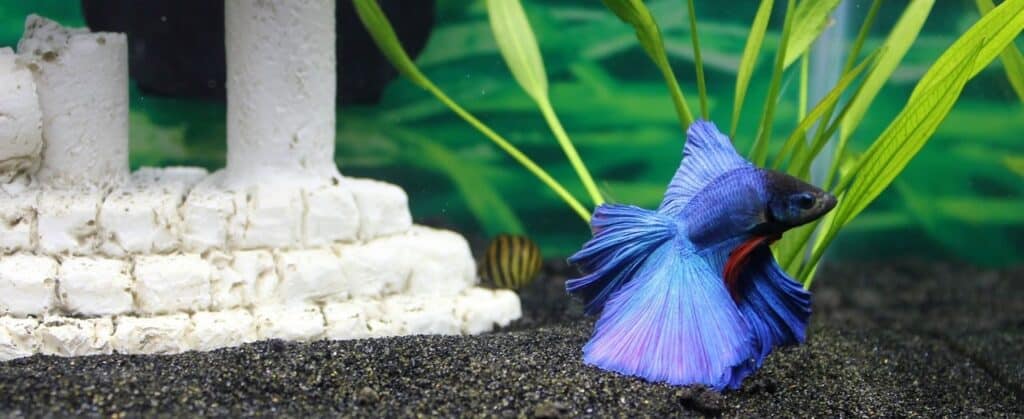
Choosing the right substrate and hardscape is essential for establishing a healthy environment for your betta fish. I recommend using a thin layer of aquarium substrate combined with aquarium soil, which promotes plant growth and minimizes ammonia seepage. Inert rocks like black lava rock are excellent for maintaining stable water pH and hardness while providing ample surface area for beneficial bacteria.
Incorporate hardscape materials like dragon wood to create hiding spots and territories, enhancing your betta’s sense of security and reducing stress. Ensure all decorations and hardscape elements are smooth and free of sharp edges to protect your betta’s delicate fins. Strategically position the substrate and hardscape to allow for swimming space while providing areas for plants and hiding spots.
Filter and Water Quality Management
To maintain a healthy environment for your betta fish, effective filters and water quality management are essential. Key points include:
- Use a filter that processes aquarium water 3 to 5 times per hour; for a 20-gallon tank, choose a filter rated for at least 60 gallons per hour.
- Fill your tank with conditioned or deionized water to protect your betta from contaminants.
- Regularly test water for ammonia, nitrite, nitrate, pH, GH, and KH to ensure ideal conditions.
- Perform partial water changes to keep ammonia and nitrite levels at zero ppm and nitrates below 40 ppm.
Lighting and Temperature Considerations
Maintaining ideal lighting and temperature is just as important as managing water quality for your betta fish. Bettas thrive in water temperatures between 76 to 81 °F, so investing in a reliable heater is essential. Additionally, lighting should mimic natural day-night cycles. I recommend using LED lights; they’re energy-efficient and provide adequate brightness without excessive heat.
| Factor | Recommendation |
|---|---|
| Temperature | 76–81 °F |
| Heater | Reliable and adjustable |
| Lighting | LED lights, off at night |
| Algae Control | Limit excessive lighting |
Selecting Decorations and Plants

Safety and well-being are paramount when selecting decorations and plants for your betta fish tank. Choose decorations with smooth, non-toxic surfaces to avoid damaging delicate fins.
Incorporate live plants like Anubias, Hornwort, and Java grass for aesthetics, improved water quality, and valuable hiding spots. Add a betta hammock so your fish can rest near the surface, mimicking its natural behavior. Balance open swimming space with strategic plant placement to encourage exploration and activity.
Introducing Your Betta Fish
Once you’ve set up your betta fish tank, introduce your new fish carefully to ensure a smooth transition. First, condition the tap water and set the heater to 76 to 81 °F. Float the sealed fish bag in the tank for 10 minutes to acclimate the betta.
Gradually mix tank water into the bag every 10 minutes for an hour. When ready, use a net to transfer the betta, avoiding bag water contamination. Minimize disturbances by turning off lights for the first day and observe your betta’s behavior for comfort and health.
Ongoing Maintenance and Care
After your betta is settled, ongoing care becomes essential to ensure long-term health and well-being. To keep your betta thriving, regularly test water parameters, including ammonia, nitrite, and pH. Perform partial water changes of 25–50% every 1–2 weeks to maintain water quality.
Clean the tank and decorations periodically to prevent algae buildup. Maintain a consistent temperature between 76 to 81 °F and a steady light cycle. Monitor your betta for any signs of illness and adjust care routines as necessary.
Conclusion
Setting up a betta fish tank can be a rewarding experience when these guidelines are followed. By understanding your fish’s needs and creating a suitable environment, you guarantee a thriving habitat. Remember to maintain water quality, monitor temperature, and provide enriching decorations.
With proper care and attention, your betta will flourish, bringing beauty and life to your space. Enjoy the journey, and don’t hesitate to reach out for advice as you begin this aquatic adventure!