When choosing rocks for your Betta aquarium, I recommend focusing on types that won’t change your tank’s pH. Ideal options include inert rocks like Dragon Stone, slate, quartz, black lava rock, and petrified wood. Avoid limestone, dolomite, soapstone, Seiryu stone, and geodes, as they can raise pH levels and harm your fish. v
Always clean the rocks before adding them to your tank to prevent contaminants. There’s more to learn about selecting and maintaining the right rocks for your Betta’s health.
Why Aquarium Rocks Matter
Setting up a Betta aquarium is essential for both the aesthetic and health of the fish. The right aquascaping rocks enhance the tank’s natural look and provide shelter and spawning spots that mimic Betta habitats and support aquatic plants. However, caution is necessary, as certain rocks can alter pH levels and water hardness, negatively impacting Betta’s health. I prefer smooth, non-sharp rock surfaces to prevent injuries to their delicate fins.
Properly sourced rocks can support beneficial bacteria growth, which is vital for maintaining water quality and the nitrogen cycle. By selecting the right rocks, I create a stable environment that promotes my Betta’s well-being and overall happiness.
7 Ideal Rock Types for a Healthy Betta Fish Aquarium
Choosing the right rock types for a Betta aquarium greatly impacts both the tank’s aesthetic and the well-being of the fish. For my Betta tanks, I recommend light rock such as Dragon Stone, an Igneous rock with a lightweight nature, which helps maintain water balance. Slate is a classic Sedimentary rock, another excellent choice; its flat, smooth surface minimizes the risk of fin injuries. I also appreciate quartz, as it’s inert and won’t alter pH, keeping my fish safe.
Lava rock, with its porous surface, promotes beneficial bacteria growth, but smoothness is necessary to protect active Bettas. Finally, petrified wood adds a natural look while remaining safe for water parameters. It can also be used with larger rocks to create depth. Avoiding rocks like limestone and dolomite is vital, as they can raise pH and harm my Betta’s health.
Common Aquarium Rocks to Avoid for Your Betta Fish

While many rocks can enhance the beauty of a Betta aquarium, it’s essential to steer clear of certain types that can jeopardize your fish’s health. Here’s a quick reference to avoid:
| Rock Type | Reason to Avoid | Effect on Betta Fish |
|---|---|---|
| Limestone | Raises pH and hardness | Creates unsuitable conditions |
| Dolomite | Increases pH levels and hard water | Causes stress |
| Soapstone | May contain harmful metals | Risks poisoning |
| Seiryu Stone | Elevates water hardness and pH | Potential stress |
| Geodes | Can leach harmful minerals | Negatively impacts environment |
| Texas Holey Rock | Leaches harmful minerals | Affects water quality |
How to Introduce Rocks Into Your Betta Fish Aquarium
Introducing rocks into your Betta fish nano tank aquarium can enhance its aesthetic appeal and provide essential hiding spots for your fish. Start by thoroughly cleaning each rock with warm water and a soft brush, guaranteeing a clean tank free from contaminants. It’s vital to conduct a vinegar test; if the rocks fizz, they could alter pH levels and should be avoided in your Betta tank.
Once you’ve selected safe rocks, arrange them to create stability and various hiding spots, promoting a secure environment for your Betta. After introducing the rocks, monitor your fish’s behavior closely. Finally, regularly check the water chemistry and pH levels to confirm the rocks aren’t negatively impacting the water conditions in your aquarium.
Care and Maintenance of Aquarium Rocks
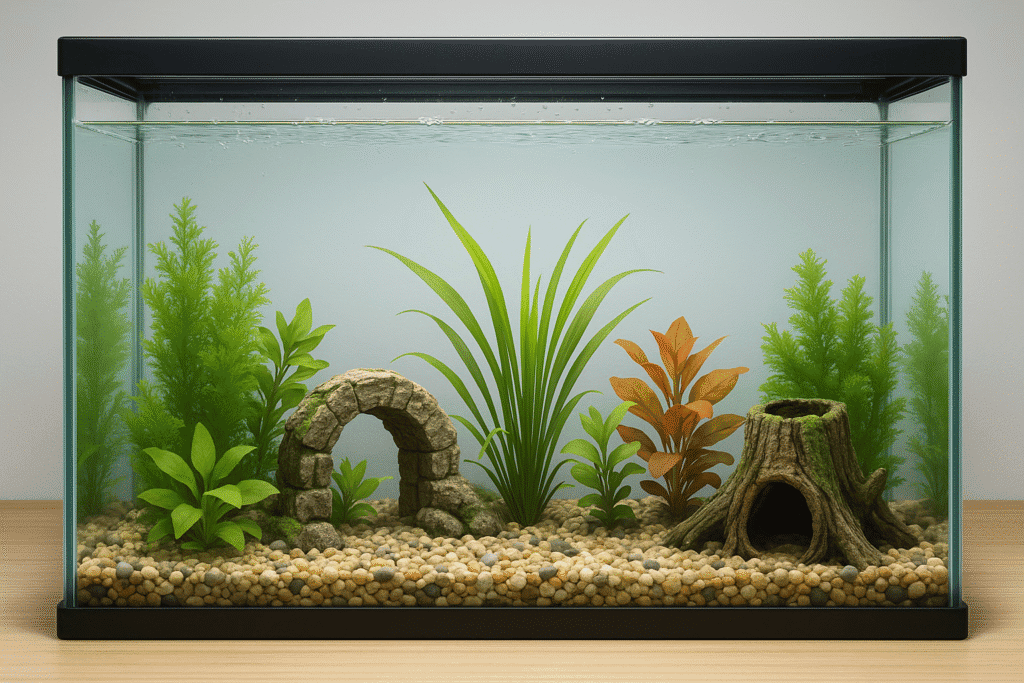
To maintain a healthy Betta aquarium, it is crucial to regularly care for and maintain the rocks within it. Here are some key practices I follow:
- Inspect rocks regularly for discoloration or unusual growth, which can signal water quality issues.
- Clean rocks during water changes by scrubbing them manually to control algae growth and keep the environment healthy, especially when using Decorative Ceramic Rocks.
- Ensure rocks are thoroughly washed before their introduction to the aquarium to prevent harmful substances from leaching.
- Monitor the stability of rock arrangements to avoid shifting that could harm Betta fish or disrupt the aquascape.
Conclusion
In summary, choosing the right natural rocks for your betta aquarium is essential for maintaining stable pH levels and ensuring your fish thrive. By selecting safe Igneous rock options and avoiding harmful ones, you can create a healthy environment for your Betta.
Remember to introduce new Igneous rock additions carefully and keep up with regular maintenance to prevent any issues. With the right approach, you’ll provide a beautiful and safe habitat that supports your Betta’s well-being.