When I set up my betta fish breeding tank, the focus is on three key elements: selecting a healthy pair, conditioning them, and preparing the environment. I choose vibrant, active bettas and condition them with a rich diet for at least ten days.
Ensure you have a minimum 10-gallon tank, maintain the water at 80°F, and add Indian almond leaves. There’s so much more to perfecting the process than these basics.
Essential Equipment for Betta Breeding
When setting up a breeding environment for betta fish, having the right equipment is essential for success:
- A breeding tank of at least 10 gallons provides ample space for the pair and their offspring.
- I always incorporate a sponge filter connected to an air pump to maintain ideal water quality without disturbing the bubble nest.
- I set the heater to 80°F (26.7°C) to create perfect breeding conditions.
- I use Indian almond leaves to help buffer pH and prevent fungal infections in the tank.
- Preparing a micro worm culture and a brine shrimp hatchery is critical for feeding fry post-hatching.
- I keep jars handy for monitoring fry and a breeder net for acclimating the female, ensuring a stress-free environment.
Selecting the Perfect Breeding Pair
I prioritize choosing healthy bettas that are active, young, and free of disease to maximize our chances of successful spawning. When selecting, I look for striking color and fin shape, ensuring the female is slightly smaller than the male, which aids in breeding.
It’s essential to maintain pristine water quality through regular changes, as this supports both the breeding pair and the fry. I also monitor the female for readiness indicators—such as a darkened body, visible vertical bars, and a pronounced egg tube—which signal she’s prepared to spawn.
Conditioning Your Bettas for Spawning
To guarantee ideal readiness for spawning, I condition both male and female bettas for at least ten days using high-quality, nutrient-enriched foods. Here’s what I focus on:
- Nutrient-Rich Diet: I offer varied foods like bloodworms and daphnia to enhance health.
- Pristine Water Conditions: I maintain clean water with regular changes to minimize stress.
- Observe Female Indicators: I watch for a plump body and a visible ovipositor on the female.
- Monitor Readiness: I look for signs like the female displaying vertical bars and the male building a bubble nest.
These measures make certain both bettas are physically and psychologically prepared for the spawn tank.
Setting Up the Breeding Tank
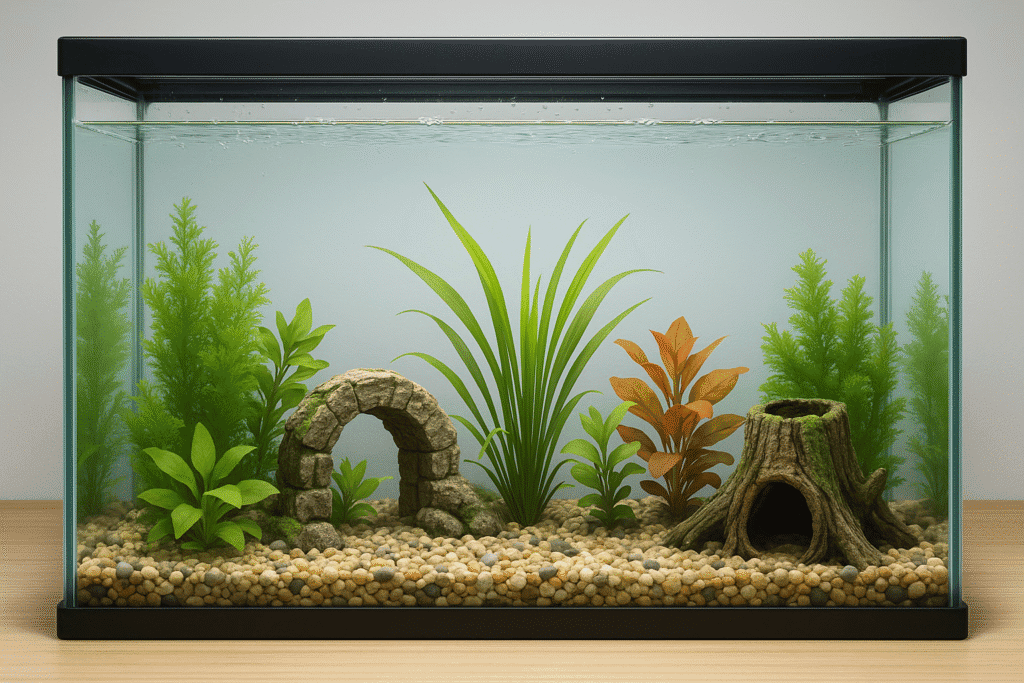
I chose a minimum 10-gallon aquarium with a bare bottom to prevent eggs from getting stuck and to facilitate easy cleanup. A sponge filter connected to an air pump helps maintain water quality without disturbing the male’s bubble nest during breeding. I set the water temperature to approximately 80°F (26.7°C) for ideal conditions.
Adding Indian almond leaves not only buffers pH but also releases beneficial tannins, which aid in preventing fungal infections. I introduce the male betta first, allowing him to build his bubble nest before acclimating the female in a breeder net to reduce stress.
Creating the Ideal Breeding Environment
Creating a breeding environment that mimics the natural habitat of betta fish greatly enhances their chances of successful spawning:
- Use a bare-bottom tank of at least 10 gallons (38 liters) for easy cleaning and egg management.
- Maintain the water temperature at 80°F (26.7°C) while ensuring pristine water conditions through regular changes.
- Introduce Indian almond leaves to buffer pH and release beneficial tannins, promoting breeding behavior.
- Implement a sponge filter to maintain water quality without disturbing the male’s crucial bubble nest.
Observing Courtship Behavior
While observing the courtship behavior of betta fish, I find it fascinating to witness the intricate rituals that unfold between the male and female. The male displays flaring behavior and builds a bubble nest, signaling his readiness to mate.
Meanwhile, the female exhibits vertical bars on her body, indicating receptiveness. If the female shows aggression or prolonged chasing occurs without spawning, separation is necessary to mitigate stress. Introducing her after the male has established his bubble nest increases the likelihood of successful spawning.
| Behavior | Male Action | Female Response |
|---|---|---|
| Flaring | Builds bubble nest | Displays vertical bars |
| Dance | Approaches female | Flares and dances |
| Spawning | Wraps around female | Releases eggs |
The Spawning Process
As the moment for spawning approaches, I carefully introduce the female betta to the male’s tank, ensuring the bubble nest remains undisturbed to foster a conducive breeding environment. I monitor her for signs of readiness, including vertical barring indicating excitement and a plump body signaling she’s full of eggs.
The male then wraps around her to induce egg release and collects and places the eggs in the bubble nest. During spawning, the male tends to the eggs, and the fry typically hatch within 24–72 hours. Once they’re free-swimming, I remove the male to protect the fry and ensure they receive proper nourishment.
Caring for Eggs and Newly-Hatched Fry
After the breeding process, the male betta collects fertilized eggs into a bubble nest and monitors and eats any unfertilized eggs to maintain nest quality. He tends to the fry until they hatch and remain in the bubble nest, relying on their yolk sacs for nutrition. Once the fry is free-swimming, the male should be removed to prevent aggression.
Fry Feeding Techniques
Initially, fry absorb their yolk sacs for about 36 hours, so feeding is avoided during this period to prevent water pollution. Once they start swimming, I feed them 2–4 times daily with microworms, which provide essential nutrients for growth.
After removing the male betta, I cover the tank openings to maintain humidity while ensuring air access. As the fry grows, I introduce brine shrimp (BBS) 2–3 times daily to support their high metabolism and promote healthy growth.
Transitioning and Feeding Fry
Once fry hatch, it is crucial to provide them with the right nutrition and environment to guarantee their successful growth and development:
- Feed 2–4 times daily with microworms until they absorb their yolk sacs, which takes about 36 hours.
- Once free-swimming, introduce brine shrimp (BBS) into their diet, feeding them 2–3 times daily.
- Shift fry from a 10-gallon rearing tank to a larger 20-gallon tank when it becomes crowded, ensuring matching water parameters.
- Start daily water changes of 10–30% in the fry’s tank to maintain water quality, gradually increasing as they grow.
Monitoring the Growth and Health of Fry

As I monitor the growth and health of my betta fry, it’s essential to pay close attention to their feeding routines and environmental conditions. I feed them 2–3 times daily with microworms and once daily with newly hatched brine shrimp to guarantee steady growth and prevent starvation, given their high metabolism.
Maintaining ideal water quality is critical, so I perform 50% water changes daily in their jars. I also watch for signs of aggression, separating identified males to prevent fighting, which can hinder their growth. By about five weeks, I notice fry starting to show color and fin characteristics, indicating they’re developing into their adult forms.
Conclusion
Successful betta breeding hinges on careful preparation and attention to detail. From selecting the right pair to setting up an ideal environment, each step plays a vital role. By conditioning your fish and creating a nurturing breeding tank, you set the stage for a productive spawning process. Once the eggs hatch, diligent care and monitoring of the fry guarantee their growth and health. With patience and dedication, you can enjoy the rewarding experience of raising beautiful betta fish.