Understanding Betta splendens aggression is key to creating a peaceful aquarium. I’ve found that their territorial behavior can lead to intense clashes, especially among males. Factors like tank size, cleanliness, and hiding spots play vital roles in reducing aggression. These fish communicate through gill flaring and nipping, which signal dominance. Stick around to explore their fascinating behaviors more!
Understanding Betta Fish Aggression
As I explore the fascinating world of Betta fish, it’s hard to ignore their notorious fighting behavior, especially among males. Male Betta fish, or Siamese fighting fish, often engage in aggression to establish dominance. These territorial creatures display common behaviors like gill flaring and fin nipping, which can result in serious injuries.
Curiously, environmental factors play a significant role; males raised in isolation tend to show heightened aggression compared to those raised in groups. Selective breeding has also intensified these traits, making it essential to choose tank mates wisely. Female bettas, on the other hand, are less aggressive and can coexist peacefully in groups, forming a social hierarchy that contrasts sharply with their male counterparts.
Environmental Influences on Behavior
Understanding the aggressive nature of Betta fish naturally leads to an exploration of how their environment shapes these behaviors. Factors like tank size and cleanliness play a vital role; larger, well-maintained tanks encourage healthier interactions.
Notably, Bettas raised in isolation show higher aggression levels compared to those in groups, highlighting the importance of social conditions. Visual barriers and a well-structured tank setup that includes hiding spots and plenty of swimming space create a secure environment, helping to reduce aggression. Here’s a quick overview:
| Environmental Factor | Impact on Behavior | Recommendations |
|---|---|---|
| Tank Size | Larger tanks reduce aggression | Aim for at least 10 gallons |
| Cleanliness | Cleaner tanks promote health | Regular maintenance needed |
| Visual Barriers | Minimize territorial disputes | Use decorations or dividers |
| Hiding Spots & Space | Secure environment, less stress | Provide ample hiding places |
Signs of Aggression in Betta Fish
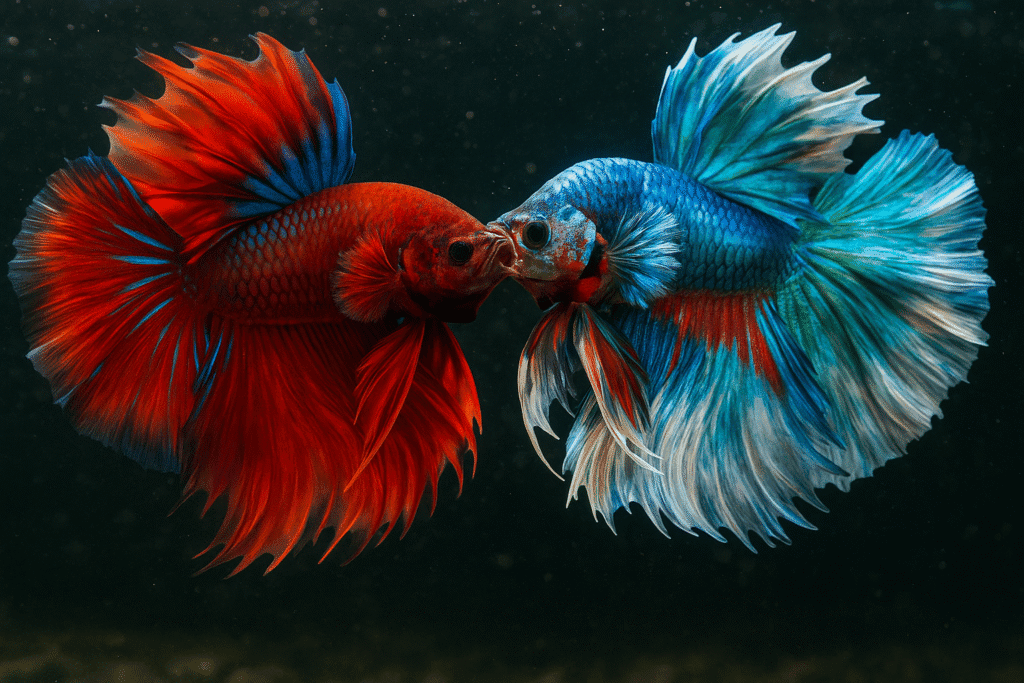
While observing Betta fish, you’ll quickly notice their dynamic personalities, and it’s vital to recognize the signs of aggression that can emerge. Common signs include gill flaring, where males push their operculum forward to appear larger, and aggressive interactions like ramming or nipping at rivals. You might even witness lip-locking behaviors, which indicate high levels of aggression and can lead to physical injuries.
Look for visible signs such as missing scales, torn fins, and increased hiding behavior—these are clear indicators of stress or harm. Environmental factors like tank overcrowding can exacerbate these behaviors, so it’s important to monitor your tank setup. Understanding these signs helps guarantee your Betta fish remain healthy and happy.
Strategies to Manage Territorial Behavior

To effectively manage the territorial behavior of Betta fish, I recommend implementing a few key strategies that can create a harmonious environment in your aquarium.
- Keep only one male in each tank to prevent aggressive encounters.
- Use visual barriers like plants or decorations to obstruct lines of sight, reducing tension between fish.
- Confirm your tank has ample space (at least 5 gallons) and hiding spots for fish to establish their territories and minimize territorial disputes.
- Gradually introduce new tank mates and actively monitor interactions to confirm they adapt positively, avoiding stress-induced aggression.
The Role of Genetics in Aggression
Genetics plays an essential role in shaping the aggressive behaviors of Betta fish, and I’ve found it fascinating how selective breeding has led to such pronounced differences among various strains. Fighting bettas, in particular, exhibit remarkable genetic variations linked to aggression. Researchers have pinpointed specific genetic markers associated with behaviors like puffing gills and biting rivals during confrontations.
According to a publication on ResearchGate GmbH, by comparing genomes from wild bettas in rural Thailand with selectively bred ones, we gain insightful perspectives on aggression. Excitingly, upcoming experiments using CRISPR technology will allow for precise behavior modification. This research not only deepens our understanding of Betta fish aggression but also sheds light on the genetic basis of aggressive behaviors in other species, including humans, paving the way for future discoveries.
Conclusion
In summary, understanding betta fish aggression is essential for any aquarist. By recognizing the signs and environmental influences that trigger territorial behavior, I can create a more harmonious tank. With the right strategies, such as providing ample space and hiding spots, I can manage their aggression effectively.
Ultimately, fostering a balanced environment allows my bettas’ vibrant beauty to shine without constant conflict. Additionally, recent neurobiological studies indicate that the optic tectum plays a role in visual threat assessment, offering new avenues for research and understanding.