During the Betta egg laying process, you’ll first need to select a mature breeding pair. Next, prepare to introduce the female after acclimatizing her for one to two days. Observe their behaviors closely, as the male’s bubble nest and the female’s readiness signs are essential.
Once spawned, the male guards the fertilized eggs, ensuring they’re safe and preventing fungal growth. Expect hatching within 36-48 hours, with further stages of fry management and care following. There’s much more to explore!
Selecting the Breeding Pair
When selecting the breeding pair for Betta fish, it is crucial to choose sexually mature individuals, typically around 4-6 months old. I always prefer a male that’s larger than the female, as this size difference often leads to successful breeding.
Before introducing them, I observe the female’s behavior—she should darken in color, display vertical stripes, and show a white egg spot on her belly when ready to spawn. To gauge their interest, I position the female’s tank next to the male’s. The male will display his readiness by flaring his gills, spreading his fins, and performing a fascinating dance.
Only after confirming both are prepared do I introduce the female into the male’s tank, prompting him to build a bubble nest for breeding.
Preparing for Spawning
To guarantee a successful spawning process, I’ve found that preparing the breeding environment is just as important as selecting the right pair. First, I place the male Betta in a suitable 30-gallon tank, maintaining an ideal water temperature of around 80°F (26°C).
This sets the stage for when the male gets busy building his bubble nest using saliva, signaling his readiness. Meanwhile, I introduce the female into the tank using a cut plastic cola bottle as a chimney, allowing her to acclimatize for 1-2 days.
During this conditioning phase, I feed both Betta pairs a diet rich in live foods to enhance their spawning readiness. Finally, I release the female shortly before lights go off to encourage immediate interaction.
Female Acclimatization and Nest Building
When I introduce the female Betta to the breeding tank, I let her acclimatize for 1-2 days, which is vital for triggering egg production. During this time, the male Betta constructs a bubble nest using his saliva, an essential element for spawning.
I also place the female in a transparent chimney to observe her behavior, particularly the vertical striping and color darkening that indicate her readiness to spawn.
Acclimatization Process Duration
While acclimatizing the female Betta, it is important to allow her to remain in a separate container for 1-2 days, which not only stimulates egg production but also helps her adjust to her new environment. During this acclimatization period, the male Betta will build a bubble nest using his saliva, vital for the eggs after spawning.
This time reduces stress and aggression, making the eventual introduction smoother. I recommend introducing the female shortly before the lights go off, as this encourages immediate interaction and spawning behavior. Pay attention to her vertical striping during acclimatization—this often indicates her readiness to spawn and willingness to engage with the male Betta, thereby enhancing the likelihood of successful reproduction.
Male Nest Construction

Observing the male Betta as he constructs his bubble nest is a fascinating part of the breeding process. During the acclimatization of the female, he diligently builds this nest using saliva, guaranteeing a protective environment for the fertilized eggs after spawning. The ideal water temperature around 80°F (26°C) encourages peak behavior for both the male and female.
| Action | Description | Purpose |
|---|---|---|
| Bubble Creation | The male blows bubbles to the water’s surface | Forms the nest |
| Material Addition | Incorporates plant materials | Provides stability |
| Courtship Display | Flares fins |
This preparation is essential for a successful spawning process.
Female Behavior Observation
The female Betta’s behavior during acclimatization plays an essential role in the breeding process. Initially, I place her in a cut plastic cola bottle chimney for 1-2 days, which encourages egg production. During this time, she displays vertical striping, signaling her readiness and interest in the male.
Once I remove her from the chimney, she enters the male’s tank, where he has constructed a bubble nest using his saliva. I carefully observe her interaction with the male; if she approaches him with her head down, she’s signaling her enthusiasm to spawn.
It’s vital to monitor their behavior closely to prevent any aggression from the male, ensuring a smooth spawning process and a successful breeding experience.
Observing Interaction and Behavior
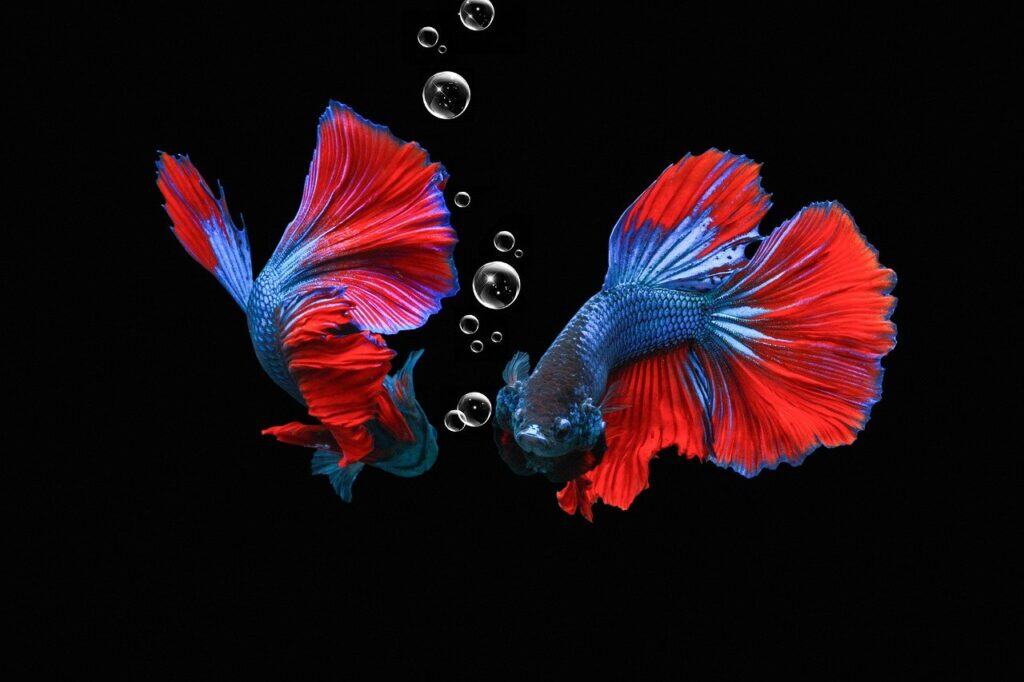
When I observe the male Betta, his display behavior is intriguing as he flares his fins and engages in a fascinating dance to attract the female. I pay close attention to her response indicators, especially the head-down posture that signals she’s ready to spawn. This interaction not only prepares them for the spawning process but also highlights their unique courtship dynamics.
Male Display Behavior
As I watch the male betta during the spawning process, it’s fascinating to see how he employs a series of elaborate displays to attract the female. His male display behavior includes flaring his gills and spreading his fins wide, creating an impressive visual spectacle.
He even performs an enchanting dance, all aimed at enticing her. Once she’s released into his tank, the male encourages her to approach the bubble nest by coaxing her under it through flaring and brief chases.
The embrace between the male and female is essential, as it facilitates the release of eggs. Afterward, he collects the eggs and places them in the bubble nest, ensuring a safe environment for the upcoming fry.
Female Response Indicators
Observing the male betta’s display behavior provides insight into the female’s response indicators. When a female is ready to spawn, she exhibits vertical striping and darkening in color, signaling her receptiveness. Approaching the male with her head down indicates her willingness to breed.
You’ll notice her moving along the tank edges, showcasing breeding bars—dark stripes that further indicate her readiness. During initial interactions, while the male spreads his fins and dances, the female may respond with her own flaring and movements.
However, if she’s not ready or feels threatened, she might retreat to hiding spots or display submissive behavior, which can prompt the male to become more aggressive or persistent in his courting attempts.
Spawning Preparation Signals
Understanding the spawning preparation signals in bettas is essential for successful breeding. I’ve observed that the behavior of both male and female bettas is key during this phase. Here are some critical indicators to watch for:
- The male flares his gills, spreads his fins, and dances, showing readiness for spawning.
- The female darkens in color, moves along the tank edges, and displays breeding bars, indicating her receptiveness.
- Initially, I suggest keeping the female in a separate container to observe the male.
- Once the male builds a bubble nest, I know it’s time to remove the female and encourage direct interaction.
The Spawning Process

When Betta fish engage in the spawning process, the male embraces the female in a series of synchronized movements to facilitate egg release. As the female releases her eggs, the male simultaneously releases sperm, resulting in fertilized eggs that fall to the bottom of the tank.
Both fish actively collect these eggs with their mouths, carefully placing them into the bubble nest they’ve created. This intricate process can last anywhere from 30 minutes to 3 hours, depending on the pair’s readiness and environmental conditions.
Once spawning is complete, the male chases the female away to protect the eggs, allowing her time to recover from the physical exertion of laying eggs, ensuring the safety of the future Betta fry.
Post-Spawning Care for Eggs
After spawning, I closely monitor the male Betta as he tends to the eggs for 1-2 days, ensuring they’re cared for and protected. I keep a small light on near the aquarium; it helps him locate the eggs and fry as they begin to hatch within 36-48 hours. During this critical period, he actively fends off the fry that sink to the bottom, returning them to the safety of the bubble nest.
Light Assistance for Eggs

Providing light assistance near the aquarium post-spawning can greatly enhance the care the male betta gives to the eggs. By keeping a small light on, you help him see and tend to the eggs more effectively. The male betta typically stays motionless under the bubble nest for 1-2 days, focusing on protecting and fanning the eggs, which is essential for their health. Here’s why light assistance is beneficial:
- It allows the male betta to spot and care for the eggs.
- Fanning prevents the growth of fungus around the eggs.
- It encourages the male to retrieve any sinking fry back to the bubble nest.
- Proper lighting aids in monitoring water conditions and fish behavior.
With this support, you’ll boost the chances of a successful hatch!
Male Fry Care
Caring for male fry after the spawning process is essential for their survival and growth. After spawning, I always leave a small light on near the aquarium to help the male betta see and tend to the eggs effectively.
For 1-2 days, the male remains motionless under the bubble nest, fanning the eggs to circulate water and prevent fungus. Once the majority of betta fry start swimming horizontally, I carefully remove the male to prevent him from eating the fry.
I also keep a close watch on their development, ensuring each fry swims correctly, as some may struggle without monitoring.
| Key Actions | Timing |
|---|---|
| Remove the male | Once fry swim horizontally |
| Monitor fry | Daily for the first few days |
| Light assistance | Throughout the incubation |
Hatching Timeline Expectations
Once the male fry care is underway, it’s important to understand the hatching timeline for the eggs. Typically, the eggs hatch within 36-48 hours, influenced by water temperature and conditions. In those first few days, the fry will sink to the bottom, and the male will diligently return them to the bubble nest.
Here’s what to expect during this critical period:
- Fry become free swimming within 4-5 days post-hatch.
- Maintain a small light near the aquarium to help the male see the eggs.
- The male stays mostly motionless under the bubble nest, protecting the eggs.
- Environmental conditions can greatly affect the hatching timeline.
Understanding these details guarantees the best care for your developing fry.
Monitoring Egg Development

Monitoring egg development in Betta fish is a critical phase that guarantees the survival and health of the fry. After spawning, the male Betta remains largely motionless beneath the bubble nest for 1-2 days, vigilantly watching the eggs.
During this period, the eggs typically hatch within 36-48 hours, influenced by water temperature—optimal conditions lead to faster hatching. The male actively fans the eggs, ensuring proper water circulation and preventing fungal growth, which is essential for their healthy development.
Once the fry hatch, they initially sink to the bottom, but the male will catch and return them to the bubble nest for safety. As they become free-swimming in a few days, they’ll start swimming horizontally, indicating readiness for feeding.
Fry Hatching and Initial Care
As the fry begin to hatch, the initial moments are essential for their survival and development. Within 36-48 hours post-spawning, the male will start to care for them by fanning the eggs to circulate water and prevent fungus. Once the fry hatch, they’ll sink to the bottom, and the male will attempt to catch and return them to the bubble nest as they begin to swim.
Here are some key points to remember:
- Fry will absorb their yolk sac within 12 hours.
- Free swimming fry will orient horizontally, unlike those with pointed tails.
- The male’s protective role is important during this early stage.
- Once most fry are free swimming, around 3-4 days, place the male in a separate tank to guarantee fry safety.
Male Betta Removal and Fry Management
After the fry begin to swim freely, it’s time to remove the male betta from the breeding tank to prevent predation. I carefully catch him using a clear cup with a lip, making sure I don’t disturb the fry. It’s vital to match the water temperature in the cup to the breeding aquarium to avoid shocking him. After removal, he may seem worn out from his efforts in caring for the fry.
For effective fry management, I continuously monitor their development and the water quality. Here’s a quick reference table for your convenience:
| Task | Timing | Importance |
|---|---|---|
| Male Betta Removal | Once fry are swimming | Prevents predation |
| Monitor Fry Growth | Daily | Guarantees health and survival |
| Check Water Quality | Every few days | Maintains ideal conditions |
Future Considerations for Fry Care

While caring for fry, I guarantee that their nutritional needs are met from the very beginning, starting with egg yolks and shifting to baby brine shrimp by the time they reach eight days old. Proper fry care is vital for their survival and growth. Monitoring their development is significant, as spawns can yield anywhere from 30 to over 300 fry.
To guarantee a healthy environment, I recommend:
- Conducting daily water changes of 10-15%
- Maintaining a consistent water temperature around 80°F (26°C)
- Continuously evaluating their growth and health
- Adjusting feeding routines as they mature
Conclusion
In summary, successfully breeding bettas requires careful preparation and close observation throughout the entire spawning process. By selecting a compatible pair and creating a conducive environment, you can witness the fascinating behavior of bettas during spawning.
Once the eggs hatch, proper care and management of the fry are essential for their growth and development. With patience and attention to detail, you can enjoy the rewarding experience of nurturing your betta fry into healthy adult fish.