To train your betta to follow your finger, start with an acclimation period of at least one week. Confirm your fish is healthy and in a suitable tank. Use gentle tapping to grab your betta’s attention and reward it with treats for following your finger. Keep training sessions short, around 3–5 minutes, and be consistent.
Gradually increase the complexity of movements. With patience and positive reinforcement, you’ll enhance your bond and your betta’s agility—and I’ve always found that small, regular water changes help keep them motivated. There’s so much more to explore!
Preparing to Train Your Betta
Before starting training, make certain your betta has had enough time to acclimate—ideally, at least a week. This allows the fish to recognize you and feel secure. Always check for signs of health, such as bright colors, intact fins, and smooth scales, to confirm readiness.
A minimum tank size of five gallons creates an ethical training environment, providing ample space for movement. When beginning sessions, I use suitable snacks like freeze-dried bloodworms as positive reinforcement to encourage desired behaviors.
Finally, wash your hands with hot water (without soap) before handling your betta to prevent contamination, ensuring a safe and healthy experience for both of us.
Getting Started With Training
Before starting training sessions, give your betta at least a week to settle in. This acclimation helps the fish recognize you as its owner, which is essential for effective training. Once it’s settled, set up a consistent environment to maximize session effectiveness—something I’ve learned over time.
Betta Acclimation Period
A successful training experience starts with giving your betta fish an adequate acclimation period. I recommend at least a week for your betta to adjust to its new fish tank. This time helps guarantee your betta’s comfort and confidence, which is essential for effective training.
| Aspect | Observation | Importance |
|---|---|---|
| Color | Bright and vibrant | Indicates good health |
| Fins | Intact and unfrayed | Sign of well-being |
| Scales | Smooth and shiny | Reflects overall health |
| Tank Size | Minimum 5 gallons | Provides space for exploration |
| Interaction | Gentle tapping | Gently gains attention |
Training Environment Setup
Creating an ideal training environment for your betta fish is essential for successful learning and engagement. First, verify your tank is at least five gallons; this space promotes health and comfort. Allow your betta at least a week to acclimate, helping it recognize you.
Before handling your fish, wash your hands with hot water—no soap—to maintain safety. During training, gently tap the tank to get your betta’s attention, but avoid excessive tapping to minimize stress. I also arrange little betta tunnels inside the tank to encourage exploration. Use fish food as positive reinforcement; when your betta follows your finger, reward it promptly.
This approach not only facilitates learning tricks but also strengthens the bond between you and your fish.
Teaching Basic Tricks

While many might think training a betta fish is impossible, it’s entirely feasible with the right approach. I begin by placing a finger on the aquarium glass and rewarding the betta immediately if it shows interest; this helps it associate my finger with food. Then, use gentle movements—shaking your finger or dragging it across the tank—to capture attention and encourage following.
Gradually increase the complexity by moving your finger in various directions, rewarding the betta for following along to reinforce the behavior. Practice short sessions of about 3–5 minutes several times a week, consistently offering small treats like pellets or bloodworms to maintain motivation.
Following Your Finger
To train a betta to follow a finger, start by placing your finger on the aquarium glass and rewarding any response with a treat. If it doesn’t react right away, lightly shake your finger to attract attention. As responsiveness improves, introduce side-to-side and vertical movements, continuing to reward actions to reinforce behavior. I find that a carefully timed treat after each correct move speeds up learning.
Initial Engagement Techniques
Engaging your betta effectively requires a structured approach, and one of the most effective techniques is using your finger as a visual cue. To begin, place your finger on the aquarium glass and observe interest. If there’s no response, gently shake your finger to capture attention. Once engaged, gradually move it side to side, rewarding each follower. Incorporating vertical movements can help maintain interest.
It’s important to practice short training sessions of 3–5 minutes daily, which keeps your betta motivated and enthusiastic to learn. By consistently rewarding the fish, you’ll reinforce positive behaviors and enhance the overall training experience.
Rewarding Successful Responses
Rewarding successful responses is essential for effective betta fish training, as it reinforces desired behaviors and encourages active engagement. I find that when a betta approaches, offering a small pellet immediately creates a strong positive link. Each time your betta follows your finger, provide consistent rewards to strengthen the behavior.
Keep training sessions short—around 3–5 minutes—to maintain interest and prevent overstimulation, ultimately fostering a more interactive experience between you and your fish.
Gradual Movement Progression
As you begin training your betta to follow your finger, it is important to establish a foundation of trust and recognition. Start by laying your finger against the aquarium glass and rewarding the fish with a treat when it shows interest or moves toward it. If the betta doesn’t respond, gently shake your finger to catch its attention.
Once engagement is achieved, gradually increase movement complexity—side to side and vertically. Each successful follow should be met with a reward like freeze-dried bloodworms. Keeping sessions brief (3–5 minutes) ensures focus is maintained and behaviors reinforced.
Jumping Out of Water
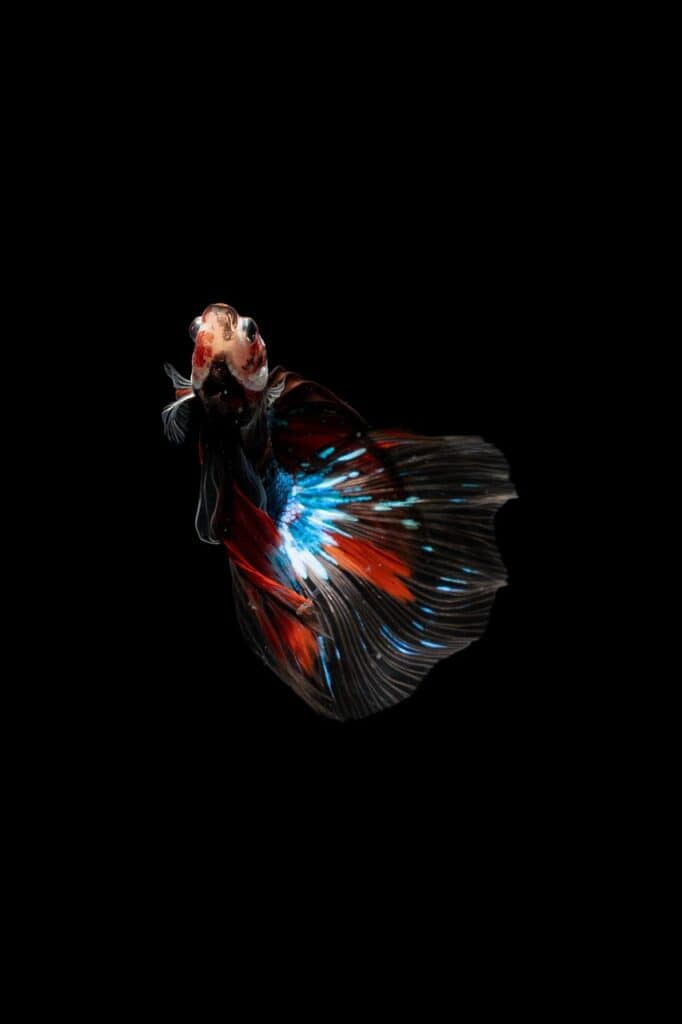
While many may not realize it, jumping is a natural behavior for betta fish, and with training, they can learn to leap out of the water for a treat. To start, I hover a food pellet just above the water using a straw or popsicle stick, enticing the betta to jump up and grab it.
During these sessions, I make sure to have a lid on the tank to prevent any accidental escapes. Consistent practice coupled with positive reinforcement enhances this exercise and makes learning enjoyable.
Flaring on Command
How can a betta be taught to flare on command? To start, I use a small mirror or a colored pen with a black or red cap to provoke natural flaring behavior. During training sessions, limit exposure to about 3–5 minutes to prevent stress.
When the betta successfully flares at the mirror or pen, reward it with treats, reinforcing positive behavior. Consistent practice is key; some bettas require more time, depending on temperament. With patience and dedication, you can successfully train this impressive display.
Swimming Through a Hoop
Teaching a betta fish to swim through a hoop can be both enjoyable and rewarding. To start, I created a hoop using a pipe cleaner and positioned it near the tank wall during feeding time.
- I encouraged my betta to swim through the hoop using food as a reward.
- Gradually moved the hoop further away as the betta improved.
- Kept sessions short, around 3–5 minutes, to maintain focus.
- Reinforced good behavior with immediate treats after each successful swim.
Fun Activities and Engagement Strategies
Engaging your betta fish in fun activities not only stimulates mental capacity but also strengthens your bond. One great connection method is through finger movement techniques during feeding. Move your finger side to side, rewarding the betta when it follows. Keep sessions short—3–5 minutes—to maintain focus and interest.
As the betta improves, introduce vertical movements or vary speeds. I’ve discovered that observing your fish’s bubble nest building afterward is a delightful reward for both of you.
| Activity | Duration | Goal |
|---|---|---|
| Finger Following | 3–5 mins | Teach your betta |
| Swim Through Hoop | 5 mins | Improve agility |
| Feeding Interaction | 5 mins | Strengthen bond |
Training Timeline and Tips
While training a betta fish, establishing a structured timeline greatly enhances learning. I recommend dedicating a few minutes each day to sessions, focusing on consistency. Here’s how I approached it:
- Start by placing a finger on the glass and rewarding the betta when it responds.
- Gradually move the finger side to side, rewarding each correct follow.
- Engage the betta to flare using varied movements in different directions and heights.
- Practice for about 3–5 minutes per feeding, ensuring patience, as it may take 3–4 months for consistent performance.
Conclusion
To sum up, training a betta fish can be a rewarding experience that enhances both your bond and the fish’s mental stimulation. I’ve found that understanding your fish species makes customization of methods easier, and with dedication, patience, and the right approach, your betta can showcase intelligence and personality through a variety of delightful tricks.