Betta fish, especially males, display aggression as part of their natural instinct. This aggression is normal during territorial displays and social interactions, but it’s essential to recognize when it escalates into harmful fighting.
Factors like tank size, hiding spots, and water quality greatly affect their behavior. Males shouldn’t be housed together, while female groups require careful observation.
I’ve learned that understanding these dynamics—and how to maintain proper water temperature—will help guarantee a peaceful environment for your bettas, and there’s more to discover about creating a harmonious community tank setup.
Understanding Betta Fish Behavior
When I observe fighting fish, it’s clear that their behavior is driven by instinctual aggression, especially among males. These Siamese fighting fish often display fighting behaviors to establish territory and dominance.
I notice common aggressive actions like flaring, where males expand their gill covers to intimidate rivals. Physical confrontations may involve nipping or ramming, which, while natural, can lead to injuries or stress-related deaths.
It’s essential to monitor their interactions. Female betta fish, although generally less aggressive, can still show territorial behaviors and develop social hierarchies in groups.
I’ve found that environmental factors, such as aquarium heaters and available hiding spots, greatly influence betta aggression. Creating a suitable environment can help reduce fish fight incidents and guarantee a healthier tank.
The Nature of Aggression in Betta Fish
Although the aggressive nature of betta fish is often misunderstood, it plays an important role in their survival and social interactions.
Betta splendens exhibit aggression primarily to establish territory and compete for resources.
One striking behavior is flaring, where they expand their gill covers to appear larger, aiming to intimidate rivals.
While aggression can lead to physical confrontations, injuries, and stress-related health issues, it’s vital to recognize that this behavior is heightened in captivity due to limited space. Notably, males can also display aggression towards females outside breeding conditions, reflecting the complexity of their interactions.
| Behavior Type | Purpose | Context |
|---|---|---|
| Flaring | Intimidation | Rival encounters |
| Fighting | Territory disputes | Limited space in captivity |
| Aggression | Resource competition | Mating opportunities |
| Displaying | Social interactions | Various social contexts |
Common Misconceptions About Fighting
Many people hold misconceptions about species of fish fighting that can lead to misunderstandings about their behavior.
It’s essential to recognize these myths to foster a better environment for our beloved fish:
- Betta fights always result in death.
- Aggression stems solely from an inherent trait.
- Flaring is an invitation to fight.
- Only male bettas exhibit aggressive behavior.
Understanding these points helps us see that aggression often arises from environmental stressors rather than a desire to harm. By managing their surroundings together, we can reduce unnecessary stress among bettas and promote healthier interactions.
Embracing this knowledge empowers us as fish keepers to create a more harmonious environment for our aquatic companions.
Male vs. Female Aggression
Understanding aggression in betta fish requires a closer look at the differences between male and female behavior.
Male betta fish are notoriously territorial and often display aggression towards both male and female bettas, which can lead to confrontations. In contrast, female betta fish can also be aggressive but are generally less territorial. They may establish a pecking order in groups.
| Type | Behavior | Notes |
|---|---|---|
| Male Bettas | Highly territorial | Aggression towards both sexes |
| Female Bettas | Less territorial | Can show aggression in groups |
| Mating | Temporary | Should subside after spawning |
| Dominance | Can escalate | Immediate separation post-mating needed |
| Pecking Order | Social hierarchy | Helps maintain social structure |
Breeding Behavior and Fighting
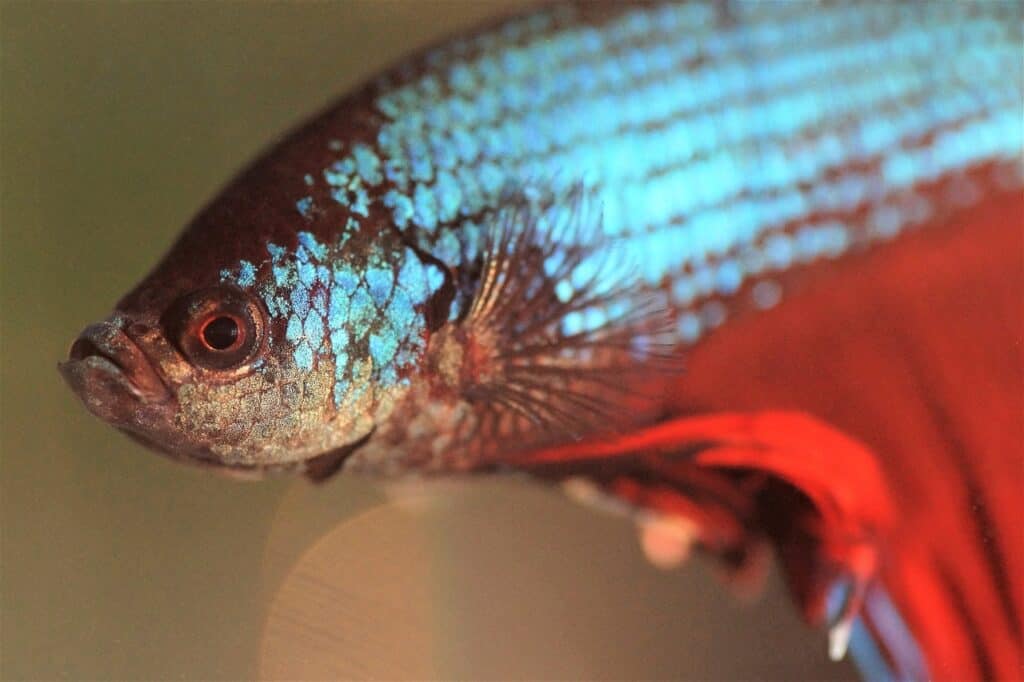
Breeding behavior in betta fish often involves a complex interplay of aggression and courtship rituals.
When I observe these fish together during mating, I notice that the males exhibit behaviors that can seem aggressive but are part of their natural courtship.
Key aspects include:
- Males build bubble nests to attract females.
- They may chase and flare at females to encourage spawning.
- Aggression can arise if conditions aren’t ideal, like limited space.
- Immediate separation post-mating is vital to protect the female and fry from potential harm.
While some fighting is normal, it’s essential to monitor their interactions closely. If aggression escalates, separating the fish is necessary to guarantee their safety and well-being.
Signs of Healthy Aggression vs. Harmful Fighting
Understanding the difference between healthy aggression and harmful fighting is important for maintaining a healthy aquarium.
Healthy aggression often includes flaring and territorial displays without physical harm, while harmful fighting results in visible injuries.
| Healthy Aggression | Harmful Fighting |
|---|---|
| Flaring without contact | Torn fins or open wounds |
| Swimming close together | Biting or severe injuries |
| Establishing territory | Stress-related issues |
| Temporary mating displays | Persistent aggression |
| Regular monitoring | Immediate separation needed |
Regular observation is essential. If you notice signs of harmful fighting, separating the fish is critical for their well-being.
Environmental Factors Influencing Aggression
While many factors can influence the behavior of betta fish, environmental conditions play an essential role in shaping their aggression levels.
A small tank can heighten stress and territorial disputes, leading to increased aggression. Here are key aspects to consider:
- Tank size: Larger tanks minimize stress and aggression.
- Hiding spots: Adequate hiding places reduce confrontations.
- Water conditions: Stable temperature and pH levels are critical for peace.
- Aquatic plants: Adding plants can break lines of sight and reduce stress.
- Ecosystem changes: Introducing new fish can disrupt established pecking orders.
Tips for Reducing Aggression Among Bettas
To create a harmonious environment for betta fish, I often recommend implementing a few strategic measures that can greatly reduce aggression.
First, using partitioned tanks can prevent direct contact and visual stimulation, minimizing territorial disputes. A larger tank of at least 5 gallons provides ample space, reducing stress and fighting potential.
Incorporating plenty of hiding spots and decorations offers bettas retreats, promoting comfort. It’s essential to monitor water conditions closely, as ideal quality and temperature can greatly influence behavior and lessen stress-related aggression.
Finally, I regularly observe interactions among my fish and remain prepared to separate them if signs of aggression arise. This guarantees a peaceful habitat, where even a betta’s bubble nest can thrive.
Monitoring Tank Dynamics for Safety
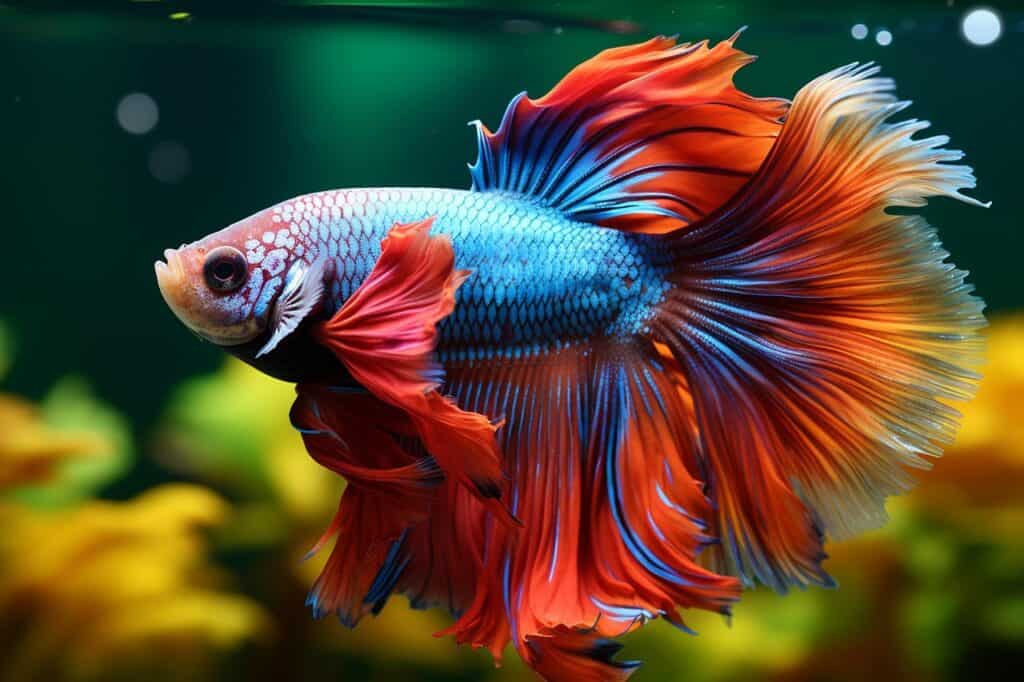
Monitoring the dynamics within your betta tank is essential for maintaining a safe and healthy environment.
By regularly observing interactions, you can catch signs of stress or aggression early. Focus on:
- Behavior like flaring or chasing.
- Changes when introducing new fish or altering the tank setup.
- Ensuring plenty of hiding spots to minimize territorial disputes.
- Watching for physical signs of stress, such as fin damage or lethargy.
Being proactive in these areas helps create a harmonious habitat. If I notice any aggressive behaviors, I’m always ready to intervene promptly.
When to Separate Fighting Bettas
Recognizing when to separate fighting bettas is essential for their health and safety, especially since aggression can escalate quickly.
I’ve found that monitoring their behavior closely is vital. Here’s a quick reference:
| Situation | Action |
|---|---|
| Visible injuries or stress signs | Separate immediately |
| Constant flaring behavior | Separate to prevent injury |
| Mating process completed | Remove male to avoid fighting |
Always remember, males should never be housed together due to their territorial nature. Females can group, but I recommend keeping a keen eye on them, especially in smaller tanks.
High-quality care means being proactive. Regular observation is key to ensuring a peaceful environment for your bettas.
Conclusion
In summary, understanding betta fish behavior is essential for any aquarium enthusiast. While aggression is a natural part of their interactions, it’s often misunderstood.
By recognizing the differences between male and female aggression, breeding behavior, and the environmental factors at play, we can foster a healthier habitat.
Implementing strategies to reduce conflict and monitoring tank dynamics can prevent harmful fights. Ultimately, knowing when to intervene guarantees the well-being of your bettas, allowing them to thrive in a harmonious environment.