When raising show-quality betta fish, also known as Siamese fighting fish, I focus on genetic selection, particularly tail types and coloration. Choosing similar colorations guarantees consistency in offspring, preventing undesirable traits. By carefully selecting my breeding pairs, I’m not only enhancing visual appeal but also improving overall health. There’s much more to explore about breeding techniques and genetics.
Understanding Betta Tail Types
When exploring the fascinating world of betta fish, understanding the various tail types is vital for any breeder aiming for show-quality specimens, whether for home aquariums or commercial fish farms. The primary tail types include Halfmoon, Crowntail, and Double Tail Halfmoon, each with unique characteristics. The Halfmoon features a full 180° spread, perfect for breeding quality bettas, while the Crowntail presents a spiky appearance due to its extended rays.
I often recommend starting with Halfmoon Plakats, as they’re robust and less prone to fin damage compared to longer fin varieties. It’s important to avoid breeding Double Tail bettas due to their higher risk of spinal deformities. Observing fin shape and functionality is key to selecting the best tail types for maximum show quality in your breeding endeavors.
Selecting the Ideal Tail Type

Having established the importance of understanding betta tail types, it’s now time to focus on the selection process for the ideal tail type in breeding, especially when considering opponent fish displays. Selecting the right tail type is vital for producing quality fish. Here are three recommended tail types to take into account:
- Halfmoon: Its 180° spread and D-shaped tail make it visually striking and a favorite among show breeders.
- Plakat (Halfmoon Plakat): Known for its hardiness, it’s ideal for novice breeders, as it’s easier to spawn and less prone to fin damage.
- Crowntail: Offers unique aesthetics, but careful selection is critical to guarantee desirable traits in offspring.
Evaluating Betta Coloration
While selecting bettas for breeding, evaluating their coloration is critical to achieving desirable traits in offspring. Bettas present a spectrum of colors, including solid, bi-color, and the increasingly popular marbles. For consistent results, I prefer breeding pairs with similar coloration. It’s wise to avoid mixing different coloration patterns in initial breeding attempts to enhance the likelihood of vibrant, healthy offspring. Ultimately, striking a balance between aesthetic appeal and health is essential for successful betta breeding.
Choosing the Right Coloration
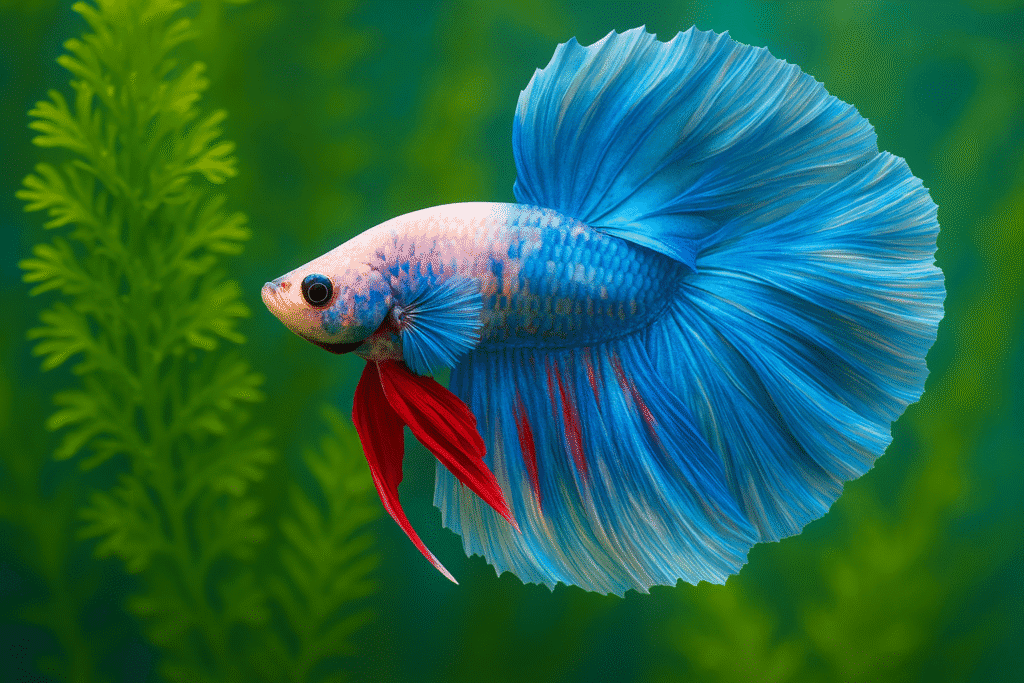
Choosing the right coloration for breeding betta fish is essential, as it directly influences the aesthetic appeal and health of the offspring. To achieve desirable results, I recommend focusing on the following aspects:
- Select Similar Colorations: Pair fish with comparable color variations to prevent undesirable first-generation outcomes.
- Avoid Problematic Colors: Steer clear of breeding-specific colors like blue marbles and dragon scales, as they may be linked to health issues.
- Prioritize Strong Genetics: Guarantee that both parent fish exhibit not only attractive coloration but also robust genetic backgrounds to enhance the chances of healthy offspring.
Criteria for Pair Selection
When selecting pairs for breeding betta fish, it’s essential to take into account specific criteria to guarantee high-quality offspring. I prioritize males with a 180-degree tail spread and well-formed dorsal fins that overlap the caudal fin. Consistent coloration among breeding pairs is important, as it enhances the chances of desirable traits in fry. Focusing on long-term breeding goals shapes my selections, ensuring superior genetic quality in the resulting fry.
| Criteria | Males | Females |
|---|---|---|
| Tail Spread | 180-degree | N/A |
| Dorsal Fin | Well-formed, overlaps caudal fin | Smaller than males |
| Body Structure | Sleek | Broader than males |
| Behavior | Confident posture, minimal swimming | Aggressive towards males |
| Coloration | Similar patterns | Similar patterns |
Conclusion
To sum up, successfully raising show-quality betta fish hinges on a meticulous understanding of genetic selection. With dedication and strategic planning, I can contribute to the ongoing evolution of this intriguing species.