If your betta fish shows signs of distress like lethargy, abnormal swimming, or faded colors, act quickly. First, check water parameters—ensure the temperature is 76-81°F, pH between 6.5 to 7.5, and ammonia levels at 0 ppm.
Perform a 25-50% water change and isolate your fish in a separate tank to minimize stress. Monitor their behavior closely afterward. Understanding common health issues and preventative measures can help maintain a healthy environment for your betta.
Assessing the Situation: Signs of Distress in Betta Fish
How can you tell if your betta fish is in distress? Start by observing for signs of illness. Lethargy is a key indicator; if your betta remains inactive or stays at the tank’s bottom, something’s wrong.
Watch for changes in coloration—dull or faded hues often signal stress or health issues. Abnormal swimming behavior, such as erratic movements or floating sideways, hints at potential problems like swim bladder disorder. Clamped fins, where your betta keeps them close to its body, usually indicate discomfort.
Finally, a poor appetite or refusal to eat is a significant sign of distress. If you notice these symptoms, immediate observation is essential, and you may need to intervene swiftly to guarantee your betta’s well-being.
Water Parameter Check: Temperature, Ph, and Ammonia Levels
Maintaining the right water parameters is essential for your betta fish’s health and well-being. Start by checking the water temperature, ideally kept between 76-81°F (24-27°C) to support ideal immune function.
Next, monitor the pH levels; a range of 6.5 to 7.5 is safe, as fluctuations can stress your betta. Regularly test ammonia levels, ensuring they remain at 0 ppm, since even minimal amounts are toxic and can lead to serious health issues.
During the cycling period, daily water testing is vital to prevent harmful buildups. Always use a water conditioner to treat tap water, ensuring it’s dechlorinated and free from heavy metals. By managing these water parameters, you promote your betta’s aquatic health and successful betta care.
Immediate Actions: Partial Water Change and Isolation
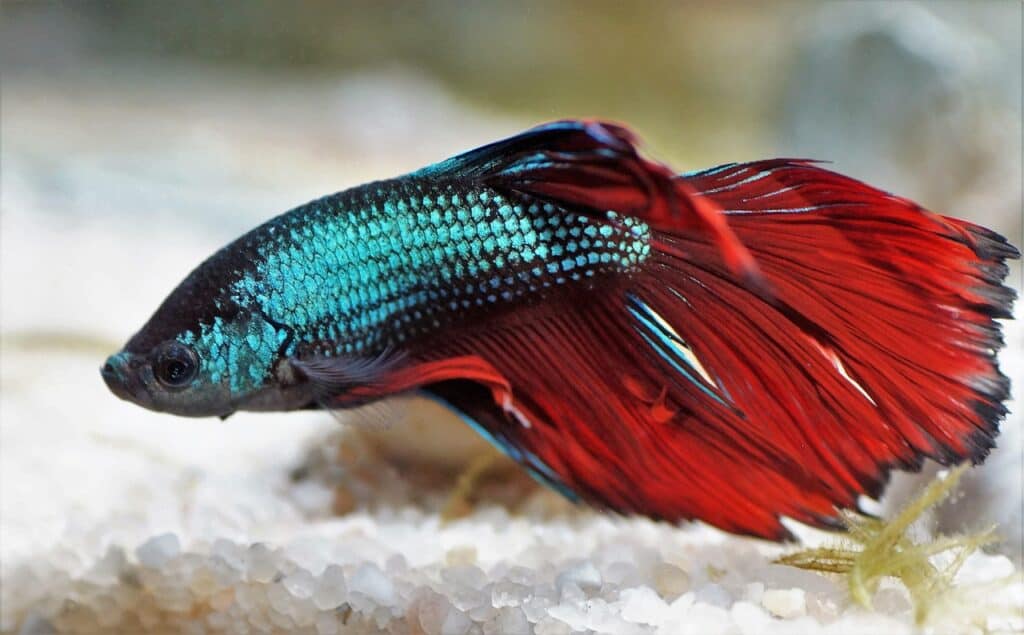
When you notice your betta fish showing signs of distress or illness, taking immediate action is essential for its recovery. Start by performing a partial water change of 25-50% to improve water quality and reduce harmful toxins. Next, isolate your betta in a separate tank or container to minimize stress and prevent disease spread. Make certain the isolation tank has proper heating and filtration to maintain stable water conditions.
| Action | Purpose |
|---|---|
| Partial Water Change | Improve water quality and reduce toxins |
| Isolate | Minimize stress and prevent disease |
| Monitor behavior | Observe for changes in symptoms |
| Maintain Stability | Make certain conditions during recovery |
Regularly test water parameters in both tanks to support a stress-free environment.
Common Betta Health Issues: When to Seek Veterinary Help
Recognizing the signs of illness in your betta fish is essential, as timely intervention can make a significant difference in its recovery. If you notice lethargy, faded colors, or abnormal swimming behavior, these may indicate serious health issues that need immediate attention.
Symptoms like torn fins, clamped fins, or a lack of appetite are clear red flags suggesting your betta may require veterinary intervention. Common diseases such as fin rot, velvet, and ich can escalate quickly, making prompt treatment vital.
If your betta shows signs of distress or illness lasting more than a couple of days, despite adjustments in water quality or diet, don’t hesitate to consult a veterinarian. Regular monitoring of ammonia levels can help prevent these issues.
Preventative Measures: Maintaining a Healthy Betta Environment
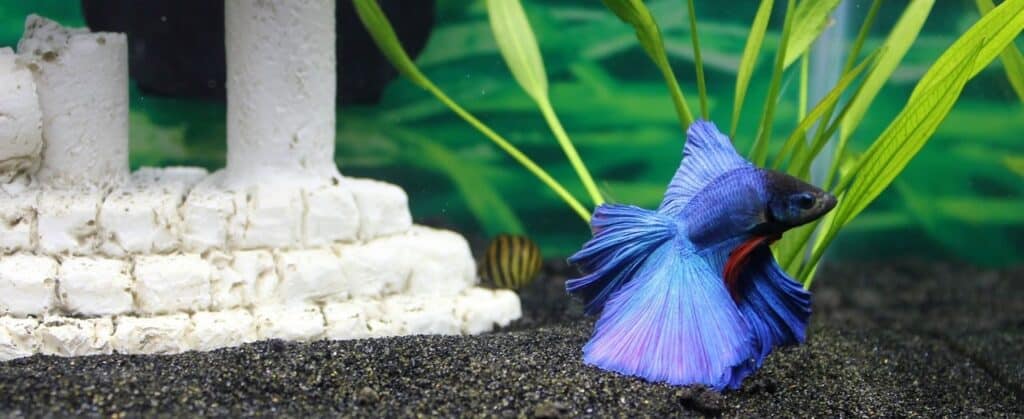
To guarantee your betta fish thrives, it’s essential to create and maintain an ideal environment. A minimum tank size of 5 gallons helps guarantee stable water parameters, while regular testing of water quality is fundamental to prevent toxic build-up.
I recommend performing weekly water changes of 15-25% to keep conditions clean and reduce disease risks. Additionally, maintaining a water temperature between 76-81°F is critical, as fluctuations can weaken your betta’s immune system. Incorporating live or silk plants and hiding spots mimics their natural habitat, helping reduce stress and promoting a healthy betta.
| Factor | Recommended Condition |
|---|---|
| Tank Size | Minimum 5 gallons |
| Water Quality | pH 6.5-7.5, Ammonia 0 ppm |
| Water Changes | 15-25% weekly |
| Water Temperature | 76-81°F |
| Live Plants | Yes |
Conclusion
In summary, when your betta fish shows signs of distress, quick action is essential. By evaluating their condition, checking water parameters, and taking immediate steps like a partial water change and isolation, you can often stabilize their health.
Remember, recognizing common health issues early can make a significant difference. Maintaining a clean, stable environment is important for prevention. Stay vigilant, and don’t hesitate to seek veterinary help if needed—your betta’s well-being depends on it.