The domestication of betta fish has evolved over a millennium, primarily driven by selective breeding practices that transformed their aggressive nature into the vibrant ornamental varieties we see today. Initially collected for fighting, these fish underwent genetic changes that enhanced their coloration and fin structures, reflecting societal values.
Today, as I explore their history, it’s evident that understanding their past highlights the importance of conservation and sustainable practices for their future. There’s much more to uncover.
Discovery of Betta Fish
The fascinating history of betta fish begins in the shallow waters of Southeast Asia, where these vibrant creatures are native. Initially recognized for their combative nature, bettas were primarily collected for the popular sport of fighting, particularly in Thailand, where they became known as Siamese fighting fish.
The king of Siam himself was involved in this practice, enhancing its prestige. In 1849, Theodor Edvard Cantor scientifically described these fish, marking a significant moment in ichthyological history. As interest in ornamental fish grew in the late 19th century, domesticated bettas emerged through selective breeding, emphasizing color and fin morphology.
This shift not only reduced the popularity of fighting but also established bettas as cherished ornamental fish in aquariums worldwide.
Historical Significance and Cultural Impact
Domesticated betta fish have not only shaped the aquarium trade but also carved a niche in cultural narratives across Southeast Asia. Their historical significance is profound, particularly in Thailand, where Betta splendens became a national symbol through the tradition of competitive fighting.
This practice, heavily influenced by the king of Siam, fostered a surge in selective breeding, emphasizing aesthetic traits alongside combat prowess. The cultural impact of betta fish extends beyond mere competition; it intertwines with societal values, reflecting deep-rooted customs and high-stakes gambling practices.
As a result, bettas have evolved into diverse ornamental forms, enhancing their status as “designer fish” among hobbyists. Consequently, the domestication of bettas illustrates a remarkable intersection of culture and ecology.
Spread of Bettas Worldwide
Although many might associate betta fish primarily with their cultural roots in Southeast Asia, their journey into global aquarists began with a significant scientific interest in the 19th century. Theodor Edvard Cantor’s description of Betta splendens marked the Western recognition of these vibrant creatures, with Pierre Carbonnier documenting them in France in 1874.
Paul Matte’s introduction of bettas to Germany in 1896 further expanded their appeal. By 1910, significant imports to the United States began, particularly from Cambodia in 1927, making them staples in the aquarium trade. The shift from betta fighting to appreciate their ornamental value transformed wild bettas into beloved pets, showcasing their aggressive nature while also highlighting their enchanting beauty in home aquariums worldwide.
Etymology and Name Evolution
Etymology reveals much about the betta fish’s identity and cultural significance. The name evolution encapsulates its journey through domestication and selective breeding. Here are key aspects:
- Macropodus pugnax: The initial scientific name, denoting the aggressive nature and large fins of these fish.
- Betta: Derived from the Malay term “ikan betta,” meaning fish warrior, highlighting their combative traits.
- Betta splendens: Renamed in 1909, with “splendens” meaning shining in Latin, emphasizing its ornamental beauty.
- Plakat: A vernacular term for short-finned strains, originating from “pla kat,” which means biting fish in Thai.
These names reflect the betta’s transformation from an aggressive fish to a cherished ornamental species through centuries of selective breeding.
Genetic Changes Through Selective Breeding
As I explore the genetic changes brought about by selective breeding in betta fish, it becomes evident that human intervention has dramatically shaped their evolution. The selective breeding of bettas has led to significant genetic changes, particularly in ornamental traits. Domestic varieties now exhibit pronounced differences compared to their wild counterparts.
| Trait | Wild Counterparts | Domestic Varieties |
|---|---|---|
| Coloration | Dull muted hues | Vibrant, vivid colors |
| Fin Structure | Short, simple | Elaborate, extended |
.
Coloration and Physical Traits
When examining the coloration and physical traits of domestic betta fish, it becomes clear that selective breeding has greatly transformed these characteristics over the past millennium. The vibrant colors and patterns we see today are starkly different from their wild counterparts. Here are some notable traits:
- Brilliant reds, blues, and yellows that outshine the dull greens and browns of wild bettas.
- Diverse tail types, including long-finned varieties, are often referred to as “designer fish.”
- Genetic markers are specifically identified through research that governs coloration and pattern traits.
- Female preferences for certain colors greatly influence breeding success, enhancing ornamental traits in offspring.
These alterations showcase the remarkable influence of selective breeding on the domestic betta’s physical characteristics.
Domestication and Behavior
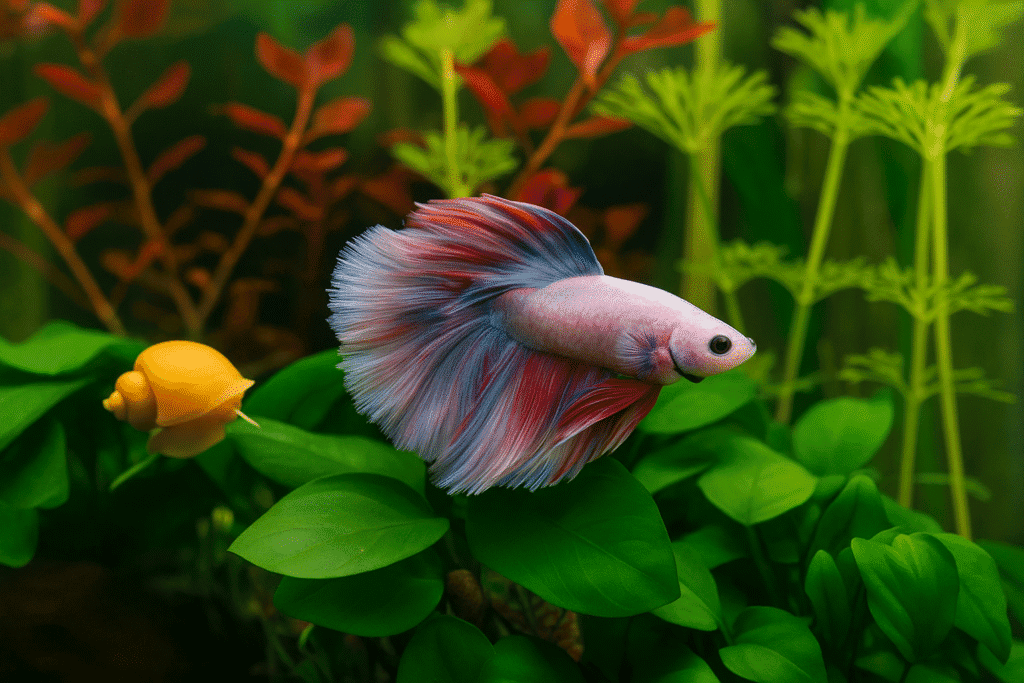
In analyzing the domestication of betta fish, I’ve observed that males exhibit heightened aggression, a trait that has been selectively enhanced through breeding for fighting purposes. Conversely, the social dynamics among female bettas reveal a more complex interplay, where aggression is tempered by social hierarchies.
This contrast underscores the significant behavioral adaptations that have emerged during their long history of domestication.
Aggressive Behavior in Males
Although the domestication of betta fish began over a millennium ago, the intense aggression displayed by male bettas remains a focal point of their behavioral study. This aggressive behavior stems from their territorial nature, shaped by selective breeding for fighting traits. Key observations reveal:
- Males exhibit aggressive displays when confronted with rivals.
- Genetic studies indicate significant differences between domestic and wild bettas regarding aggression.
- Cultural practices, including betta fighting, highlight the historical significance of this behavior.
- Understanding the genetic origins of aggression in bred bettas can inform insights into similar behaviors across domesticated species.
As we explore these aspects deeper, we uncover the complex interplay of domestication and breeding that has shaped the aggressive behavior of these intriguing fish.
Social Dynamics of Females
While male bettas are often characterized by their aggressive behaviors, female bettas present a different social dynamic that warrants attention. These aquatic animals can be kept in groups of three to five, establishing stable hierarchies that minimize aggression.
Keeping them in odd numbers promotes a dominant structure, reducing stress and ensuring smoother social interactions. They exhibit distinct social behaviors, such as flaring and displaying, which signal their rank within the group.
Understanding these dynamics is essential for effective breeding practices in aquaculture, enhancing the welfare of female bettas.
| Group Size | Aggression Level | Breeding Implications |
|---|---|---|
| 3 | Low | Stable breeding |
| 5 | Moderate | Enhanced hierarchy |
| 7 | High | Increased stress |
Conservation Status and Future Challenges
As we explore the conservation status of betta fish, it’s evident that these enchanting creatures face significant threats in their natural habitats. Currently listed as Vulnerable by the IUCN, wild betta species are jeopardized by various factors:
- Habitat destruction from urbanization and agriculture.
- Pollution affecting water quality and ecosystem health.
- Over-collection driven by the ornamental fish trade.
- Invasive species disrupting local populations and genetic diversity.
These challenges underscore the necessity for robust conservation efforts. We must balance the demand for ornamental varieties with sustainable practices to preserve genetic diversity. Protecting wild betta species and their habitats is essential for ensuring their survival in a rapidly changing world. The future of Betta Fish depends on our commitment to these initiatives.
Conclusion
In examining the 1,000-year journey of betta fish domestication, it’s clear that selective breeding has not only enhanced their physical traits and behaviors but also transformed their cultural significance. As I reflect on their historical and genetic evolution, I recognize the delicate balance between appreciation and conservation.
The challenges ahead, including habitat loss and overbreeding, necessitate a concerted effort to guarantee that these remarkable creatures thrive in both our aquariums and their natural habitats.