Betta fish can’t survive in unconditioned tap water because it contains harmful chemicals like chlorine and heavy metals, unlike distilled water or bottled water. These substances, combined with fluctuating water temperature, can jeopardize their health and shorten their lifespan.
To keep your betta fish safe, make certain you perform a water change and treat tap water with a dechlorinator before use. This will remove harmful elements and improve water quality. It’s important to maintain ideal water parameters and regularly test for any issues.
If you’re curious about proper water preparation and care techniques in your Fish Tank, there’s more to discover.
Understanding Tap Water and Betta Fish
When considering whether betta fish can thrive in tap water versus spring water, it’s vital to understand the potential hazards it poses. Tap water often contains chlorine and heavy metals, harmful substances that can jeopardize betta fish care.
To guarantee their safety, always use a water conditioner to create dechlorinated water and provide live plants for added filtration. Maintaining ideal pH levels between 6.5 and 8 is important for their health. I regularly test my water parameters, including ammonia levels and nitrite levels, with a test kit to confirm the water chemistry is safe.
While some bettas might survive in unconditioned tap water briefly, it greatly increases their risk of health issues and shortens their lifespan.
Preparing Tap Water for Your Betta Fish
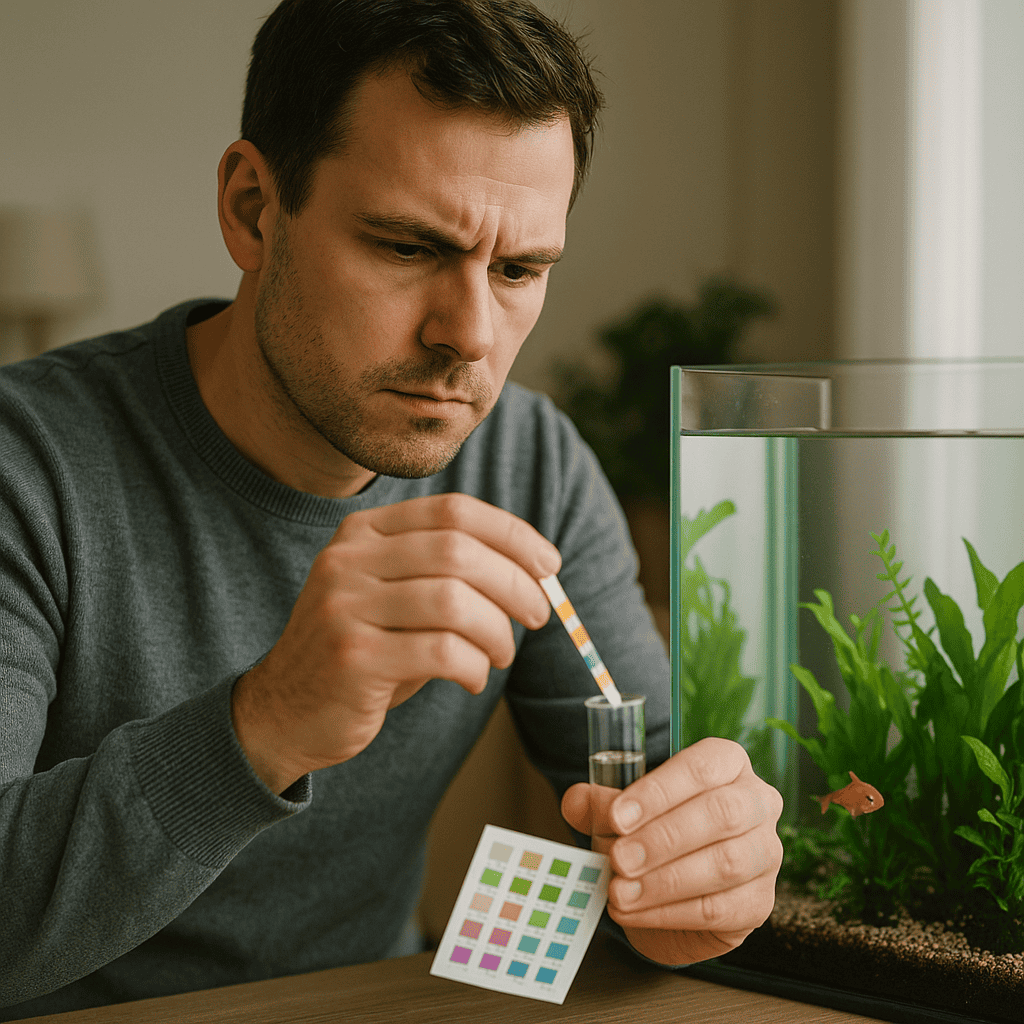
To guarantee your betta fish thrives, preparing tap water properly and planning partial water changes are vital. Start by treating your tap water with a dechlorinating water conditioner to remove harmful substances like chlorine and chloramine.
I always let the treated water sit for at least an hour to confirm that any residual chemicals are neutralized. Regular testing of pH levels, ammonia, general hardness, and carbonate hardness is essential for maintaining a healthy environment; aiming for a pH between 6.5 and 7.5 is ideal.
Using a water testing kit for Water Testing and a water conditioner like Aquasafe Plus binds heavy metals, improving overall water quality for your betta fish in the aquarium.
Conclusion
In summary, while betta fish can survive in tap water, it’s essential to prepare it properly. By using a water conditioner to remove harmful chemicals and ensuring the temperature and pH levels are suitable, you can create a healthier environment for your betta.
I maintain a consistent routine of equipment checks, observing fish behavior, and investing in quality supplies to keep their habitat stable. Regular assessments of parameters will help maintain their well-being. Taking these steps will greatly enhance your betta’s chances of thriving in your aquarium.