I can’t stress enough that you should never let your betta fish fight. Male bettas are extremely aggressive and will fight to the death if kept together. This not only puts their lives at risk but is also an unhealthy and cruel practice that causes immense stress.
It’s crucial to create a suitable environment for your betta, ensuring their safety and well-being. Want to know how to provide the best care for your betta? Let’s explore that!
Understanding Betta Aggression
While you might be tempted to let your betta fish interact with each other, understanding betta aggression is vital before making such decisions. Male bettas are highly aggressive and will fight to the death if housed together. Even female betta fish can display aggression, particularly in a sorority tank without careful management.
This aggression stems from selective breeding for fighting traits, leading to territorial disputes and stress. Chronic stress can result in health issues, like a weakened immune system, making it important to create appropriate tank setups. Prioritizing their well-being guarantees your bettas thrive in a harmonious environment.
Promoting a Healthy Environment for Your Betta
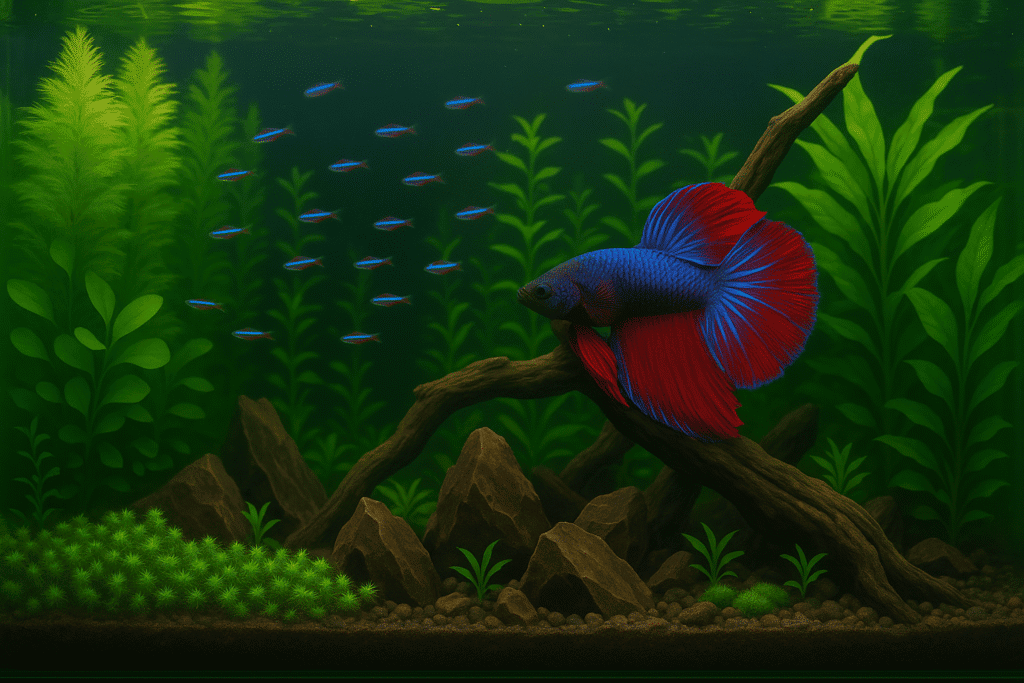
I recommend a minimum tank size of 10 gallons rather than the usual 5 gallons, as this provides ample swimming space and helps maintain water quality in a community tank. Regular water changes, ideally daily, guarantee cleanliness and reduce fish waste.
Remember, male betta fish shouldn’t be housed together due to their aggressive tendencies. Including hiding spots, silk plants, and other decorations creates a secure habitat for your fish. Finally, monitor your tank’s temperature, keeping it between 75-80°F to prevent health issues.
| Aspect | Recommendation |
|---|---|
| Minimum Tank Size | 10 gallon |
| Water Changes | Daily |
| Hiding Spots | Yes |
| Male Bettas Together | No |
| Temperature | 75-80°F |
Conclusion
In summary, letting your betta fish fight isn’t a good idea. Their natural aggression can lead to severe stress and injury, impacting their health and overall well-being. Instead, focus on creating a peaceful and stimulating environment for your betta.
By providing proper care, enriched surroundings, suitable tank mates, and high-quality Betta Fish Food, you’ll guarantee a happier, healthier life for your beautiful tropical fish.
Remember, their happiness ultimately reflects on your enjoyment of having them as a pet! Oh, and if you’re interested in other small tropical species, consider the fascinating labyrinth fish from Southeast Asia to learn more about fish behavior and pecking order!