If I notice my betta fish being lethargic, hiding for long stretches, or refusing to eat, it’s often a sign of sadness or depression. Their colors may fade, and they might only swim when disturbed, indicating discomfort. Factors like poor water quality, small tank size, and incompatible tank mates can contribute to these feelings.
Understanding these signs helps me take action to improve their environment and overall health, so we can explore solutions together.
Signs of a Depressed Betta Fish
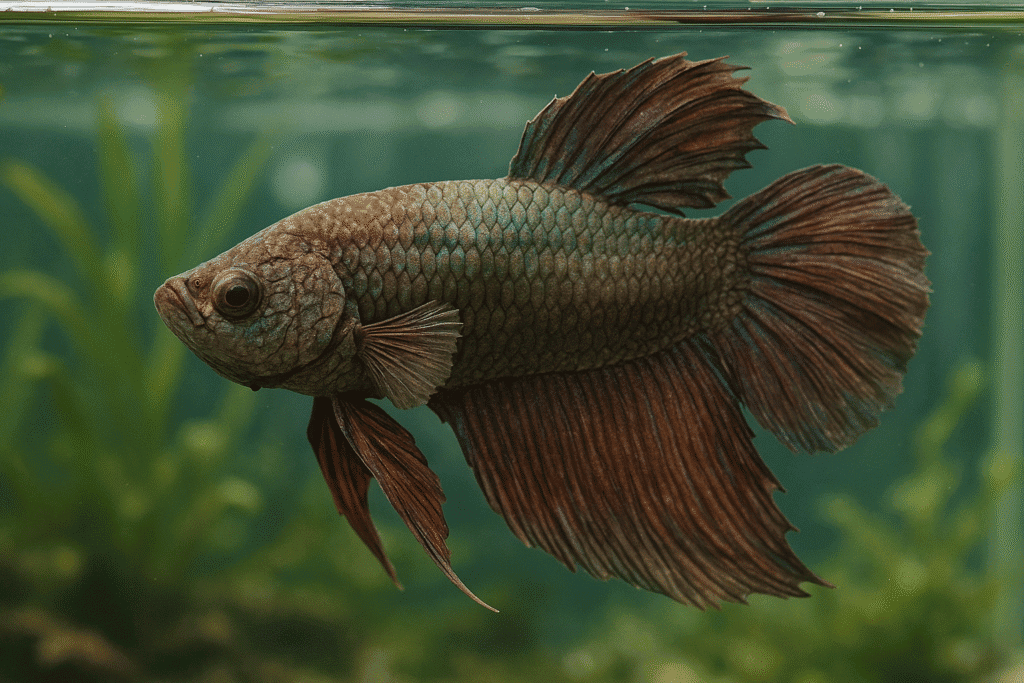
When it comes to recognizing if your betta fish is feeling down, there are several key signs you should watch for. A depressed betta fish often shows lethargy, remaining motionless at the bottom or hiding for long periods.
You might notice a loss of appetite, with your betta refusing to eat, signaling emotional distress. Fading colors can also indicate sadness, as vibrant hues dull under stress. Limited movement, where your fish only swims when disturbed, reflects a lack of engagement with its environment.
Finally, aggression towards tank mates can arise, revealing deeper emotional turmoil. Be attentive to these signs to support your betta.
Causes of Betta Fish Depression
Understanding the causes of betta fish depression is essential for ensuring their happiness and well-being. I’ve noticed several factors that can greatly impact a betta’s mental state:
- Inadequate housing, like a tank smaller than 5 gallons or a simple fish bowl, limits swimming space.
- Poor water quality with high ammonia, nitrite, or nitrate levels stresses the fish.
- Lack of environment enrichment, leading to boredom—adding live plants can help.
- Social stress from incompatible tank mates is causing anxiety.
- Illness or injury, manifesting as withdrawal or aggression, such as fin rot.
Conclusion
In summary, recognizing the signs of a sad betta fish is vital for their well-being. By observing their behavior and environment, you can address potential causes of depression. Remember, a happy betta thrives in a stimulating and caring habitat with regular water changes and stable water temperature.
If you notice changes in your fish’s mood, don’t hesitate to perform a partial water change, adjust their setup, or add a labyrinth organ–friendly plant structure to their tank. Your attention and care can make all the difference in bringing joy back to your beloved Siamese fighting fish.