No, betta fish don’t constantly swim. Their swimming patterns vary based on several factors like health, environment, and comfort. Active swimming can indicate curiosity or happiness, especially in new tanks.
However, excessive swimming may signal stress, discomfort, or poor water quality. Healthy bettas also rest in cozy spots like plants or decor. By observing their behavior, you can gain insights into their well-being and better understand the nuances of their activity levels.
Understanding Betta Behavior: Swimming Patterns and Resting Habits
How do betta fish navigate their environment? I’ve noticed betta fish actively swim, especially in new tanks, showcasing their curiosity and happiness. Their unique swimming patterns rely on pectoral fins for propulsion, rather than their ornamental tails. However, constant swimming can indicate stress, boredom, or discomfort, especially if they rub against surfaces.
Healthy bettas also exhibit resting habits, favoring spots like leaves or decor. It’s crucial to monitor their behavior, as increased resting, accompanied by other symptoms, may signal health issues. Additionally, understanding that bettas swim more actively when food is present can help distinguish between normal behavior and potential problems like ammonia toxicity. I sometimes set up a community tank to observe how they interact with other species.
Factors Affecting Betta Activity Levels: Health and Environment
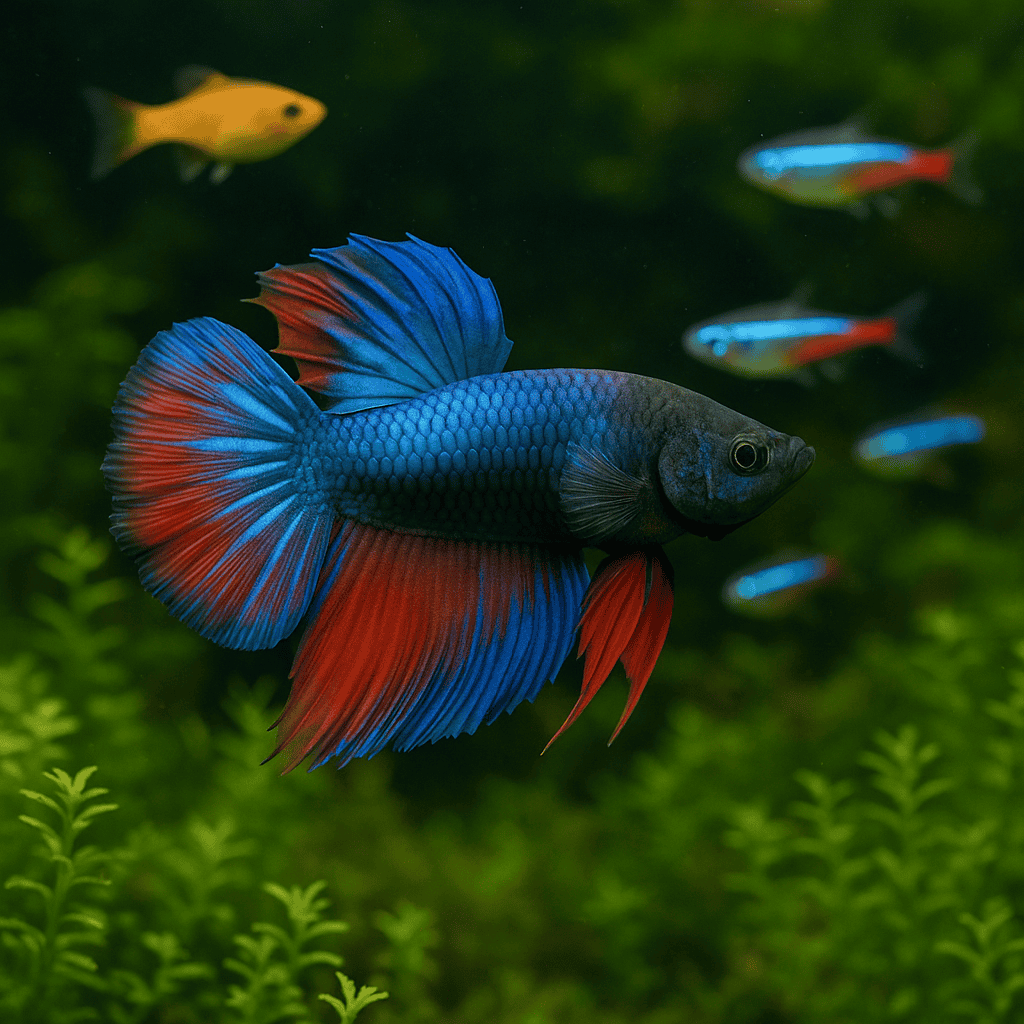
Betta fish are fascinating creatures whose activity levels can reveal much about their health and environment. I’ve experienced that poor water quality, especially high ammonia levels, can lead to stress, prompting these tropical fish to swim excessively in search of comfort. When they’re placed in a new home, their behavior often reflects their anxiety.
Small tanks restrict their movement, pushing them to explore the top of the tank more frequently. Regular water changes and the use of products like Stress Coat can help maintain a happy and healthy environment, balancing their activity levels and preventing restlessness. Stimulating habitats with plants can further enhance their well-being. I once added extra foliage to help my female bettas feel secure.
Conclusion
To summarize, betta fish don’t constantly swim; instead, they exhibit a balance of activity and rest influenced by their environment and health. I’ve found that understanding their natural behavior can help us create a suitable habitat that promotes their well-being. By observing their swimming patterns and ensuring they have places to rest, we can foster a healthier and happier betta.
Ultimately, recognizing these nuances allows us to appreciate the complexity of their behavior and care for them more effectively, whether you’re keeping a pair of male bettas or designing a community tank. Swim bladder health plays a role, too, so be mindful of diet and water conditions.