To tell if your betta is unhealthy, I look for signs like dull colors, lethargy, and poor appetite. If it sits at the bottom excessively or hides often, that’s a red flag. Damage to fins or rapid breathing can indicate serious issues, such as gill problems or low oxygen levels.
Pay attention to symptoms of common ailments like fin rot or ich. Each detail matters, and exploring water temperature and water conditions can help guarantee your betta’s well-being.
Signs of an Unhealthy Betta Fish
When observing my betta fish, I notice specific signs that indicate its health status. Unhealthy bettas often display faded colors, signaling stress or poor water quality. I see lethargy in excessive bottom-sitting or hiding, which can indicate disease or swim bladder disorder.
A poor appetite is another red flag; if it refuses food for over a day, it’s concerning. I also watch for damaged or clamped fins, suggesting fin rot or Hole in the Head Disease. Rapid breathing or gasping at the surface can point to gill problems or low oxygen levels, so incorporating aquarium salt sometimes helps maintain oxygen levels.
Common Ailments and Their Symptoms
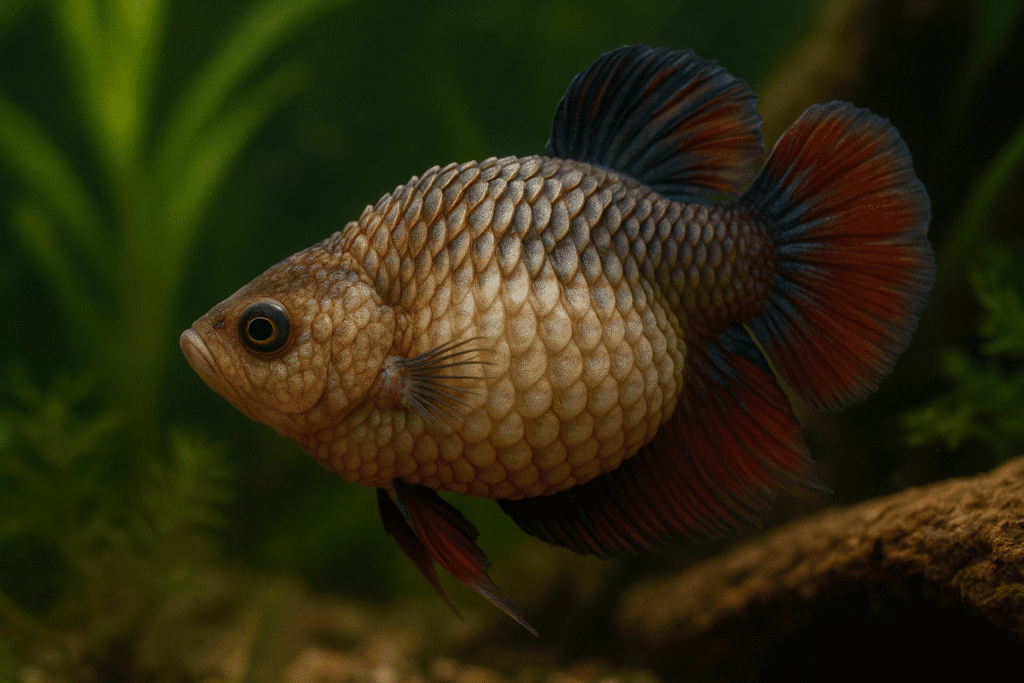
As I monitor my betta fish, I’ve learned to recognize ailments that can affect their immune system. Fin rot shows as deteriorating fins with black or red edges, often due to dirty water.
Swim Bladder Disease leads to abnormal swimming, such as floating upside down in a fish bowl. Ich, or white spot disease, appears as small white dots, while velvet disease presents a gold sheen alongside lethargy and clamped fins.
If I observe swelling and raised scales—often linked to dropsy—it can signal kidney failure. I focus on water changes, live plants, and proper water temperature to support the labyrinth organ and alleviate symptoms like loss of appetite.
Conclusion
In conclusion, recognizing the signs of an unhealthy Betta splendens is vital for their care and well-being. By observing changes in behavior, appearance, and overall health, you can identify common ailments such as bulging eyes or infections early on.
Addressing these issues promptly can prevent further complications and guarantee your betta thrives in its environment. Always remember, staying informed about aquarium salt treatments and the role of live plants is key to fostering a healthy aquatic companion. Keep a close eye on your betta, and act swiftly when necessary.