I’ve learned that Betta fish shouldn’t eat goldfish flakes, as their nutritional needs differ greatly and they need more than typical goldfish food. Goldfish flakes are primarily plant-based and lack the high-protein food that bettas require.
Inadequate feeding with such flakes can disrupt their fish diets, leading to lethargy, dull coloration, and even health issues like obesity. It’s best to offer high-quality betta pellets or specialized live food designed for carnivorous species. If you’re curious about better dietary options for your Betta, there’s more to explore on this topic.
Nutritional Concerns for Betta Fish
When considering the dietary needs of betta fish, it’s vital to acknowledge that their nutritional requirements differ markedly from those of goldfish. Goldfish flakes, primarily plant-based, lack the necessary protein content essential for bettas. Feeding them these flakes can lead to health issues, such as lethargy and dull coloration, due to inadequate nutritional value and disruptions in their digestive systems.
Ingredients like corn and wheat flour offer minimal vitamins and minerals, while a high vegetable content can cause obesity and swim bladder disorders. For ideal health, quality foods made with fish meal and carefully balanced nutrients ensure that they receive what they truly need. I still suggest monitoring portions to support optimal well-being.
Alternative Feeding Suggestions for Bettas
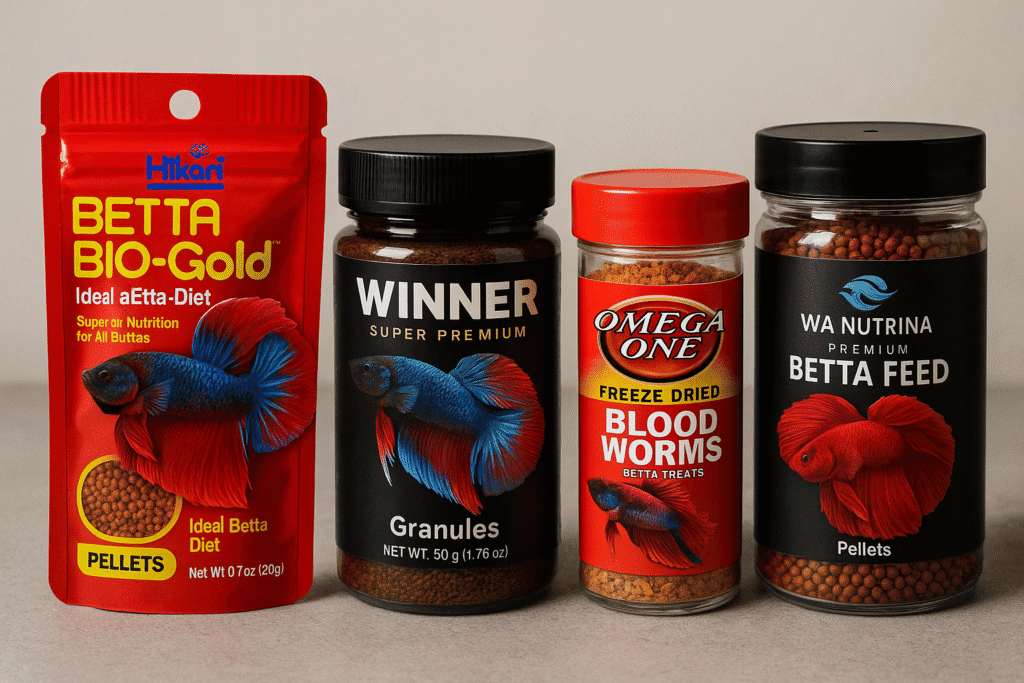
Understanding the nutritional shortcomings of goldfish flakes leads to exploring better alternatives for feeding bettas. I suggest shifting your Betta to high-quality betta flakes, gradually replacing goldfish flakes. Tropical flakes formulated for carnivorous species also provide a suitable option, improving nutritional balance.
To enhance protein intake, consider floating pellets and occasional freeze-dried foods alongside frozen treats like bloodworms or brine shrimp. Offering a variety of foods prevents nutritional deficiencies and promotes overall health. By avoiding goldfish flakes, you guarantee your Betta thrives on a diet tailored to their unique needs and preferences.
Conclusion
I recommend recognizing that while betta fish might nibble on goldfish flakes, it’s not advisable as a regular food source due to their nutritional deficiencies. Bettas require a high-protein diet to thrive, which these flakes lack. Instead, consider feeding them high-quality goldfish pellets sparingly and frozen foods like mosquito larvae or brine shrimp.
Including occasional treats such as bloodworms ensures variety and balanced nutrition. This approach will guarantee they get the essential nutrients they need for peak health and vibrant coloration. Prioritizing their dietary needs will lead to a happier, healthier betta.