If your betta fish is staying at the top of the tank, it usually points to problems with water quality, temperature, or oxygen levels. High ammonia levels or low temperatures can stress your fish, pushing it to the surface.
I’ve noticed that bettas might also seek air if dissolved oxygen is low, so regular water changes and maintaining the right temperature can help restore normal behavior. Want to know more about improving your tank’s conditions? There are additional steps you can take.
Common Causes of Betta Fish Staying at the Top of the Tank
Why does my betta fish stay at the top of the tank? It’s often a sign of underlying issues. Poor water quality, especially high ammonia levels, can irritate your fish, prompting it to seek the surface. I’ve experienced strong currents from a filtration system that stressed my betta, causing it to hover near the top.
Additionally, if the water temperature falls below the ideal range of 78–82°F, bettas may float up for warmth. Stress from overcrowding or strong currents can also push them to the top, where they feel safe. I sometimes add an air pump or a small aquarium heater to enhance oxygen levels and warmth for my fish.
Regular water changes and monitoring tank size are essential for maintaining beneficial bacteria and overall health.
Improving Water Conditions to Encourage Normal Behavior
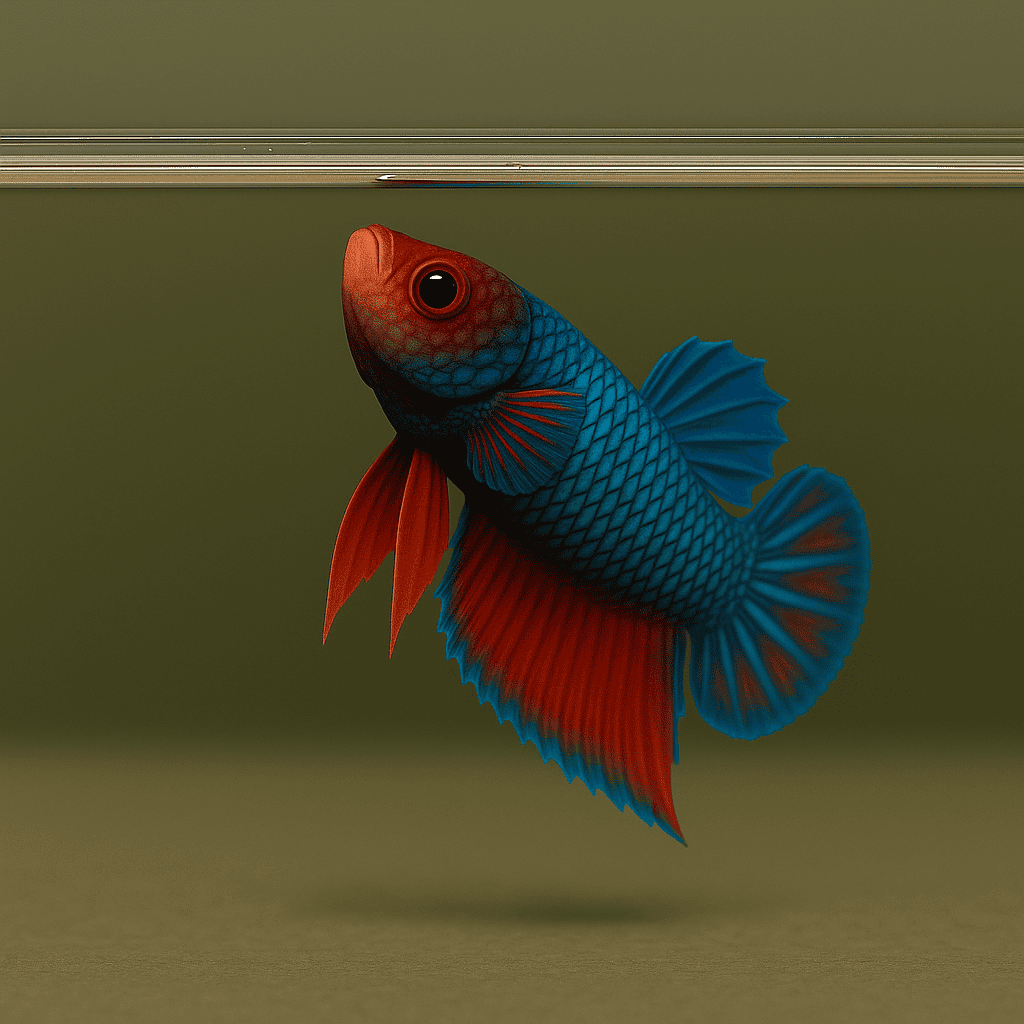
To guarantee your betta fish exhibits normal behavior, it’s essential to focus on improving water conditions. Regular water changes and monitoring parameters can make a significant difference in your fish’s health.
I use test strips and Seachem Prime during each change to neutralize chlorine and detoxify ammonia. Use a reliable test kit to check ammonia and oxygen levels.
| Parameter | Ideal Level |
|---|---|
| Ammonia | 0 ppm |
| Nitrite | 0 ppm |
| Nitrate | < 20 ppm |
| pH level | 6.5 – 7.5 |
| Temperature | 78–82°F |
Conclusion
If your betta fish is consistently staying at the top of the tank, it’s essential to address the underlying issues. Poor water quality, low oxygen levels, or stress can all contribute to this behavior.
I’ve treated swim bladder disease and fin rot in the past by adjusting these factors and adding brine shrimp as a protein boost. By improving water conditions with the right tropical fish care—monitoring water parameters, balancing pH, and ensuring proper filtration system—you can encourage your betta to explore its habitat more actively.
Remember, monitoring and adjusting your tank’s conditions not only promotes your fish’s well-being but also enhances your overall aquarium experience with happier tank mates and healthy fish that aren’t gasping at the surface and thriving on betta pellets.