If you notice your betta fish has dull colors, is lethargic, and has clamped fins, it’s likely in distress or facing health issues. A refusal to eat for over a day is also concerning.
Additionally, symptoms like a swollen belly, raised scales, or visible lesions indicate serious problems. It’s vital to act quickly, as these signs can worsen. Keep an eye on their behavior and environment; understanding what’s happening can help guarantee their well-being.
Signs of an Unhealthy Betta Fish
When caring for a betta fish, recognizing the signs of an unhealthy specimen is essential for its well-being. I’ve learned that a betta displaying dull colors often indicates stress or poor water quality, and white spots can appear when conditions deteriorate.
Lethargy, like excessive hiding, can suggest infections or swim bladder disorder. When clamped fins are present, it signals stress or illness, and the water temperature may be too low. A refusal to eat for over a day raises alarm bells, potentially hinting at infections or constipation linked to inadequate betta pellets.
Additionally, physical signs such as a swollen belly, raised scales, or visible lesions indicate serious health concerns that require immediate attention to support their immune system and overall health. I also monitor the activity level daily to catch subtle changes early.
Common Betta Fish Diseases and Symptoms
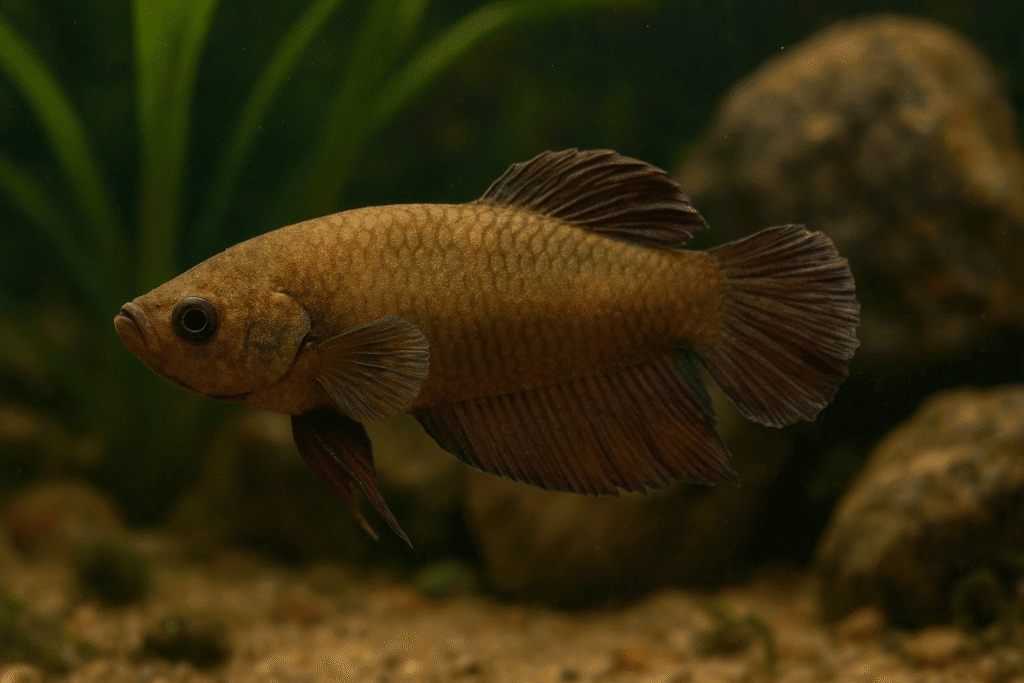
Understanding the common diseases that afflict betta fish is essential for any responsible owner. Betta fish often suffer from common diseases like Columnaris and Ich, which can be linked to poor water conditions. Symptoms of illness include faded coloring, lethargy, and refusal to eat.
Physical indicators such as swollen bellies signal swim bladder disease, while damaged fins may suggest fin rot or an Anchor worm infestation. Additionally, watch for breathing difficulties like rapid breathing or gasping, which can indicate gill issues or compromised labyrinth organ function.
Behavioral changes, such as excessive hiding in a quarantine tank or clamped fins, are also vital signs of stress. I’ve noticed that adding aquarium salt in small amounts can sometimes help, but a proper treatment plan is essential.
Conclusion
In summary, recognizing the signs of an unhealthy betta fish is vital for their well-being. By observing changes in behavior, appearance, and eating habits, you can identify potential health issues early on.
If you notice any concerning symptoms—such as bulging eyes, a Hole in The Head Disease lesion, or physical symptoms like red streaks—it’s essential to act promptly and consult a veterinarian or aquatic specialist. Remember, your betta relies on you for care, so staying informed and attentive can make all the difference in ensuring a long, healthy life for your vibrant companion.
When setting up a new fish bowl or rehoming, use live plants, décor, and consider the proper use of a fish bowl versus a larger tank to reduce stress. Always perform a water change routine and keep an eye on quarantine tank readiness before introducing new fish.