A happy betta fish shows vibrant colors and active swimming, often exploring its tank with energy. You’ll notice it enthusiastically following your finger or responding to your presence. A hearty appetite during feeding times is a good sign, too.
If you spot a bubble nest built by a male, it reflects their contentment and sense of security. Understanding what makes your betta thrive will help guarantee their happiness in your care. There’s more to explore about creating the ideal environment!
Signs of a Happy Betta Fish
When observing my betta, one of the first signs of happiness is active swimming around the fish tank, exploring decorations and plants with energy and curiosity.
Vibrant colors and shiny scales indicate a healthy betta. Engaging by following my finger or responding to my presence also shows comfort and joy. A hearty appetite, demonstrated by enthusiastic feeding and anticipation at mealtime, signals contentment. If I spot a bubble nest created by male bettas, it reflects their security and happiness, even if not all do this.
Creating a Suitable Environment for Your Betta
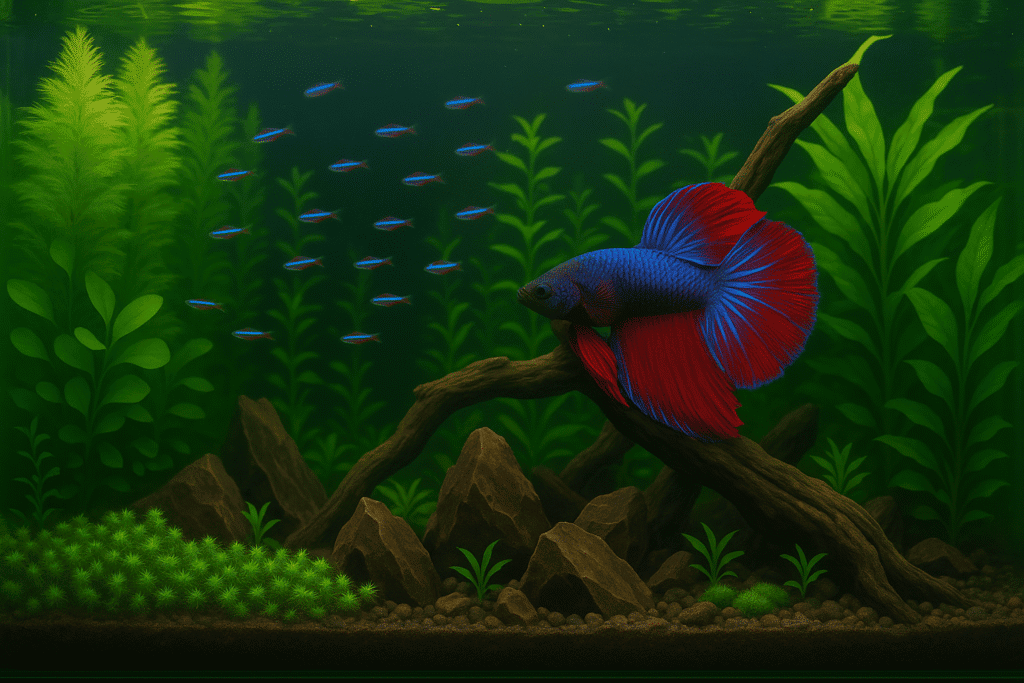
Creating a suitable environment for your betta fish is essential for its overall well-being and happiness. A happy betta thrives in a well-maintained space. Here are three key elements to evaluate:
- Tank Size: A minimum of 5 gallons provides ample room for swimming and exploration.
- Water Temperature: Maintain temperatures between 76-84°F (24.4–28.9°C) to mimic their tropical habitat.
- Hiding Spots: Use silk plants and decorations to reduce stress and offer security. I always include floating plants to help my betta feel safe.
Regular water changes—at least 50% weekly—keep the water quality high, while low-current filters like a sponge filter help create a calm atmosphere for your betta.
Conclusion
To sum up, a happy betta fish displays vibrant colors, active behavior, and an inquisitive nature. By providing a suitable environment—complete with clean water, appropriate tank mates such as Siamese fighting fish—and enriching decorations, you can help your betta thrive.
Remember, observing stress stripes along their body can indicate discomfort, so close monitoring allows you to understand their needs better. With a little care and attention, you can create a joyful habitat that promotes its well-being, ultimately leading to a healthier and more contented betta.