If your betta fish seems lethargic, hides often, or has lost its appetite, something’s wrong. Color changes are also important to monitor; dullness can signal distress while vibrancy indicates health.
Poor water quality or inadequate housing can contribute to their unhappiness. Stability in their environment is essential, too. By observing these signs and adjusting their care, you can create a happier, healthier space for your betta. There’s much more to learn about ensuring their well-being.
Signs of an Unhappy Betta Fish
When you notice your betta fish isn’t as lively as it should be, it might be a sign of unhappiness. An unhappy betta fish often shows lethargic behavior, spending time at the bottom of the tank instead of swimming upright.
You may see a loss of appetite or a lack of curiosity about its surroundings, which are clear signs of distress. Additionally, if your betta hides in corners or avoids exploring, it indicates a decline in activity.
Pay attention to any dullness in its colors, as this can signal poor water quality and overall unhappiness in your beloved fish. Watch for stress stripes on the body, which appear as horizontal lines when the fish is anxious.
Causes of Betta Fish Depression
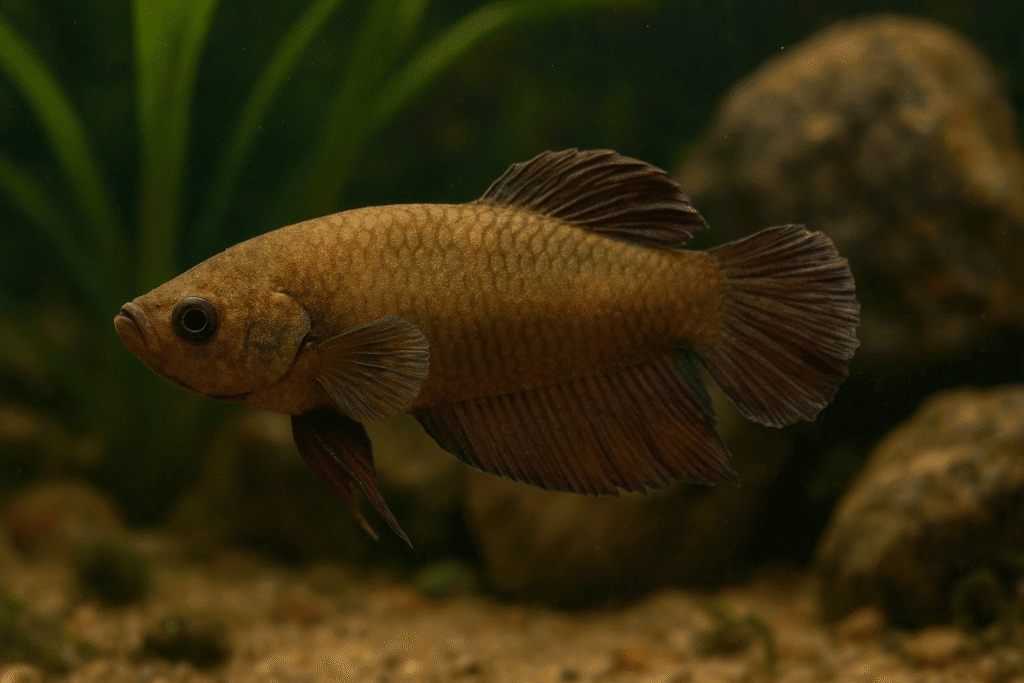
Understanding the causes of betta fish depression is important for ensuring your pet’s well-being. Here are three key factors I’ve found to be essential:
Inadequate Housing: Bettas need a minimum tank size of 5 gallons to thrive; smaller spaces can induce stress. Adding live plants can provide hiding spots and improve water quality naturally.
Poor Water Quality: Regular monitoring and water changes are critical; stagnant water leads to depression. Maintaining proper water parameters helps prevent diseases like fin rot and supports the immune system.
Environmental Changes: Sudden shifts in water temperature or pH can overwhelm bettas, triggering stress and unhappiness. Temperature fluctuations can also affect their labyrinth organ function, which allows them to breathe air from the surface.
Conclusion
In summary, keeping an eye on your betta fish’s behavior is essential for their happiness and well-being. If you notice signs of stress or unhappiness, it’s important to investigate the causes and make necessary adjustments to the environment.
Look for white spots on the body, which could indicate illness, or check if your male betta is building a bubble nest, which is a sign of good health. By providing proper care, stimulation, and a comfortable habitat, you can help your betta thrive and prevent serious conditions like Hole in the Head Disease.
Remember, a happy betta not only brightens your aquarium but also enriches your life as a responsible pet owner.