To fix swim bladder disease in your betta fish, start by fasting them for up to three days to clear any digestive blockages. After that, introduce blanched peas to aid digestion.
Make sure to maintain stable water parameters at 78-80°F and perform regular water changes to minimize stress. Using aquarium salt can help boost their immune system, but remember, it’s not a cure. There’s more to explore about keeping your betta healthy and preventing issues like this.
Understanding Swim Bladder Disease in Bettas
Understanding Swim Bladder Disease (SBD) in bettas is essential for any aquarist, as it can greatly impact your fish’s health and well-being. SBD disrupts buoyancy control, leading to symptoms like floating upside down or a curved spine. Common causes include digestive issues from overeating, low water temperatures, and physical trauma.
You may notice a distended belly, abnormal swimming, or changes in appetite in your betta. These buoyancy disorders can affect the air bladder function, which connects to the labyrinth organ system in Bony fish. Maintaining clean water conditions and stable temperatures around 78-80°F is vital.
A fasting period of up to three days can help clear blockages, followed by introducing blanched peas to aid digestion. I find monitoring for bacterial infections important during treatment.
Treatment and Prevention Strategies for Swim Bladder Disease
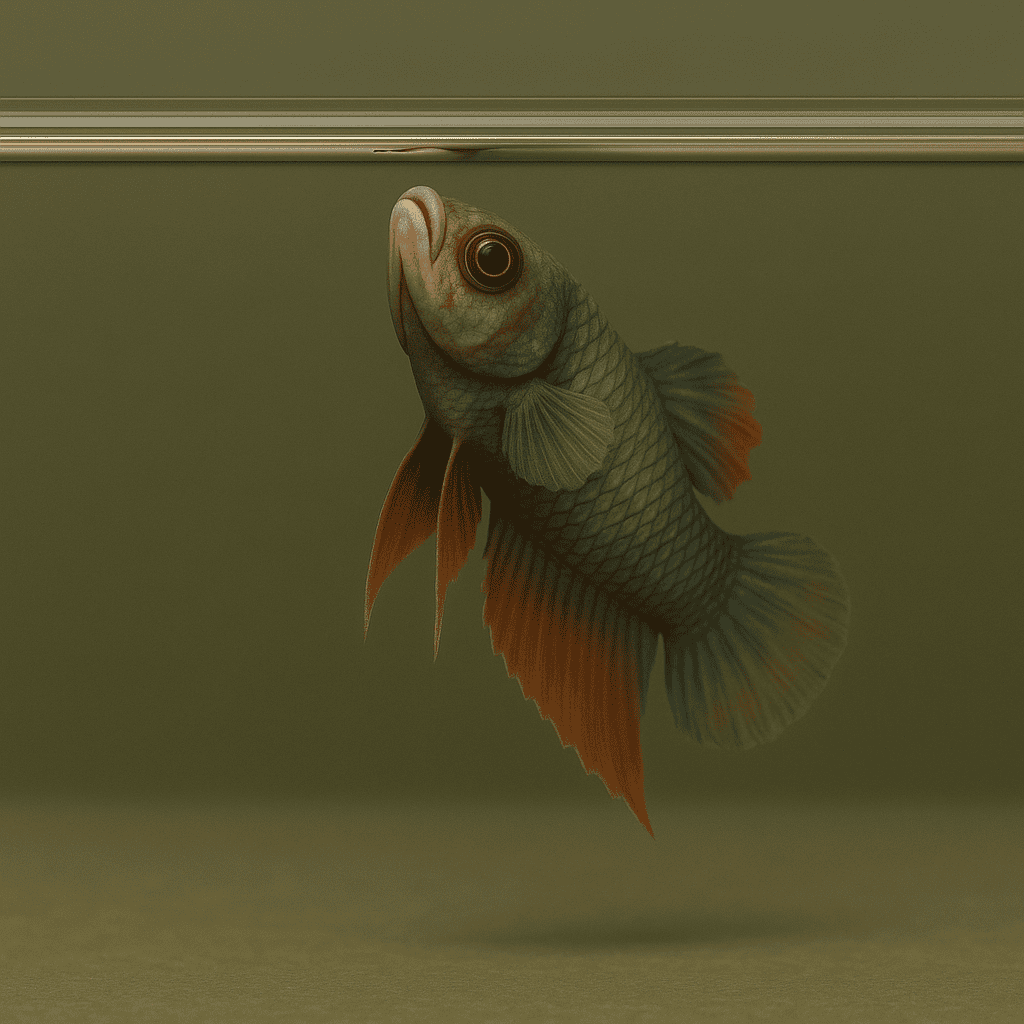
Swim Bladder Disease can be troubling for both the fish and the aquarist, but effective treatment and prevention strategies can make a significant difference. To treat Swim Bladder Disease, implementing a fasting period of up to three days can help clear any blockages.
After fasting, introduce blanched peas to aid digestion. Maintaining stable water temperature between 78-80°F supports overall health and reduces swim bladder problems. Regular water changes guarantee ideal water quality, minimizing stress and infection risk that could affect the spinal cord.
Additionally, consider using aquarium salt to bolster the immune system, but remember, it’s not a cure for swim bladder disease. I recommend ensuring compatible tank mates and adding floating plants to create a stress-free environment that helps prevent fish diseases.
Conclusion
To sum up, addressing swim bladder disease in bettas requires a careful approach. I’ve found that maintaining ideal water conditions, providing a balanced diet, and observing fish for any signs of distress can greatly improve their health.
When symptoms arise, acting promptly with treatments like fasting or using specialized medications can make a difference. By staying informed and proactive, we can help our bettas thrive, ensuring they lead happy, healthy lives in their aquatic environments.
Share
Export
Rewrite