When it comes to housing bettas, I recommend keeping a single male in a tank of at least 5 gallons to reduce aggression. For females, form a sorority in a minimum 20-gallon tank with at least six individuals to create a stable environment.
If you’re considering multiple males, a larger tank is necessary to minimize territorial disputes. Understanding their behavior is vital for maintaining peace, and it will help you create the ideal tank environment next.
Recommended Tank Sizes and Dimensions
When considering how many betta fish to keep in one tank, the tank size and dimensions play an important role in their health and behavior. For ideal health, I recommend a minimum of 5 gallons for a single Betta splendens, with 10 gallons or more being preferable.
Larger tanks, particularly over 20 gallons, greatly reduce territorial aggression when housing multiple bettas. I’ve found that longer, horizontal tanks suit these fish best, promoting their natural swimming behavior.
Considering each betta’s individual needs—like activity level and temperament—is vital for ensuring their well-being, especially when keeping female betta fish together. Incorporate live plants to provide shelter and grazing surfaces.
Understanding Betta Aggression and Compatibility
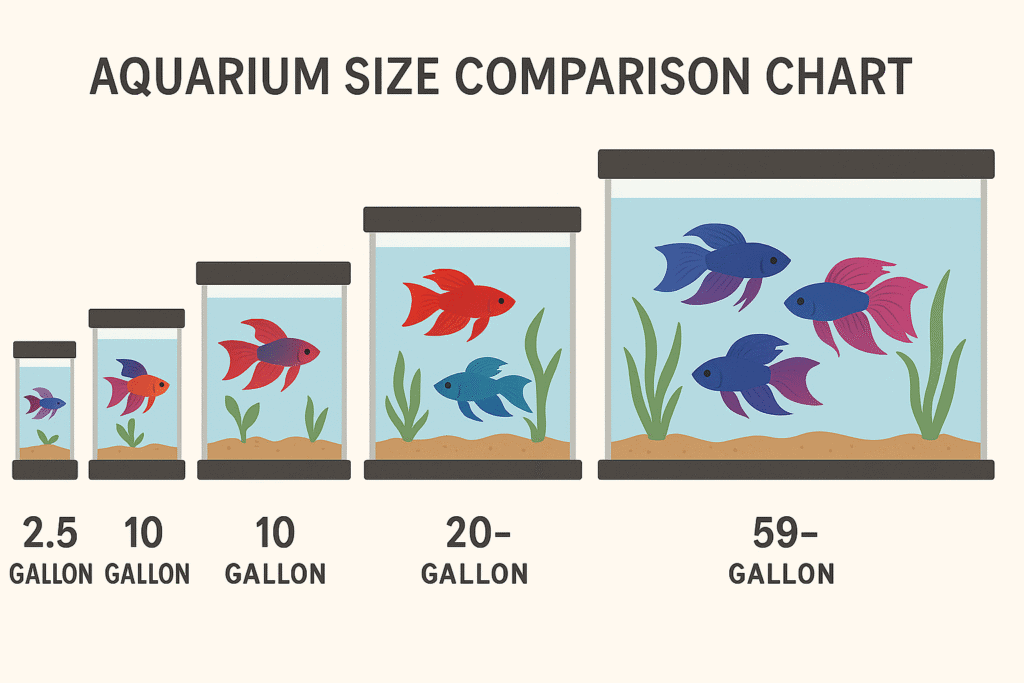
Understanding the dynamics of betta fish aggression and compatibility is vital for creating a harmonious aquarium environment. Male bettas are notoriously territorial and aggressive; if housed together in a small tank, they often fight.
Conversely, female bettas can thrive in sororities, but require at least 20 gallons and six individuals to minimize aggression. Providing ample space, hiding spots, and plants alleviates stress and fosters healthy behavior. Introducing compatible tank mates, like cory catfish or guppies, can further diffuse aggression by occupying space.
I observe fish behavior regularly to detect signs of bullying, ensuring timely intervention when necessary. These guidelines apply equally to Siamese fighting fish.
Conclusion
In summary, while it’s tempting to keep multiple betta fish in one tank, their inherent aggression and territorial nature often make this impractical. Typically, a single male betta should be housed alone to prevent stress and potential injury.
If you’re considering a community tank, guarantee compatibility with non-aggressive species and provide ample space. Ultimately, understanding these dynamics is essential for maintaining a healthy and harmonious aquarium environment for your fighting fish.