When it comes to feeding betta fish, incorporating live foods like bloodworms, brine shrimp, and Daphnia boosts growth and enhances digestive health1. Bloodworms provide protein and iron, while brine shrimp are highly digestible and nutritious. Daphnia offers fiber for digestion and represents a species of Daphnia that closely mimics a betta’s natural prey. Rotating these food options ensures a balanced diet and prevents food shortage issues.
Nutritional Benefits of Live Foods
Incorporating live foods is essential for betta health and vigor. Bloodworms deliver 6–8% protein and serve as a natural iron source. Live baby brine shrimp are advantageous for betta fry due to their high digestibility and nutritional value. Daphnia, with its fiber content, aids digestion and optimizes nutrient absorption in bettas. Rotating these live foods guarantees a balanced diet under varying food concentration levels.
Popular Live Food Options for Bettas
Bloodworms, brine shrimp, and Daphnia stand out for their nutritional benefits and stimulation of natural behaviors in bettas. Culturing live foods at home provides consistent feeding and minimizes the risk of parasites. Carefully managing food concentration during feeding prevents overfeeding and maintains water quality.
Sourcing and Culturing Live Foods
Live foods enhance nutritional intake and can be sourced or cultured for consistent availability. Bloodworms can be purchased from reputable suppliers to avoid disease introduction. Hatching brine shrimp with a simple hatchery setup offers a steady food source for fry and adults. Culturing Daphnia in a 10-gallon tank with aged water and nutrient sources like banana peels supports robust population growth.
Culturing Live Foods at Home
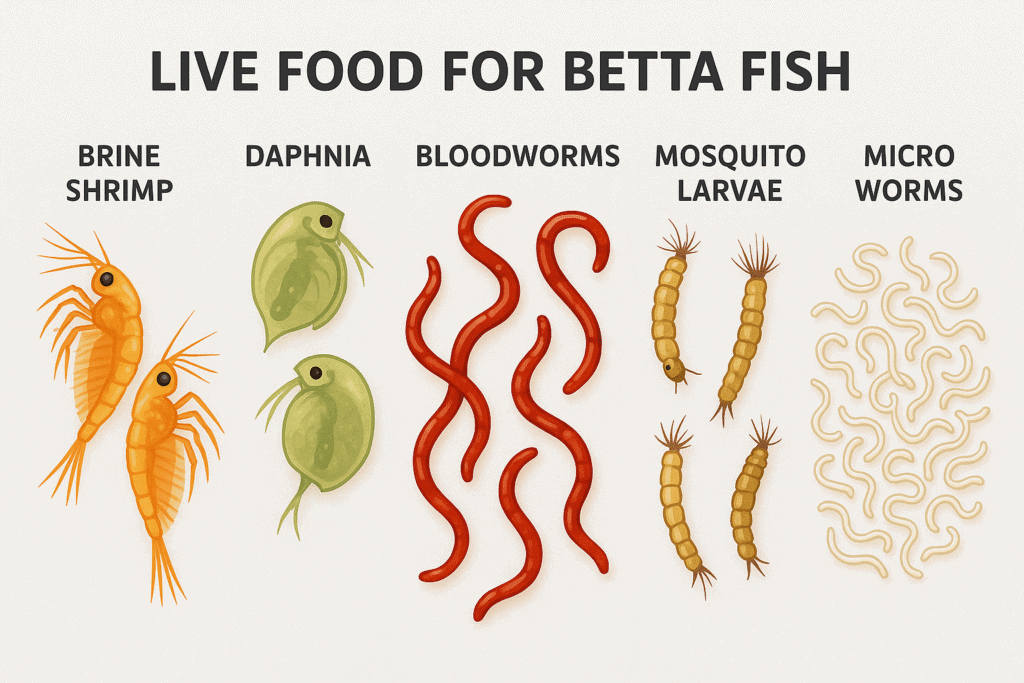
Culturing live foods at home guarantees freshness and safety. Microworms mature in 3–4 days, providing a quick harvest. Daphnia thrives in tanks with aged water and mulm, fed with vegetable matter like zucchini. Infusoria cultures can be established in jars using romaine lettuce for young fry. Maintaining proper food concentration in cultures is key to avoiding crashes in live cultures.
Risks and Precautions With Live Foods
Sourcing from reputable suppliers is essential to avoid pathogens and parasites. Culturing live foods at home reduces risk by ensuring known conditions. Observing bettas for signs of distress—such as clamped fins—after feeding live foods can indicate tolerance issues. Implementing quarantine for new live food sources prevents illness in the aquarium.
Feeding Strategies for Bettas
Rotating live foods like baby brine shrimp, frozen bloodworms, and Daphnia prevents pickiness and promotes a balanced diet. A weekly fasting day helps regulate appetite and digestion. Monitoring behavior daily ensures bettas respond well to feeding strategies and highlights any emerging food shortage concerns.
| Feeding Type | Frequency |
|---|---|
| Live Foods | 3–4 times/week |
| Frozen Foods | 2–3 times/week |
| Staple Pellets | Daily |
| Fasting Day | Weekly |
| Monitoring | Daily |
Live Food Sourcing Tips
Culturing at home through methods for brine shrimp and Daphnia reduces costs and ensures safety. When purchasing, choose specialized aquarium stores or reputable online retailers. Joining local aquarium clubs offers recommendations for quality suppliers.
Enhancing Betta Health With Live Foods

Live foods like brine shrimp and Daphnia promote better growth and well-being compared to dry diets. Bloodworms offer a protein-rich treatment supporting natural behaviors. Regular inclusion of live foods helps prevent common health issues by providing fiber and moisture essential for digestion and reducing food concentration spikes.
Myths and Misconceptions About Live Foods
Concerns over bloating and constipation are often due to improper feeding rather than live food risks. The exoskeletons of live foods support digestive health by providing necessary fiber. Educating people on nutritional benefits helps dispel myths and improves betta diets.
Conclusion
Incorporating live foods like bloodworms, brine shrimp, and Daphnia into betta diets enriches nutritional intake and promotes ideal health. By understanding sourcing, culturing, and feeding strategies, aquarists can provide varied betta fish food options and ensure thriving fish populations. Continuous monitoring and balanced food concentration maintain water quality and overall aquarium health.