Recognizing the signs of aging in your betta fish is essential for their well-being, as they typically live between 2 to 5 years. Look for dulling colors, decreased activity, and changes in appetite, which signal health issues. By monitoring these indicators, you can guarantee the best care possible during their golden years.
Importance of Recognizing Signs of Aging in Betta Fish
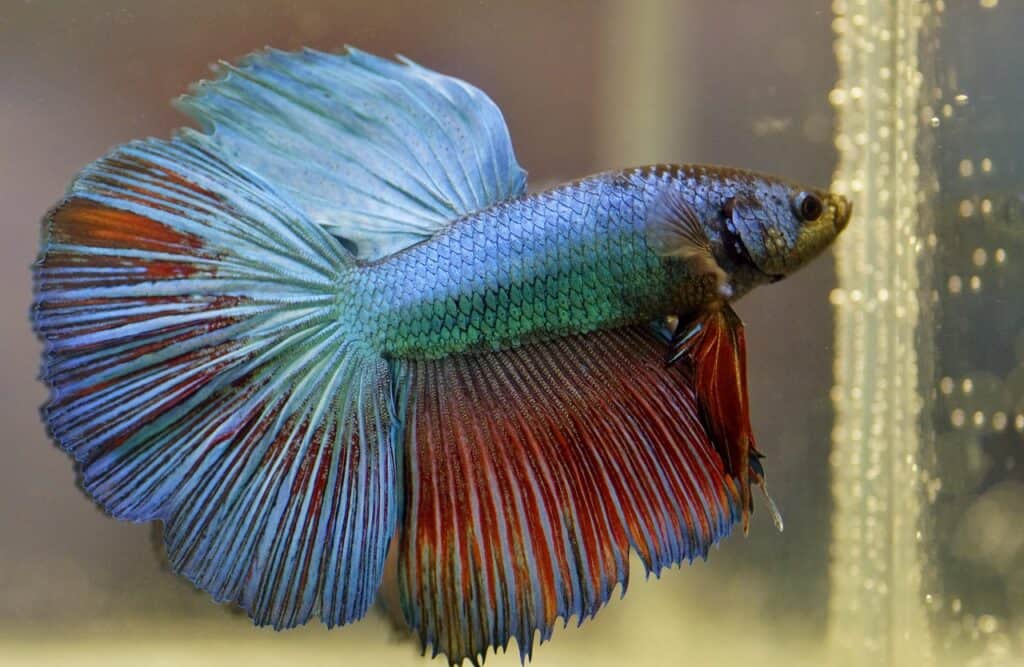
Recognizing signs of aging in betta fish is crucial given their typical lifespan of 2 to 5 years 4. Common indicators include dull coloration and decreased activity, which signal advancing age. Observing shifts in feeding behavior and energy levels helps maintain their health and comfort.
Common Signs of Aging in Bettas
Betta fish exhibit distinct signs as they enter their senior years. A common sign is muted coloration from their once vibrant hues. You may also notice prominent scales, weight loss, or white, acne-like spots indicating illness. Behaviorally, older bettas display increased lethargy, preferring to rest on plants or the tank bottom.
Behavioral and Physical Changes in Older Bettas
While observing aging bettas, several changes indicate their senior status. They often show reduced swimming vigor and increased rest periods. Appetite may decline, with fish sitting to eat instead of actively foraging. Look for fraying fins, dull coloration, and rounded bellies as physical signs of aging.
Health Considerations for Aging Bettas
Caring for aging bettas demands awareness of their changing health needs. A weakened immune system necessitates regular monitoring. Maintain optimal water quality through frequent changes to prevent health complications. A nutritious diet tailored for senior fish supports longevity.
Health Aspect Reference Table
| Health Aspect | Considerations |
|---|---|
| Immune System | Weakened; requires regular monitoring |
| Water Quality | Maintain with regular changes |
| Diet | Feed high-quality, nutritious foods |
| Fin Rot | Check regularly for chronic conditions |
| Loss of Sight | Adjust feeding techniques |
Best Practices for Caring for Aging Bettas
Stable, clean tank conditions are vital for aging bettas, as they are sensitive to poor water quality. Introduce gentle water currents and soft substrates to reduce stress. Provide hiding spots and plants for comfort and security. Adjust feeding routines with smaller, frequent portions of high-quality food.
Improving Quality of Life for Aging Bettas
Enhancing aging bettas’ quality of life involves maintaining ideal water parameters and dietary adjustments. Monitor ammonia, nitrite, and nitrate levels through regular checks and substrate cleaning. Incorporate Omega-3 enriched foods and probiotics in their meals to boost immunity.
Optimal Water Conditions
Regular water changes help keep harmful compounds at bay, reducing health risks for senior bettas. Consistent monitoring of parameters ensures a stable environment. Suitable filtration and a clean substrate prevent bacterial buildup.
Nutritional Needs Adjustment
For senior bettas, softer granules or pureed foods aid digestion and accommodate vision impairments. Feed smaller amounts more frequently to prevent overeating and support digestive health.
| Age Stage | Food Type | Frequency |
|---|---|---|
| Young Adult | High-Quality Pellets | 1–2 times daily |
| Middle Age | Omega-3 Enriched Flakes | 2–3 times daily |
| Senior Fish | Soft Granules + Probiotics | 3–4 times daily |
| Very Senior | Pureed Foods | As needed |
Handling the Passing of an Aging Betta
When bettas exhibit extreme lethargy or refusal to eat, assess their quality of life compassionately. Consult a veterinarian about humane euthanasia methods such as clove oil to ensure a peaceful passing. Creating a memorial can aid in coping with the emotional aftermath.
Recognizing Declining Health Signs
Declining health signs include excessive inactivity, gasping at the surface, and social withdrawal. Early detection of these indicators allows you to provide timely care and support.
Coping With Loss
Processing the loss of a betta can be challenging. Sharing experiences with fellow aquarists and commemorating your fish’s life can offer comfort. Reflect on the joy they brought and honor their memory through simple rituals.
Conclusion:
Monitoring aging signs—behavioral and physical—enables proactive care for your betta fish. By maintaining water quality, offering tailored nutrition, and preparing for end-of-life considerations, you can ensure a dignified and comfortable later life for your cherished companion.