To perform a perfect 25% water change in your betta tank, I first gather my supplies: a clean bucket, siphon, and de-chlorinator. I remove 25% of the old water, checking that the new water matches the current temperature (72–82°F).
After treating the tap water, I add it slowly to minimize stress. Finally, I inspect the tank for waste and test water parameters. There’s more essential information to guarantee your Betta thrives, so keep exploring!
Importance of Regular Water Changes for Bettas
When you think about keeping a healthy betta, regular water changes are non-negotiable. Maintaining ideal water quality is essential, as it helps remove waste and harmful toxins like ammonia, nitrites, and nitrates that build up in the tank. These toxins can lead to serious health issues, including fin rot and stress-related illnesses.
For smaller, unfiltered tanks, I recommend performing a 25-50% partial water change every 2-3 days, while larger filtered tanks should have a 20-30% change weekly. Consistently monitoring water parameters, especially nitrate levels, is significant; if they exceed 50 parts per million, a more substantial water change may be necessary. Prioritizing these practices guarantees your Betta thrives in a clean, balanced environment.
How Often Should You Change Betta Fish Water?
When it comes to changing betta fish water, the frequency depends on the size of your tank. For small, unfiltered tanks, I recommend a 25% change every 2-3 days, while larger, filtered tanks need a 20-30% change weekly. Monitoring your tank’s nitrate levels will also help me determine if more frequent changes are necessary to guarantee a healthy environment for my Betta.
Frequency for Small Tanks
Maintaining water quality in small tanks is essential for the health of your betta fish. For unfiltered tanks (1-3 gallons), I recommend a 25% water change every 2-3 days to prevent harmful toxin buildup. In 1-gallon bowls, I perform a complete water change weekly, with partial water changes of 25% as needed. If you have baby bettas, aim for daily or every-other-day changes to support their rapid growth.
Here’s a quick reference table:
Tank Size and Water Change Frequency
| Tank Size | Recommended Change Frequency |
|---|---|
| 1 gallon | Complete weekly, partial every few days |
| 1–3 gallons | 25% every 2–3 days |
| Baby bettas | Daily or every other day |
This table provides a quick reference for how often to change water based on your tank size and the needs of baby bettas. Regular water changes are essential for maintaining healthy water quality and supporting the well-being of your fish.
Always monitor water parameters to adjust these recommendations based on observed water quality.
Larger Tank Guidelines
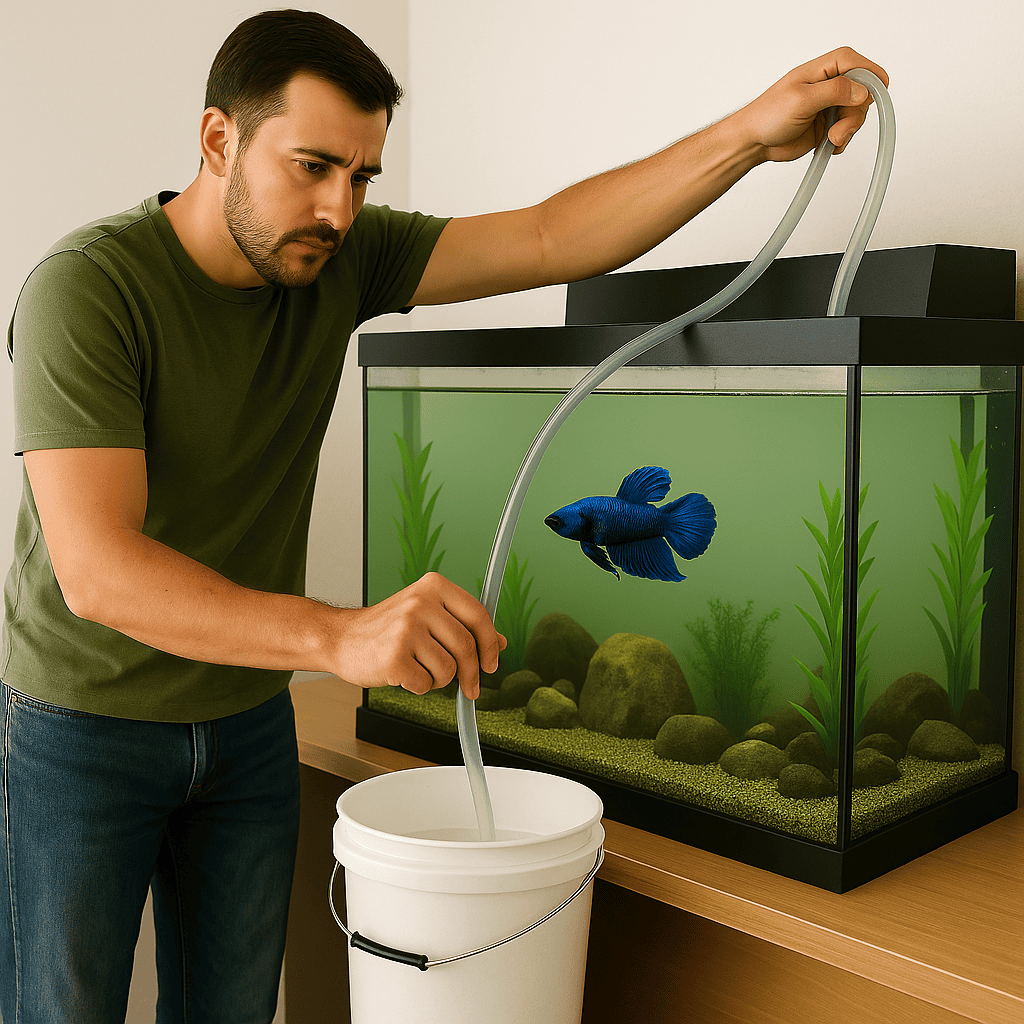
Although larger tanks provide more stable environments for bettas, regular water changes are still essential for maintaining ideal water quality. I recommend performing a 25% water change weekly for tanks sized between 5 to 10 gallons. This practice helps prevent the buildup of harmful toxins. It’s vital to monitor water parameters, especially nitrate levels; if they exceed 50 parts per million, consider increasing the frequency of water changes.
Even in filtered systems, manual cleaning remains necessary, as filtration alone won’t suffice. Always perform water changes slowly to minimize stress on your bettas and avoid drastic fluctuations in temperature or chemistry. Adjust the frequency based on your tank’s cleanliness and the health of your fish, particularly in heavily stocked or planted setups.
Signs for Water Change
Regularly observing your Betta’s environment is key to ensuring their well-being. I recommend keeping an eye out for signs that indicate a water change is necessary. Cloudy or dirty water usually means it’s time to act, as it often correlates with accumulated fish waste and toxins. Unusual behavior in your Betta, such as lethargy or hiding, can also signal poor water quality.
After feeding, if you notice uneaten food lingering, it’s a red flag for a potential water change. Additionally, monitor nitrate levels; if they exceed 50 parts per million, perform a 30% water change. Consistently maintaining water quality helps prevent stress and health issues, ensuring a vibrant life for your betta fish.
Preparation Before Changing Water

Before changing the water in my betta tank, I always gather the necessary supplies like a clean bucket, siphon, and water conditioner. I prepare the replacement water by treating tap water and letting it sit until it reaches room temperature. Finally, I checked the temperature of the new water to guarantee it matched the tank water, preventing any thermal shock to my Betta.
Gather Necessary Supplies
Preparing for a water change is vital for maintaining a healthy environment for your Betta fish. First, I gather a clean bucket specifically for aquarium use to avoid any contamination from soaps or chemicals. Next, I make sure I have a siphon or gravel vacuum to effectively remove old water and waste from the tank.
It’s also important to have a water conditioner ready, which will neutralize harmful chemicals in the tap water before adding it to the tank. A thermometer is necessary to check the temperature of the new water, confirming it matches the existing tank water to prevent temperature shock. Finally, I keep a net handy to catch any debris or uneaten food during the process.
Prepare Replacement Water
To guarantee a successful water change for my Betta, I always prepare the replacement water in advance. Here’s how I do it:
- Gather necessary materials: I use a clean bucket, water conditioner, thermometer, and siphon, making sure they’re dedicated solely to aquarium use.
- Dechlorinate the water: I treat the tap water with a de-chlorinator to neutralize harmful chemicals, which is vital for my Betta’s health.
- Allow it to sit: I let the water sit until it reaches room temperature, avoiding any stress from temperature shock.
- Check water parameters: Before adding the new water, I always test for pH and hardness to confirm a safe environment for my Betta.
Establish Temperature Consistency
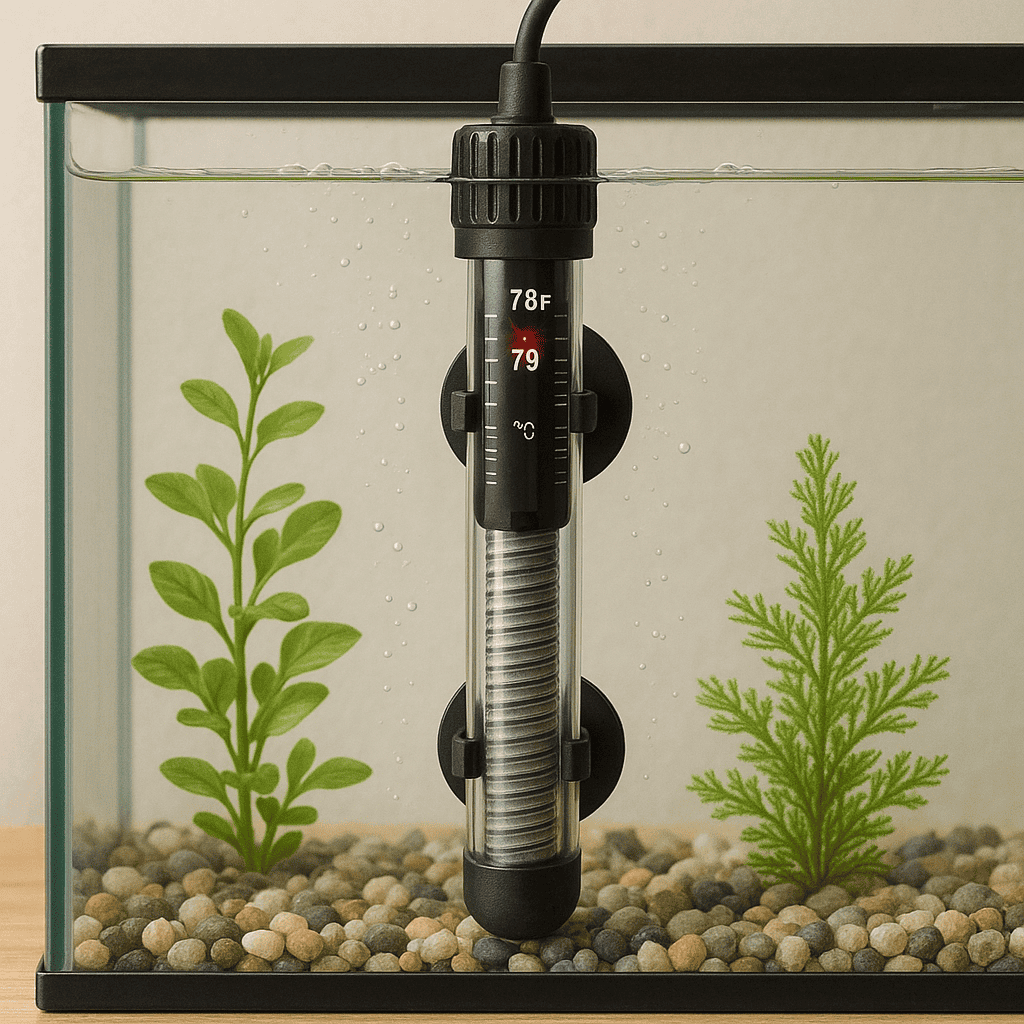
Establishing temperature consistency is essential for my Betta when changing water, as it helps prevent stress and guarantees a smooth change. To avoid temperature shock, I verify the new water’s temperature matches the existing tank water, ideally within 72–82°F. Before replacing the water, I check both temperatures using a thermometer. If the new water is too warm or cold, I let it sit until it reaches room temperature. Consistency in water temperatures creates a stable environment that promotes my Betta’s overall health.
Water Change & Temperature Check Steps
| Step | Action | Temperature Check |
|---|---|---|
| Prepare new water | Gather and treat with conditioner | Measure with thermometer |
| Match temperatures | Adjust new water temperature | Compare to tank |
| Allow to sit | Let water reach room temperature | Recheck before changing |
| Replace water | Perform water change | Verify stability |
| Monitor Betta | Observe behavior post-change | Look for signs of stress |
This table provides a clear, step-by-step guide for performing water changes while ensuring your Betta’s environment remains safe and stable. Each step highlights the necessary action and the temperature check required to minimize stress and maintain optimal health for your fish.
Step-by-Step Guide to Changing Your Betta Fish Water
Changing your betta fish’s water is essential for maintaining a healthy environment, and following a systematic approach helps guarantee the process is effective and safe. Here’s a step-by-step guide:
- Prepare new water in a clean bucket, treating it with a water conditioner to neutralize harmful chemicals and match the temperature to the tank’s water.
- Turn off all tank equipment like filters and heaters to prevent damage during the water change.
- Remove the fish temporarily if needed, then use a siphon or gravel vacuum to perform a partial water change, removing about 25% of the old water.
- Slowly add the new water back into the aquarium, ensuring a gentle introduction to minimize disruption for your Betta.
Inspecting and Cleaning the Tank
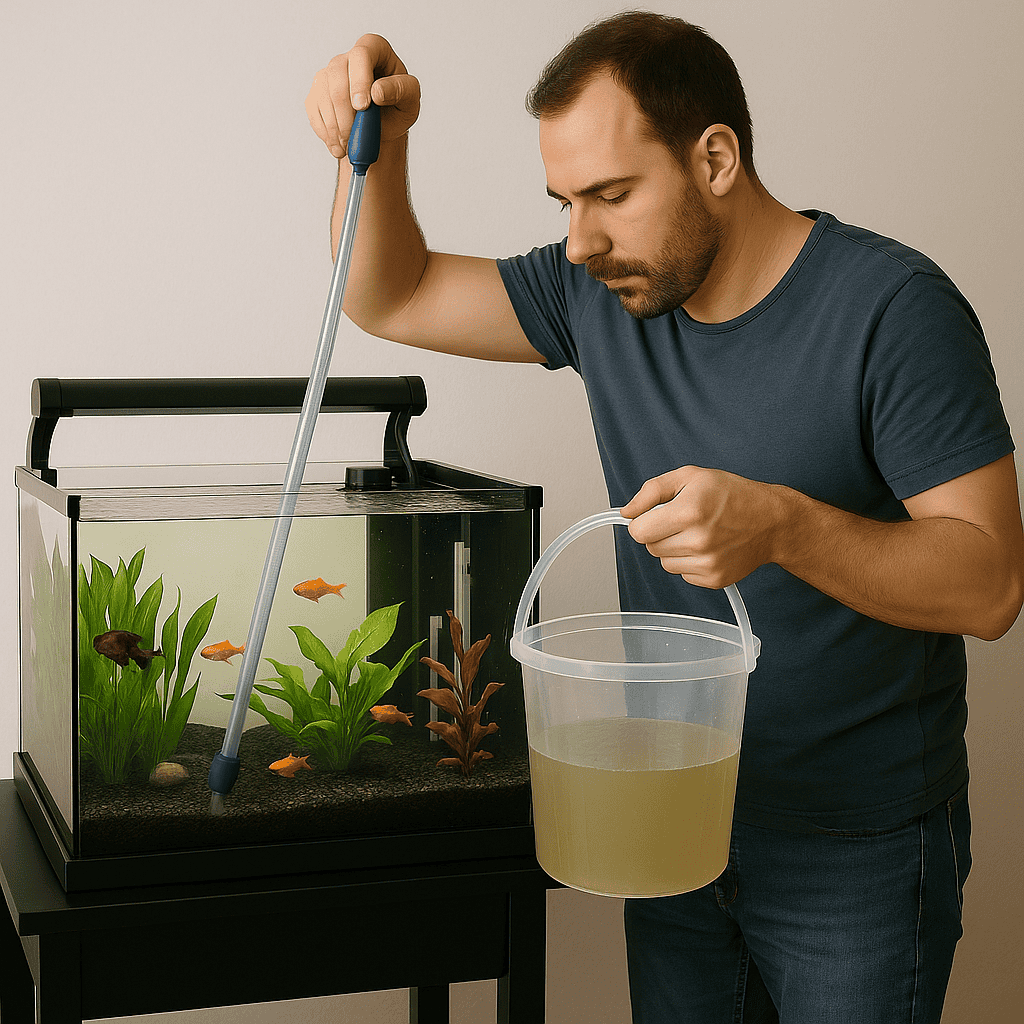
I start by evaluating the tank condition for any algae, uneaten food, or waste, as these can greatly impact water quality and my Betta’s health. Regularly cleaning the tank surfaces is crucial; I use an algae scrubbing pad or soft sponge, steering clear of soaps or chemicals. This routine not only keeps the environment clean but also guarantees the filter and heater are functioning properly for ideal water conditions.
Assess Tank Condition
As you prepare to perform a water change for your betta tank, it’s vital to first assess its overall condition. This step guarantees a healthy environment for your Betta. Here’s what I recommend:
- Inspect for Waste: Look for signs of waste accumulation and uneaten food.
- Check Algae Buildup: Examine the tank walls for algae; use an algae scraper gently to avoid disturbing beneficial bacteria.
- Evaluate Water Parameters: Test for ammonia, nitrite, and nitrate levels with water test strips to gauge tank health.
- Assess Filter Functionality: Confirm your filter is working effectively; clean or replace cartridges as needed.
Clean Surfaces Regularly
While maintaining a clean environment is essential for your Betta’s health, regular inspections of the tank surfaces should be a priority. I find that using an algae scraper allows me to gently remove algae without harming beneficial bacteria. It’s best to perform this cleaning during water changes to guarantee a thorough maintenance routine.
Aquarium Maintenance Task Table
| Task | Frequency | Tools Needed |
|---|---|---|
| Inspect surfaces | Weekly | None |
| Scrub tank walls | During water changes | Algae scraper |
| Check filter & heater | Bi-weekly | None |
| Rinse decorations | As needed | Tank water |
Adding New Water to the Tank
When adding new water to your betta tank, it’s essential to confirm that the water is treated with a water conditioner to neutralize harmful chemicals like chlorine and chloramine, which are often present in tap water. Here’s how I confirm the process goes smoothly:
- Condition the Water: Always treat the new water with a dechlorinator.
- Match the Temperature: Make sure the new water is between 72–82°F to prevent shocking your Betta.
- Pour Slowly: Carefully pour the dechlorinated water into the tank to minimize disturbance and stress.
- Use a Dedicated Bucket: Always use a clean bucket reserved for aquarium use to avoid contamination.
After adding new water, I watch my Betta for any signs of stress or discomfort, confirming a safe environment.
Monitoring Water Parameters Post-Change
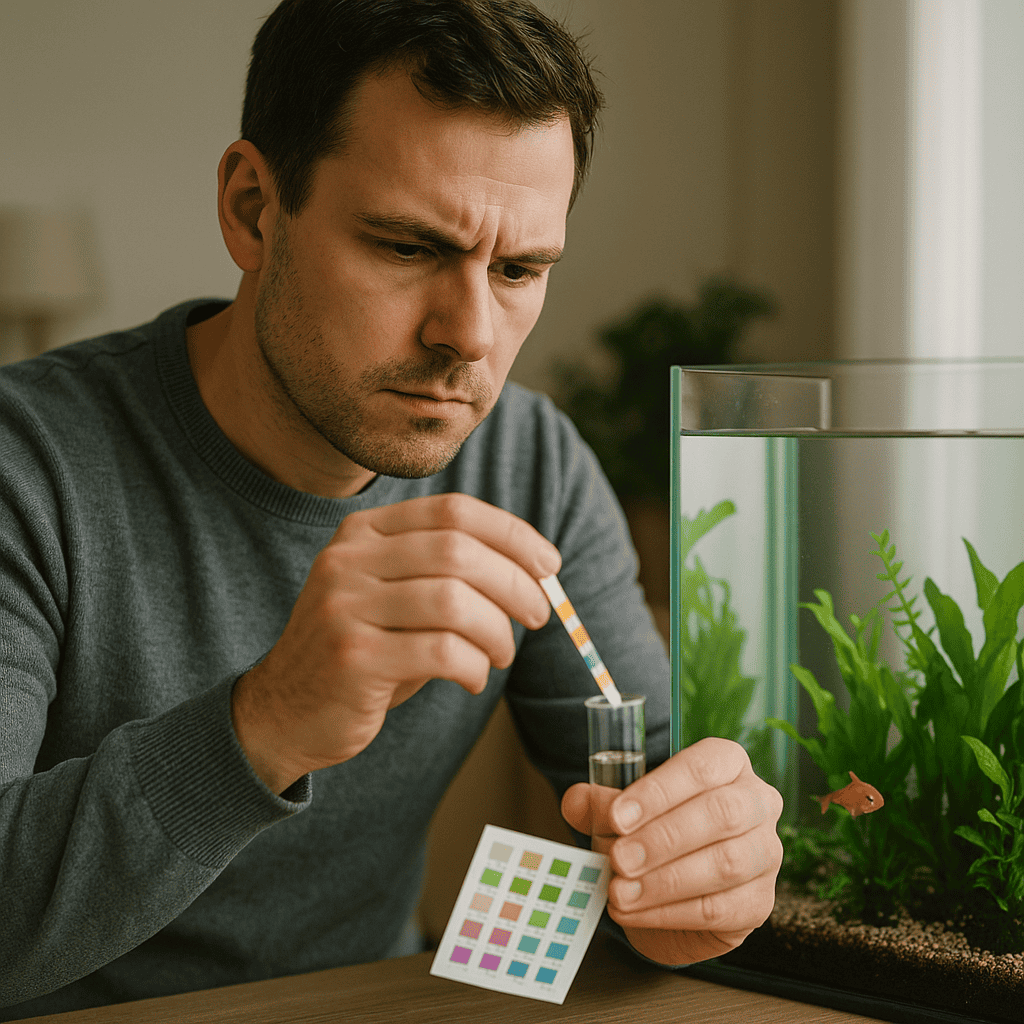
Monitoring water parameters post-change is essential to ensuring your Betta thrives. After performing a 25% water change, I always test for ammonia, nitrite, and nitrate levels with a reliable test kit. Ammonia and nitrites should be at zero ppm, while nitrates should ideally be below 20-30 ppm. I also keep an eye on pH levels, maintaining them between 6.5 and 7.5, as fluctuations can stress my Betta.
Additionally, I regularly check the water temperature, ensuring it stays between 72°F and 82°F. Observing my Betta for signs of distress, like lethargy or unusual swimming patterns, is vital. I conduct weekly tests to track changes and adjust my maintenance routine to prevent harmful spikes in toxins.
Common Mistakes to Avoid While Cleaning Your Betta Tank
Cleaning your betta tank requires attention to detail, as common mistakes can jeopardize your fish’s health. To guarantee your water changes enhance water quality, here are four pitfalls to avoid:
- Complete Water Changes: Avoid this, as it disrupts beneficial bacteria vital for your fish tank’s stability.
- Overfeeding: Don’t give your Betta more food than it can consume; leftover food pollutes the water, increasing the need for frequent changes.
- Temperature Mismatch: Always match the new water temperature to the existing tank water to prevent thermal shock.
- Neglecting Water Tests: Regularly test water parameters before changes; ignoring this can lead to undetected issues that may harm your Betta.
Routine Maintenance Tips for Betta Tanks
Routine maintenance of your betta tank is essential for keeping a healthy environment for your fish. I recommend performing 25% water changes weekly in aquariums larger than 5 gallons. Use a siphon to carefully remove the old water, taking care not to disturb the substrate too much to protect beneficial bacteria. Always prepare new tank water in advance, treating it with a water conditioner and matching the temperature to prevent shocking your betta fish.
Regularly check and clean your tank equipment, including filters, and replace filter cartridges as directed by the manufacturer. After each water change, monitor your Betta’s behavior for signs of stress or discomfort, adjusting your maintenance routine as needed based on their health and water quality.
Enhancing Tank Environment With Live Plants

Incorporating live plants into your betta tank can greatly enhance the overall environment for your fish. By adding plants, you can:
- Improve water quality by absorbing harmful nitrates and providing oxygen.
- Create hiding spots with species like Java Fern, Anubias, and Marimo Moss Balls, which help reduce stress.
- Stabilize water parameters as plants naturally filter toxins, ensuring a healthier habitat.
- Encourage natural behaviors, allowing bettas to explore and rest among the foliage, which can decrease aggression.
Regular maintenance, like pruning, promotes plant health and maximizes their benefits. By enriching your betta tank with live plants, you’re not only enhancing aesthetics but also fostering a thriving ecosystem that supports your fish’s well-being.
Conclusion
In summary, performing regular 25% water changes is essential for maintaining a healthy environment for your Betta. By following the steps outlined, you can guarantee your fish thrives in clean water. Remember to monitor water parameters and avoid common pitfalls during the process.
Consistent routine maintenance and enhancing the tank with live plants will also contribute to your Betta’s well-being. With these practices, you’ll create a vibrant habitat that keeps your Betta happy and healthy.