If your betta fish shows signs of distress, like lethargy or loss of appetite, it’s essential to act quickly. Start by checking the water parameters and maintaining a stable temperature between 78-82°F.
Creating a comfortable environment with hiding spots can reduce stress. Monitor its behavior closely and consult a veterinarian experienced with fish if you notice serious issues.
By taking these steps, you can improve your fish’s chances of recovery and maintain a healthier habitat. There’s much more to explore on ensuring your betta’s well-being.
Signs Your Betta Fish Might Be Dying
When I notice my betta fish acting differently, it’s important to pay attention, as these changes could signal that something’s wrong. Signs that your betta might be sick include lethargy, where it stays at the bottom of the fish tank, showing no interest in swimming.
A loss of appetite is concerning too; a healthy betta enthusiastically swims for fish food, while a sick fish may refuse to eat. Clamped fins often indicate distress and may signal fin rot, while rapid gill movement can signal respiratory issues.
Additionally, discoloration like fading or gray patches may hint at bacterial infections or other fish diseases, often tied to poor water quality or Swim bladder disease.
What You Can Do If Your Betta Shows Signs of Decline
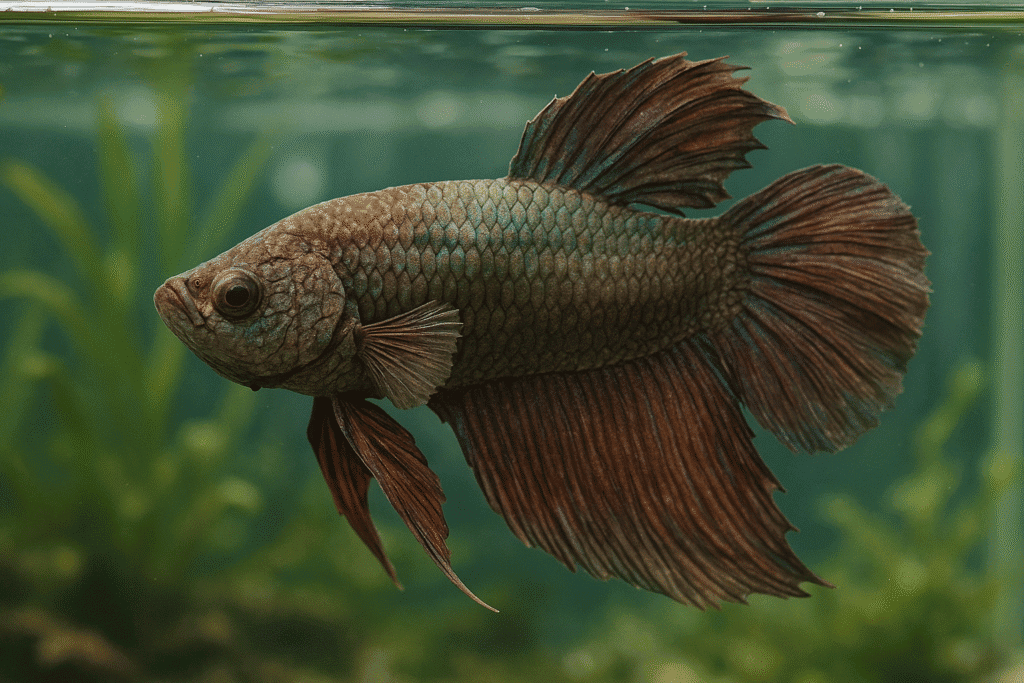
If you notice your betta fish showing signs of decline, it’s crucial to act quickly to improve its chances of recovery. Start by checking water quality, testing for ammonia and nitrites, and ensuring a stable pH balance for clean water in your gallon tank.
Create a comfortable environment with sufficient swimming space and appropriate water temperature between 78-82°F, and consider adding live plants, which can help maintain water quality. Offer nutritious betta pellets in small amounts and minimize stressors by avoiding aggressive tank mates. Monitor your betta’s behavior closely; changes in swimming, appetite, or color can indicate worsening health.
If needed, perform a partial water change to improve conditions, and consider using aquarium salt to support your freshwater fish’s immune system. Consult a veterinarian experienced with fish for professional guidance and early intervention to support your betta’s recovery.
Conclusion
To sum up, witnessing your betta fish decline can be heartbreaking. By recognizing the signs and taking prompt action, you can give your beloved pet the best chance for recovery.
Whether it’s adjusting their environment, improving their diet, or seeking professional advice, every effort counts. Remember, your compassion and care can make a significant difference in their quality of life. Stay hopeful, and cherish the moments you have with your betta during this difficult time.