When setting up a betta tank, avoid sharp decorations and substrates that can harm their delicate fins. Don’t include other male bettas or aggressive fish, as they’ll create stress. Also, steer clear of non-aquatic plants and chemical additives that can compromise water quality.
Remember to monitor water parameters closely and guarantee your tank mates are compatible with your Fish Tank environment. There’s plenty more to reflect on to keep your Betta fish healthy and happy during fish tank setup, so let’s explore further together!
Harmful Decorations and Substrates
When setting up a betta tank, it’s crucial to pay attention to the types of decorations and substrates you choose. Avoid sharp decorations and substrates with sharp edges, like crushed coral, as they can injure your betta’s delicate fins.
Also, steer clear of non-aquatic plants that decay, polluting the water with harmful toxins and compromising water quality. Decorations with small openings can trap your Siamese fighting fish, causing stress and potential injury, while proper hiding spots are essential for their comfort.
Finally, I recommend making sure you don’t use items that leach chemicals that could harm your fish’s health or interfere with your water conditioner. Choosing the right materials based on your tank size is important for your betta’s well-being.
Incompatible Tank Mates and Additives
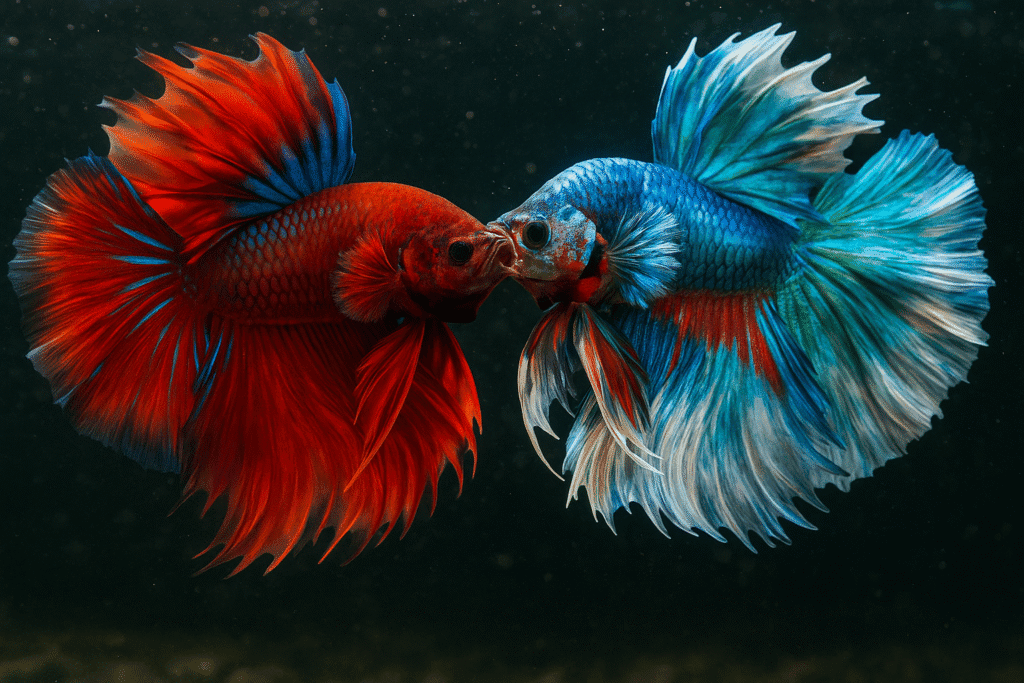
Choosing the right tank mates and additives is just as important as selecting appropriate decorations for your betta aquarium. Avoid incompatible tank mates, like other male bettas or aggressive fish such as cichlids—they can harm your betta.
Fin-nipping species, like certain tetras, should also be avoided to protect those beautiful fins. Non-aquatic plants can rot, leading to ammonia spikes that jeopardize water conditions and your betta’s health, unlike properly maintained live plants. Regular water changes are essential, and each water change helps maintain optimal conditions for your Betta splendens.
Ultimately, I recommend being cautious with chemical additives; some can induce stress and health problems. Prioritizing these factors is essential for successful betta care and a harmonious community tank.
Conclusion
In summary, creating a safe and healthy environment for your betta is essential. Avoid harmful decorations like sharp objects and unsuitable substrates that can harm their delicate fins. Be cautious with tank mates; not all fish are compatible with bettas, and additives can disrupt their well-being.
By steering clear of these pitfalls and providing proper nutrition with quality betta pellets, you’ll guarantee your betta thrives in a peaceful and stimulating habitat, allowing them to showcase their vibrant colors and unique personality.