Those tiny white worms in your Betta fish tank are likely either Detritus Worms or Planaria. Detritus Worms, with their thin, pointy bodies, thrive in dirty substrates and indicate overfeeding or poor maintenance. Planaria, on the other hand, have arrow-shaped heads and can pose a threat to fish eggs.
Both types signal issues in your tank’s ecosystem. Proper identification is essential, so let’s explore effective management strategies to tackle these unwanted guests.
Identifying Detritus Worms and Planaria
When you spot tiny white worms in your Betta fish tank, identifying whether they’re Detritus Worms or Planaria is vital for effective management. Detritus Worms have thin, pointy bodies and thrive in the substrate, feeding on decomposing organic matter.
They typically indicate poor tank maintenance or overfeeding, leading to overpopulation. In contrast, Planaria are flatworms with distinct arrow-shaped heads and two visible eyespots. Their carnivorous nature poses risks to fish eggs and weakened fish, making identification significant.
Planaria can reproduce asexually, complicating control efforts. Regular water changes and proper tank maintenance can help mitigate these issues, ensuring a healthy environment for your fish. Observing these worms’ behavior and characteristics will guide your management decisions effectively.
Managing Worm Populations in Your Aquarium
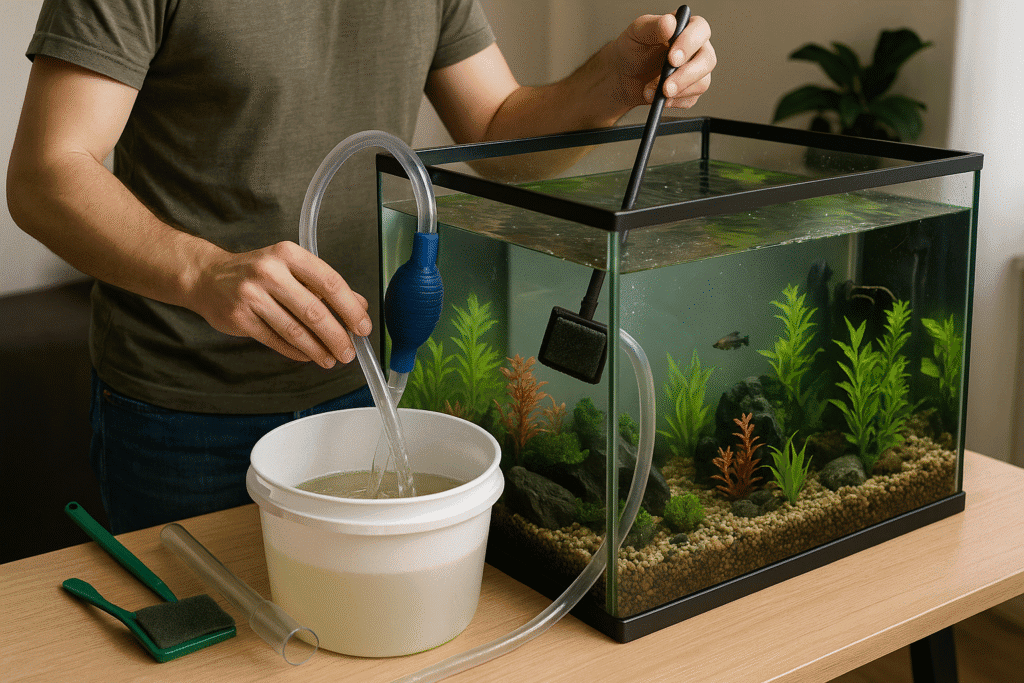
To effectively manage worm populations in your aquarium, it’s crucial to adopt a proactive approach that includes regular maintenance and careful feeding practices. I make it a point to perform water changes of 10%-15% weekly; this dilutes waste and improves water quality.
During these changes, I thoroughly vacuum the substrate to eliminate excess detritus, which serves as a food source for worms. I also carefully monitor feeding to prevent overfeeding, as excess food increases organic waste, fueling worm growth.
Additionally, introducing fish that consume worms can provide a natural control method, helping maintain balance in the tank. By focusing on these strategies, I guarantee a healthier environment for my Betta fish and minimize worm populations effectively.
Conclusion
In summary, if you’re spotting tiny white worms in your betta fish tank, they’re likely detritus worms or planaria. While they can indicate excess waste or uneaten food, it’s essential to manage their populations effectively.
Regular tank maintenance, including water changes and proper feeding, will help keep these worms in check. By staying proactive, you can guarantee a healthy environment for your Betta and reduce any potential issues with these unwelcome guests.