Betta fish can technically survive without plants, but they thrive with them present. Plants enhance their well-being, improve water quality, and provide essential hiding spots that reduce stress. They mimic a natural habitat, offering security and promoting active behavior.
Live plants, like Anacharis and Java fern, are particularly beneficial, while silk plants can also be an option if they’re safe. There’s so much more to discover about the ideal aquatic environment for bettas—let’s explore together.
The Importance of Plants for Betta Fish
Although Betta splendens can technically survive without plants, their overall well-being considerably improves when plants are included in their environment. Incorporating live plants in an aquarium not only enhances water quality by absorbing harmful ammonia and nitrites but also provides essential hiding spots that promote stress reduction.
This enrichment allows these Siamese Fighting Fish to explore and engage in natural behaviors, preventing boredom. Additionally, live plants contribute to oxygenation, creating a healthier habitat for both bettas and other aquatic life.
By mimicking their natural environment, plants help bettas feel secure and comfortable, ultimately enhancing their quality of life. The labyrinth organ in bettas also benefits from well-oxygenated water that plants provide.
Safe Plant Options for Your Betta Tank
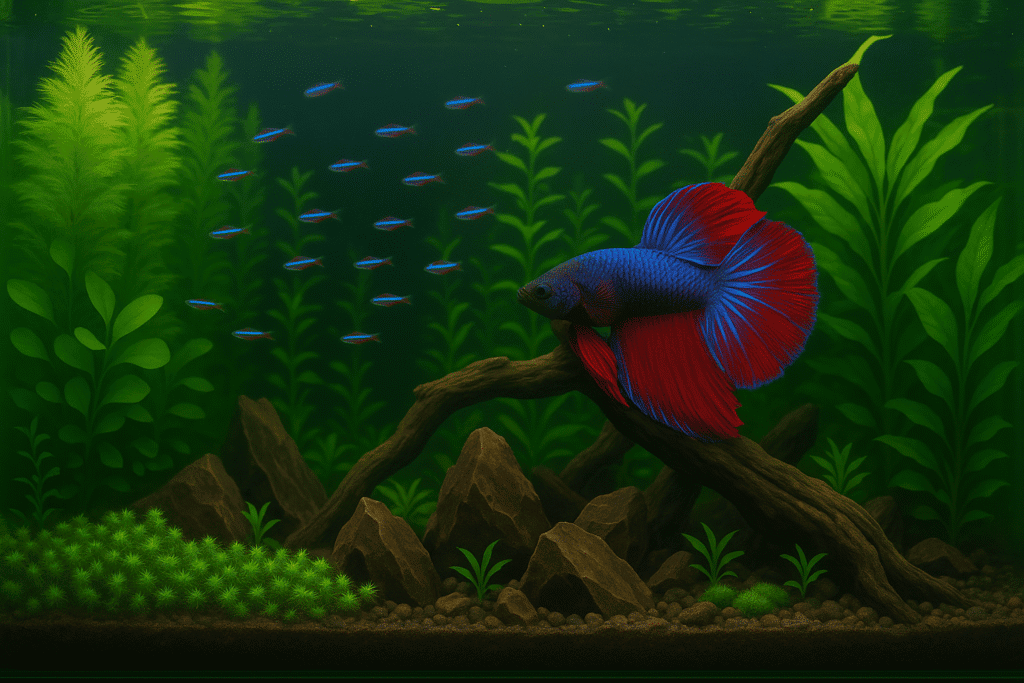
When selecting plants for a betta tank, it’s essential to evaluate options that enhance planted aquariums while promoting fish health and happiness. Safe choices include live plants like Anacharis and Java fern, which provide excellent hiding spots and reduce stress.
Floating plants create natural cover and help maintain water quality. Silk plants are another alternative, but ensure they lack sharp points to prevent fin damage. Consider adding a betta hammock for a resting spot.
Always quarantine new live plants for at least two weeks to avoid introducing pests, and regularly check for decaying matter, as it can harm water quality. Clean aquarium gravel before adding new plants.
Conclusion
To sum up, while these popular aquarium fish can technically survive without plants, they thrive in environments enriched with greenery. Plants provide essential benefits, such as hiding spots, improved water quality, and natural food sources.
By choosing safe plant options, you can create a more stimulating and healthier habitat for your betta and enhance your aquarium hobby. Ultimately, incorporating plants into tanks isn’t just an aesthetic choice; it’s crucial for fish’s overall well-being and happiness. Don’t underestimate their importance!