Yes, betta fish can live in a bowl, but their health and happiness greatly improve with better conditions. While smaller bowls can work with treated tap water and proper tank size, I find that a 5-gallon tank with clean, dechlorinated water is best.
Regular water changes every couple of days are essential to prevent pollution. Adding live plants can enhance their environment, too. Keep an eye on their behavior, as stress signals can arise. Let’s explore more tips on ensuring their well-being in a bowl.
Fish Suitable for a Fish Bowl
When considering pet fish suitable for a fish bowl, it’s important to keep in mind that while many species can survive in smaller environments, not all thrive in isolation without compatible tank mates common to community tank setups. Betta fish (Siamese fighting fish), for example, can live in a bowl, but they require at least a 5-gallon tank for best care.
If you choose to keep a betta in a one-gallon bowl, be aware of water quality and the need for partial water changes. Smaller fish like guppies and tetras can also adapt, but monitoring is crucial to avoid overcrowding. Remember, a clean environment is essential for any fish to flourish in a small tank.
How to Raise a Betta Fish in a Fish Bowl Longer
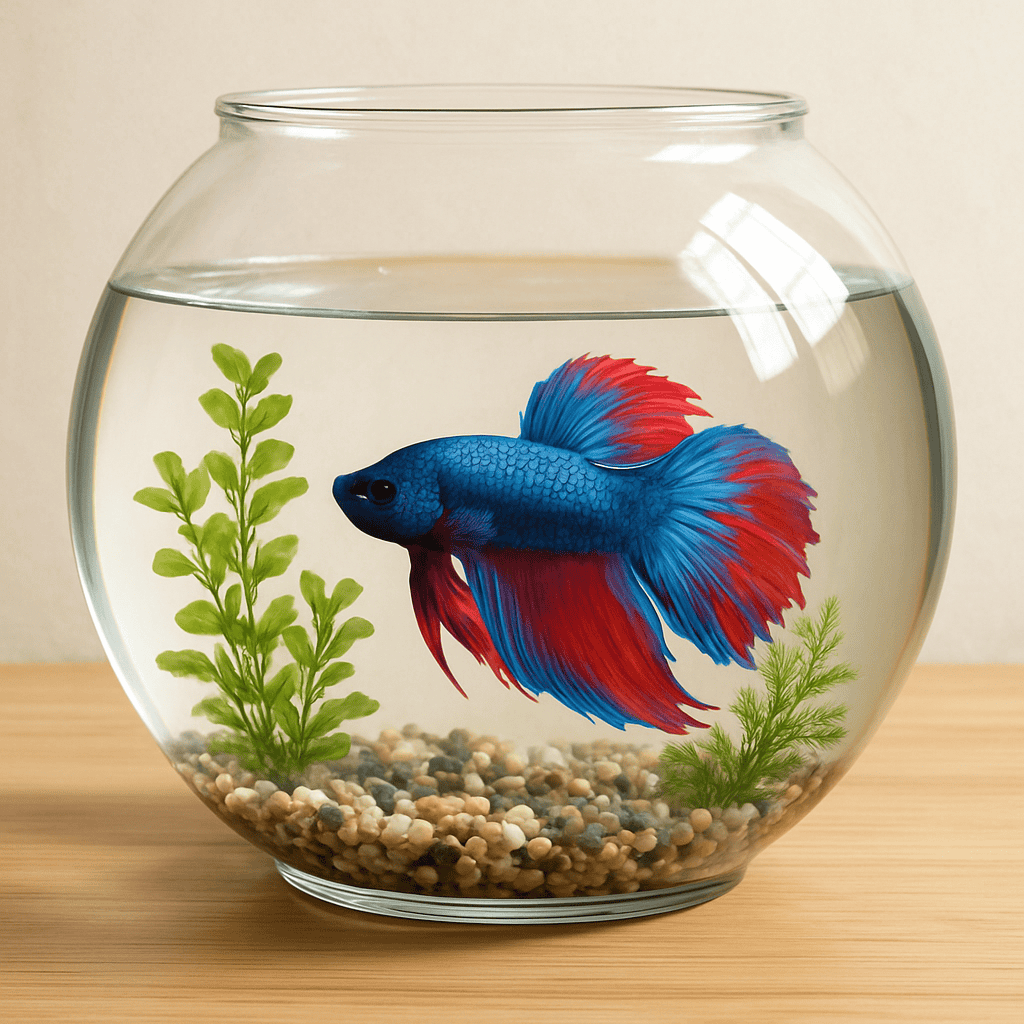
To successfully raise tropical fish such as bettas in a bowl for an extended period, you’ll need to focus on fish care, maintaining ideal water quality, and a healthy environment. Here are some key steps I follow:
- Change the water every two days with dechlorinated water and an appropriate water conditioner to prevent pollution.
- Add live plants for natural oxygenation and feed sparingly on brine shrimp to enhance the habitat.
- Monitor uneaten food to avoid waste buildup.
Conclusion
To sum up, while betta fish can survive in a bowl, it’s not the ideal environment for their long-term health. A properly maintained bowl can work for a while, but larger tanks or divided tanks with filtration and heating are better suited for their well-being.
If you choose to keep a betta in a bowl, be diligent about water quality and temperature, and provide enrichment to keep your fish happy. Ultimately, investing in a better habitat will lead to a healthier, more vibrant betta.