Betta fish are aggressive mainly due to their instinctual territorial behavior. They fiercely defend their territory, which includes food, shelter, and potential mates, from perceived threats. Selective breeding has intensified this aggression, making them more prone to confrontations with conspecifics.
Environmental factors, like tank size and the presence of visual barriers, also play a role in their aggression. Understanding these factors can help manage their behavior better, and there’s even more to explore about their fascinating aggression dynamics.
Understanding Aggression in Male Bettas
While observing male bettas in their environments, it’s clear that aggression plays a crucial role in their behavior. These Siamese fighting fish primarily display aggressive behavior to establish and defend their territory, which includes access to food, shelter, and potential mates.
Confrontations often involve gill flaring, ramming, and fin nipping against rivals. Isolated male bettas show heightened aggression towards conspecifics, while those with prior visual experiences exhibit reduced aggressive responses. It’s fascinating how their aggressive behavior varies depending on stimuli, showing more intensity towards conspecifics than towards alien species or mere reflections.
I’ve seen these displays firsthand, and they highlight just how determined Betta splendens can be.
Factors Influencing Aggressive Behavior
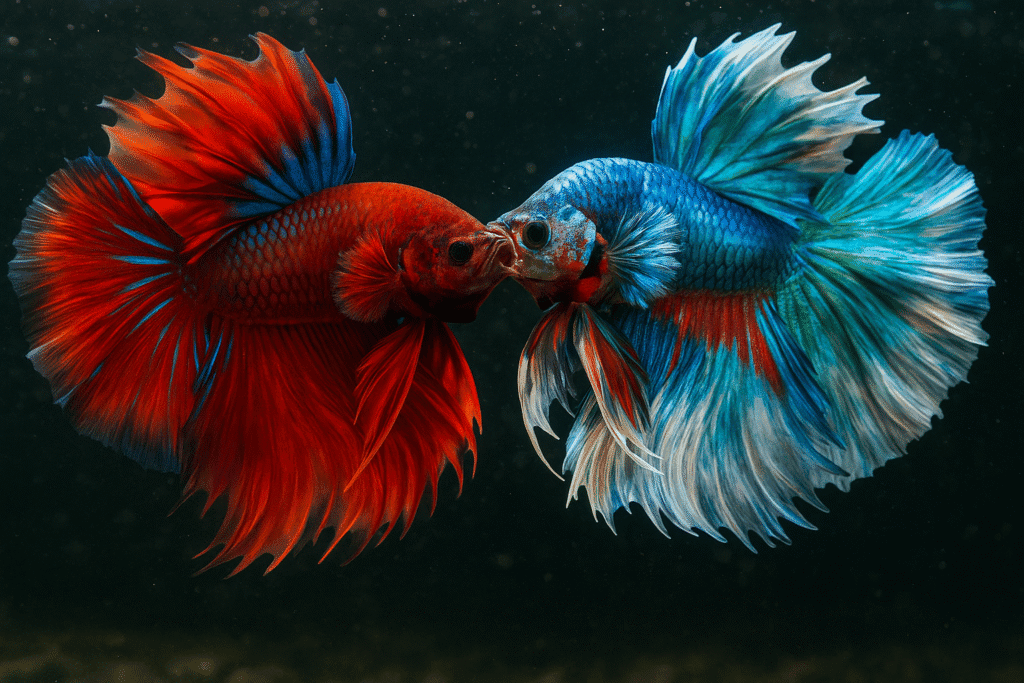
Aggression in male bettas isn’t solely driven by instinct; various factors greatly shape their behavior. Territorial instincts compel them to defend their space against perceived threats, especially other males. Selective breeding has heightened aggressive behavior, making these betta fish more confrontational than their wild counterparts.
Environmental factors play an essential role too; tank size influences aggression levels, while the presence of visual barriers can reduce stress. Notably, male bettas with prior visual experience of conspecifics exhibit less aggression. Mirrors can provoke heightened aggression, as they mistake reflections for rivals, leading to stress and potential injuries. I’ve noticed that maintaining good water quality and choosing appropriate tank mates can make a significant difference.
Conclusion
To summarize, the aggressive nature of male betta fish stems from their instinctual behaviors and territorial instincts. Their vibrant colors and elaborate fins are not just for show; they serve as signals to potential rivals. Understanding the factors that influence their aggression can help create a more harmonious environment for these stunning fish.
By recognizing their needs and behaviors, we can appreciate their beauty while ensuring their well-being in our care. I often recommend community tank setups for those wanting to observe social interactions without constant confrontations.