It’s usually best to have one betta fish, particularly if it’s a male. Male bettas are highly territorial and can become aggressive towards each other, which often results in fights. If I’ve learned anything from my own setup, it’s that male bettas need their own space in a fish tank.
If you prefer keeping multiple bettas, female bettas can coexist in groups known as betta sorority tanks, but you’ll need at least six in a proper-sized tank. The right aquarium setup is essential for their well-being. There’s much more to explore about their behavior and tank requirements, so keep going.
Understanding Betta Fish Behavior
Understanding the behavior of betta fish is essential for anyone considering them as pets. I’ve noticed that male bettas are highly territorial and aggressive, making it unsafe to house two males together; they’ll fight until one is injured or dead.
Conversely, female betta fish can coexist in groups, known as a betta sorority tank, but require a minimum of six in a 20-gallon, heavily planted tank to manage well and establish a hierarchy. Bettas’ temperament varies, with males displaying aggressive behaviors, while females often develop social dynamics.
Inadequate tank size can exacerbate aggression and stress, impacting their overall health and water quality.
Recommended Tank Setup for Betta Fish
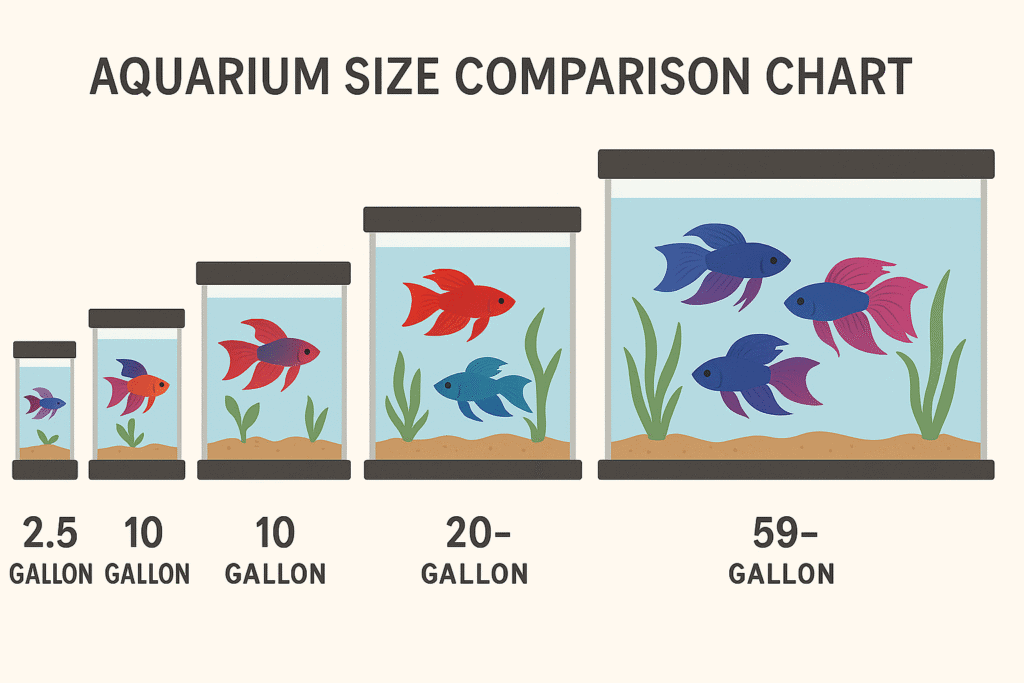
To create an ideal environment for your betta fish, it’s crucial to take into account their specific needs and behaviors. A minimum tank size of 5 gallons is recommended for one betta, while large tanks of at least 20 gallons are a good idea for housing multiple females, managed well to reduce territorial disputes.
Heavily planted tanks with hiding places mimic their natural habitat, providing security and reducing stress. I always include a hiding place near the substrate to help shy fish like Ghost shrimp and Mystery snails feel secure. Make sure the tank is covered to prevent jumping, and use gentle substrates like sand or smooth gravel to protect their fins.
If you want another betta, consider setting up another tank or introducing compatible tank mates such as African dwarf frogs, rice paddies inhabitants, or peaceful snails.
Conclusion
In summary, keeping one betta fish is generally the better option due to their territorial nature and potential aggression towards other males. A single betta can thrive in a well-maintained tank with proper care and attention.
However, if I decide to venture into a community setup, I always ascertain compatibility with non-aggressive species and provide ample space and hiding spots. You may even observe fascinating territorial behavior like a Bubble Nest built by a contented male Betta Splendens.
Ultimately, the choice depends on your setup and experience level, but prioritizing the well-being of the fish should always come first.