To tell if your betta is unhappy, watch for signs like lethargy, such as lying at the tank’s bottom or hiding frequently. Changes in color, like fading or dullness, can indicate stress. If your betta refuses food or shows decreased appetite, that’s concerning.
I’ve noticed that aggression towards tank mates or erratic swimming patterns also signal distress. Ultimately, poor water quality or lack of stimulation can lead to unhappiness, and I’m here to guide you through the solutions. white spots
Signs of a Depressed Betta Fish
How can you tell if your betta fish is feeling down? I often look for signs of lethargy; a depressed betta often lies motionless at the tank’s bottom or hides behind decorations. Fading colors, especially a loss of vibrancy, indicate stress.
Additionally, I check for a lack of appetite—if your betta refuses food for more than a day, it’s concerning. Consistent inactivity, where the fish rarely swims around or interacts, signals distress. Unusual aggression towards tank mates or erratic swimming patterns may also point to underlying issues. Always check water temperature and water quality, as it’s vital for your betta’s health and happiness.
Causes and Solutions for Betta Depression
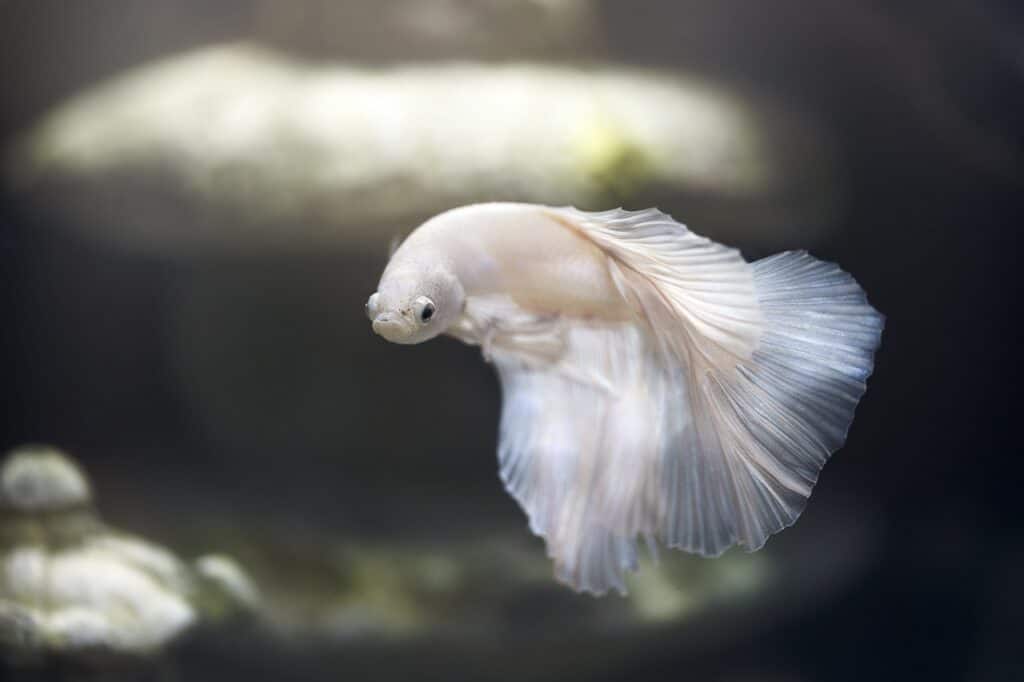
Understanding the causes of betta depression is key to ensuring your fish thrives. Poor water quality, inadequate housing, and environmental stressors can greatly impact your betta’s happiness.
To combat these issues, provide larger tanks with live plants and decorations, and maintain good water quality through regular changes and filtration.
| Cause | Solution |
|---|---|
| Inadequate housing | Provide larger tanks and include a labyrinth organ–friendly layout |
| Poor water quality | Regular water changes and monitor water temperature |
| Environmental stressors | Maintain stable conditions and prevent sudden changes |
| Lack of stimulation | Add live foods like brine shrimp and decor |
| Signs of illness | Monitor health—check swim bladder issues and seek advice |
Conclusion
In summary, recognizing the signs of an unhappy betta fish is vital for their well-being. By observing changes in behavior, physical appearance, and habitat conditions, we can identify potential distress. Addressing the underlying causes—such as poor water quality or lack of stimulation—can help restore your betta’s happiness.
Remember to introduce occasional live foods to enrich their diet. A thriving betta not only enhances your aquarium but also enriches your experience as an aquarist. Keep a close eye on your fish; their happiness is in your hands. Siamese fighting fish labyrinth organ, brine shrimp swim bladder, water temperature, live foods, white spots